Tesla Begins Unsupervised Robotaxi Rides in Austin as Musk Pushes Autonomous Vision

Tesla Begins Unsupervised Robotaxi Rides in Austin as Musk Pushes Autonomous Vision
By
David Goldfarb
Last updated:
January 23, 2026
First Published:
January 23, 2026

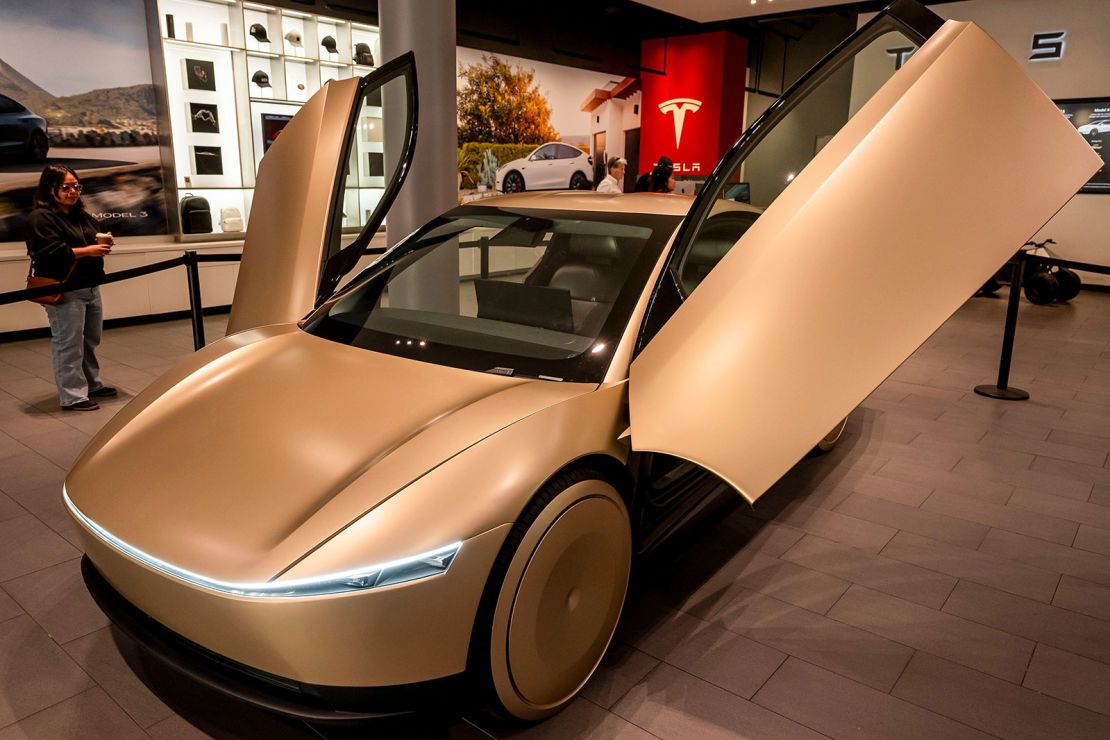
Photo: CNN
Tesla Removes Safety Supervisors From Select Austin Robotaxis
Tesla has taken a notable step toward fully autonomous ride-hailing in the United States. CEO Elon Musk confirmed that a small portion of the company’s Robotaxi fleet in Austin, Texas, is now operating without a human driver or safety supervisor inside the vehicle.
In a post shared on X, Musk said Tesla had “just started Robotaxi drives in Austin with no safety monitor in the car,” crediting the company’s artificial intelligence and software teams for the milestone. While the move does not represent a full-scale rollout, it marks the first time Tesla has publicly acknowledged unsupervised Robotaxi operations on U.S. roads.
Ashok Elluswamy, Tesla’s vice president of software, clarified that only a limited number of vehicles are currently running without onboard supervision. These unsupervised cars are operating alongside a larger fleet that still includes human safety monitors. According to Elluswamy, Tesla plans to gradually increase the proportion of fully driverless vehicles in Austin as confidence in the system grows.
Investor Reaction and Market Response
Investors responded positively to the announcement. Tesla shares rose 4.2 percent on Thursday, closing at $449.36, as markets interpreted the update as tangible progress toward autonomy, a central pillar of Tesla’s long-term valuation narrative.
Tesla is scheduled to report fourth-quarter earnings next week, and expectations are high that management will further emphasize artificial intelligence, robotics, and autonomous mobility as growth drivers, especially as global electric vehicle sales growth slows.
Tesla Still Behind Established Robotaxi Rivals
Despite the headline-grabbing announcement, Tesla remains behind several competitors already operating fully driverless commercial services at scale.
Alphabet’s Waymo continues to lead the U.S. robotaxi market, with driverless rides available to the public in multiple cities. In China, Baidu’s Apollo Go has deployed large autonomous fleets across major urban centers, facing competition from firms such as WeRide. Amazon-owned Zoox is also running limited driverless services in select U.S. locations, while startups like Nuro and May Mobility continue expanding pilot programs.
Tesla, by contrast, only launched its Robotaxi ride-hailing app recently and has so far confined operations to Austin and parts of the San Francisco Bay Area. Even in those locations, most vehicles still operate with human oversight.
Regulatory Gaps Between Texas and California
Texas has emerged as a more permissive testing ground for Tesla’s autonomous ambitions. The company secured authorization there to operate as a transportation networking company using automated driving systems, enabling limited driverless operations.
California remains a far more complex regulatory environment. Tesla has not yet obtained permits that would allow it to conduct driverless testing or commercial robotaxi rides without a human ready to intervene. As a result, any expansion of unsupervised services in the state remains off the table for now.
Bold Promises and Missed Timelines
Musk has long positioned autonomy as a near-term breakthrough. As recently as July, he suggested autonomous ride-hailing could reach roughly half of the U.S. population by year-end. That projection has not materialized.
Speaking at the World Economic Forum in Davos, Musk reiterated his confidence, calling self-driving technology “essentially a solved problem” and predicting widespread U.S. Robotaxi availability before the end of the year. However, Musk has a well-documented history of setting aggressive timelines that later slip.
In 2019, he told investors that existing Tesla vehicles would be able to operate as robotaxis through a software update within a year. Nearly six years later, Tesla is still in the early stages of limited deployment.
Autonomy Becomes Central as EV Sales Cool
With electric vehicle demand softening in key markets and pricing pressure weighing on margins, Tesla’s future growth story increasingly hinges on autonomy and artificial intelligence.
Today, Tesla sells its most advanced driver-assistance package as FSD Supervised, which requires drivers to remain attentive and ready to take control. The company has stated it plans to introduce an FSD Unsupervised system in the future, a shift that would fundamentally change both regulatory exposure and revenue potential.
Analysts at Deutsche Bank recently noted that traditional vehicle volume growth for Tesla and peers like Rivian may remain muted this year, with autonomy and “physical AI” driving investor narratives instead. They cautioned that Tesla must demonstrate reliable unsupervised driving and meaningful Robotaxi scaling before markets assign additional valuation upside.
Safety Concerns and Regulatory Scrutiny Persist
Public confidence remains a significant hurdle. Surveys conducted by the Electric Vehicle Intelligence Report late last year showed that a majority of U.S. consumers are still reluctant to ride in robotaxis, with safety concerns cited as the primary reason.
Regulators are also watching closely. California authorities previously accused Tesla of deceptive marketing related to its driver-assistance capabilities. Meanwhile, the National Highway Traffic Safety Administration continues to investigate Tesla to assess whether its Autopilot and FSD systems are linked to traffic safety violations.
Independent tracking based on regulatory data, legal filings, and media reports indicates that dozens of fatalities have occurred in crashes involving Tesla vehicles where automated systems were active, further intensifying scrutiny around the company’s autonomy claims.
A Symbolic Step With High Stakes
Tesla’s decision to remove safety supervisors from a handful of Robotaxis in Austin is a symbolic milestone rather than a commercial breakthrough. Still, it underscores how critical autonomy has become to Tesla’s identity, strategy, and stock performance.
Whether this cautious rollout evolves into a scalable, trusted, and regulator-approved driverless network will likely determine how investors and consumers judge Tesla’s next chapter.

Popular articles


Subscribe to unlock premium content
Healing from Afar in Brazil
The Culinary Revolution Delivered to Your Door

Paws of Prestige in Singapore

Healing from Afar in Brazil
The Culinary Revolution Delivered to Your Door
Healing from Afar in Brazil