Saudi AI Firm Humain Commits $3 Billion to xAI Funding Round

Saudi AI Firm Humain Commits $3 Billion to xAI Funding Round
By
Rachel Steinberg
Last updated:
February 19, 2026
First Published:
February 19, 2026

Getty Images
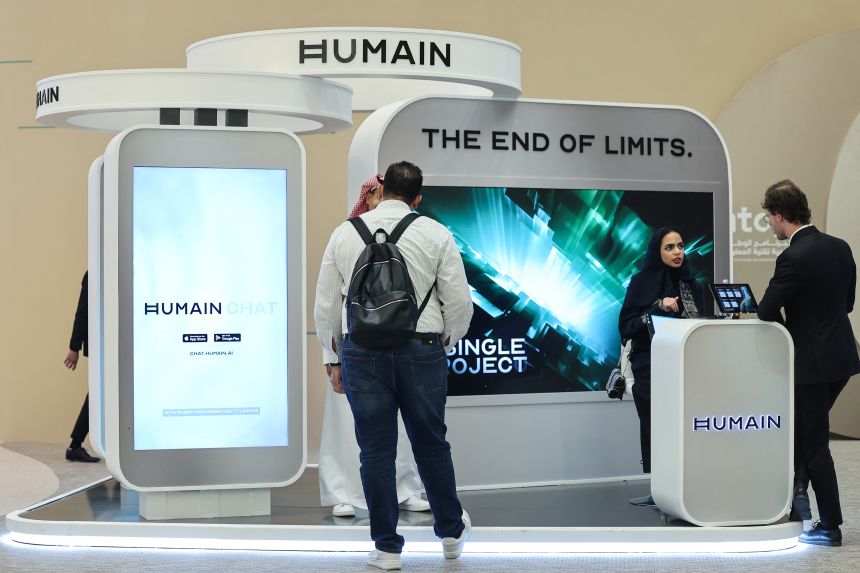
Humain, Saudi Arabia’s state-backed artificial intelligence company, confirmed it committed $3 billion to xAI as part of the company’s Series E fundraising, positioning itself as a major minority investor in one of the fastest-growing players in generative AI.
A Landmark Investment in the AI Race
The capital injection came shortly before xAI was acquired by SpaceX, a move that consolidated Elon Musk’s artificial intelligence ambitions with his broader technology empire. As part of the transaction, Humain’s equity stake in xAI was converted into shares of SpaceX, giving the Saudi firm indirect exposure to both AI and space-technology growth.
The Series E round itself totaled about $20 billion, reflecting strong investor appetite for large-scale AI infrastructure as companies race to build more powerful models and secure computing capacity.
Saudi Arabia’s Expanding AI Strategy
The investment underscores Saudi Arabia’s broader push to diversify its economy and establish a leadership position in emerging technologies. The kingdom has been channeling billions of dollars into digital infrastructure, cloud computing, and advanced research as part of its long-term economic transformation plans.
Officials view artificial intelligence as a key pillar for future growth, particularly in sectors such as energy optimization, smart cities, logistics, and government services. By backing a high-profile global AI company, Humain gains access to cutting-edge research, talent networks, and strategic partnerships.
Infrastructure Partnership and Data Center Plans
The funding builds on a previously announced collaboration between Humain and xAI to develop approximately 500 megawatts of AI-focused data center capacity. Projects of that scale can support tens of thousands of high-performance GPUs, highlighting the enormous compute requirements needed to train and deploy next-generation models.
Industry analysts estimate that global spending on AI infrastructure could surpass hundreds of billions of dollars over the next decade, driven by demand for cloud-based AI services and enterprise automation.
Competitive Dynamics in the AI Sector
xAI has been scaling aggressively to compete with leading AI developers, investing heavily in model training, proprietary datasets, and supercomputing clusters. The company’s fundraising surge reflects intensifying competition across the sector as firms race to deliver more capable and cost-efficient AI systems.
The subsequent acquisition by SpaceX is widely viewed as a strategic consolidation, enabling deeper integration between AI capabilities and Musk’s other ventures, including satellite networks and high-performance computing resources.
What the Deal Signals for the Market
For investors and industry observers, Humain’s multibillion-dollar commitment highlights the growing role of sovereign capital in shaping the AI landscape. Large state-backed funds are increasingly acting as strategic partners rather than passive investors, seeking both financial returns and technological influence.
The transaction also reinforces a broader trend: as AI development becomes more capital-intensive, alliances between governments, infrastructure providers, and private tech firms are becoming essential to fund the massive compute and energy demands of the industry.
Taken together, the investment marks another step in the rapid globalization of artificial intelligence, where funding, talent, and infrastructure are converging across borders to define the next phase of technological competition.

Popular articles


Subscribe to unlock premium content
Healing from Afar in Brazil

The Culinary Revolution Delivered to Your Door

Paws of Prestige in Singapore

Healing from Afar in Brazil
The Culinary Revolution Delivered to Your Door
Healing from Afar in Brazil