Southwest Defies the Industry Slump as Its Stock Soars Despite a Sharp Profit Drop

Southwest Defies the Industry Slump as Its Stock Soars Despite a Sharp Profit Drop
By
Junia Wells
Last updated:
December 24, 2025
First Published:
December 24, 2025

Getty Images
Profits Down, Stock Up
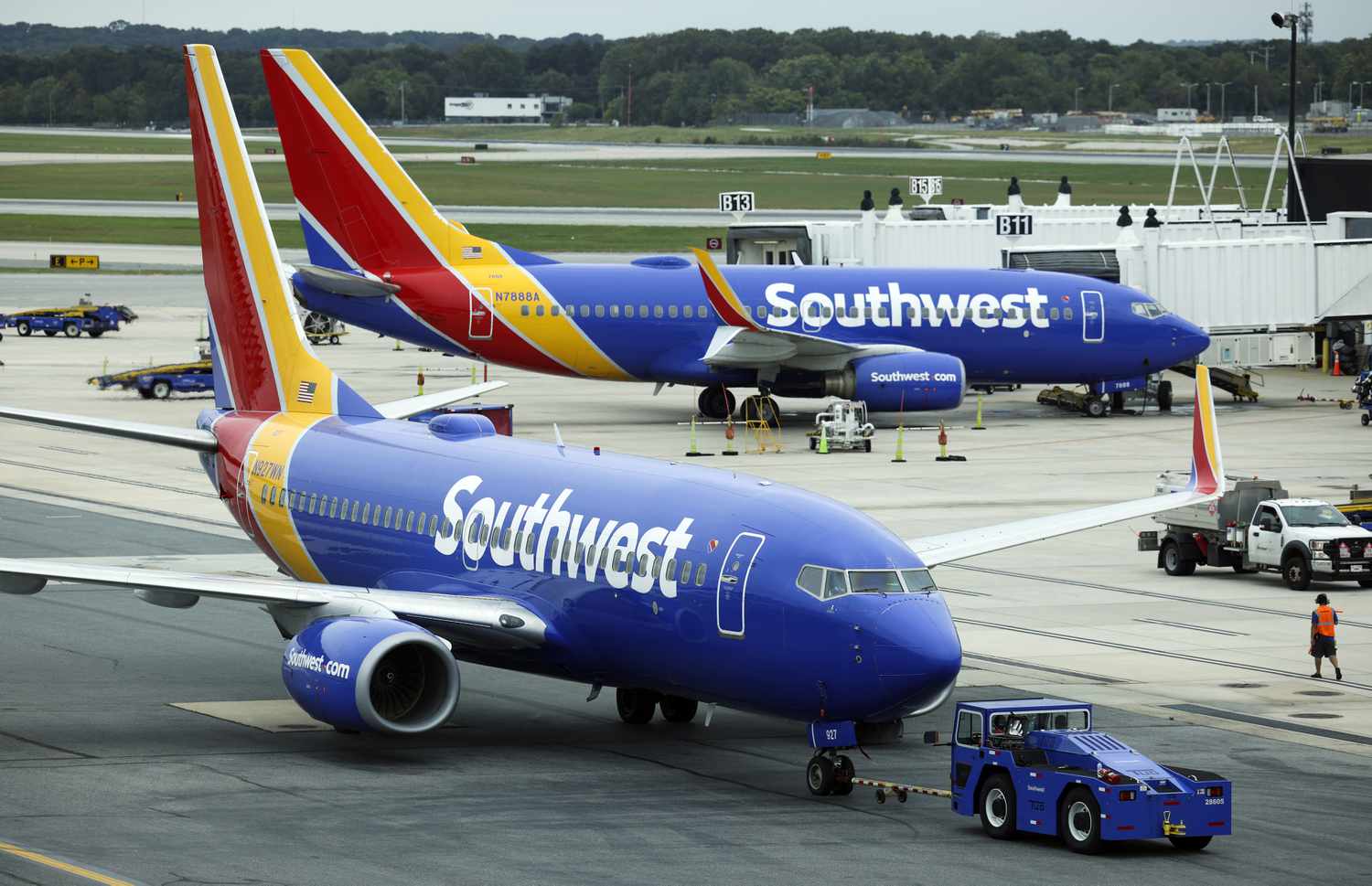
Southwest Airlines is delivering one of the most striking contradictions in the U.S. airline sector this year. While the carrier’s profits have fallen sharply, its stock performance has outpaced every major U.S. airline.
For the first nine months of the year, Southwest’s profit declined 42 percent compared with the same period in 2024. Yet investors have largely shrugged off the earnings pressure. The airline’s shares are up nearly 24 percent year to date, outperforming Delta Air Lines and United Airlines, which have each gained roughly 17 percent over the same period.
Southwest’s stock recently climbed to its highest level in about two and a half years, signaling growing confidence that its long-planned business transformation is finally taking shape.
Why Investors Are Staying Bullish
Market optimism around Southwest is less about current demand trends and more about structural changes that are set to reshape its revenue model. Analysts point out that if the stock rally were driven purely by stronger travel demand, similar gains would be visible across the sector.
Instead, investors are focusing on initiatives that move Southwest away from its traditional one-size-fits-all model and closer to the revenue-maximizing strategies used by larger network carriers.
These changes are expected to unlock new pricing power and improve margins, even in a softer demand environment.
Assigned Seating and Paid Upgrades Take Off
A major shift begins on January 27, when Southwest officially abandons its long-standing open seating policy. The airline will introduce assigned seating across its all-Boeing 737 fleet, a move that fundamentally changes the customer experience and revenue structure.
The first rows will feature extra legroom seats available for an added fee. Pricing varies by route and timing, but early February fares on a Baltimore to Las Vegas flight showed extra legroom seats priced at around $80 each way.
Southwest estimates that assigned seating and premium legroom options could generate approximately $1 billion in pretax earnings next year. By 2027, that figure is expected to rise to about $1.5 billion annually.
Company leadership has emphasized that early booking trends support the strategy, with customer behavior aligning closely with internal forecasts.
Wall Street Raises Its Expectations
The airline’s transformation has prompted upgrades from major financial institutions. Barclays recently raised its rating on Southwest, projecting adjusted earnings above $4 per share next year and more than $6 per share by 2027.
Those projections represent a significant rebound from current earnings levels and help explain why investors are willing to look past near-term profit weakness.
Analysts increasingly view Southwest’s current earnings dip as a transitional phase rather than a sign of long-term structural decline.
Breaking With Tradition on Fees and Fares
Assigned seating is not the only legacy policy Southwest has abandoned. Earlier this year, the airline ended its decades-old promise of two free checked bags, a hallmark of its brand identity. It has also rolled out its first-ever basic economy fares, allowing it to better compete on price-sensitive routes while upselling higher-value customers.
Together, these changes mark one of the most significant strategic shifts in the airline’s history, aimed at boosting ancillary revenue and improving profitability per passenger.
Demand Pressures Still Linger
Despite the upbeat investor sentiment, Southwest is not immune to broader industry challenges. Like its peers, the airline lowered its profit outlook for 2025 after demand softened early in the year. Factors cited include the impact of U.S. tariff policies, government cost-cutting measures, and uncertainty surrounding federal travel spending.
A recent government shutdown also weighed on bookings, prompting Southwest to further trim its earnings expectations. These pressures have kept near-term results under strain, even as long-term projections improve.
Looking Ahead
Southwest typically releases its full-year outlook alongside earnings in late January, a timeline that aligns closely with the rollout of assigned seating. Investors will be watching closely for updated guidance that reflects both the near-term demand environment and the longer-term revenue impact of the airline’s transformation.
For now, the message from the market is clear. Even with profits down sharply, investors believe Southwest’s strategic overhaul has the potential to redefine its earnings power and justify its position as the top-performing U.S. airline stock this year.

Popular articles


Subscribe to unlock premium content
The New Wave of Superyacht Ownership

Micro-Experience Convenience Stores Are Reinventing Quick Stops
Custom Vans for Digital Nomads Redefine Mobility

The New Wave of Superyacht Ownership
Micro-Experience Convenience Stores Are Reinventing Quick Stops
The New Wave of Superyacht Ownership