
South Korea’s Kospi Surges to Historic High as Oil Shock and Iran Conflict Shake Global Markets

South Korea’s Kospi Surges to Historic High as Oil Shock and Iran Conflict Shake Global Markets
By
David Goldfarb
Last updated:
May 11, 2026
First Published:
May 11, 2026

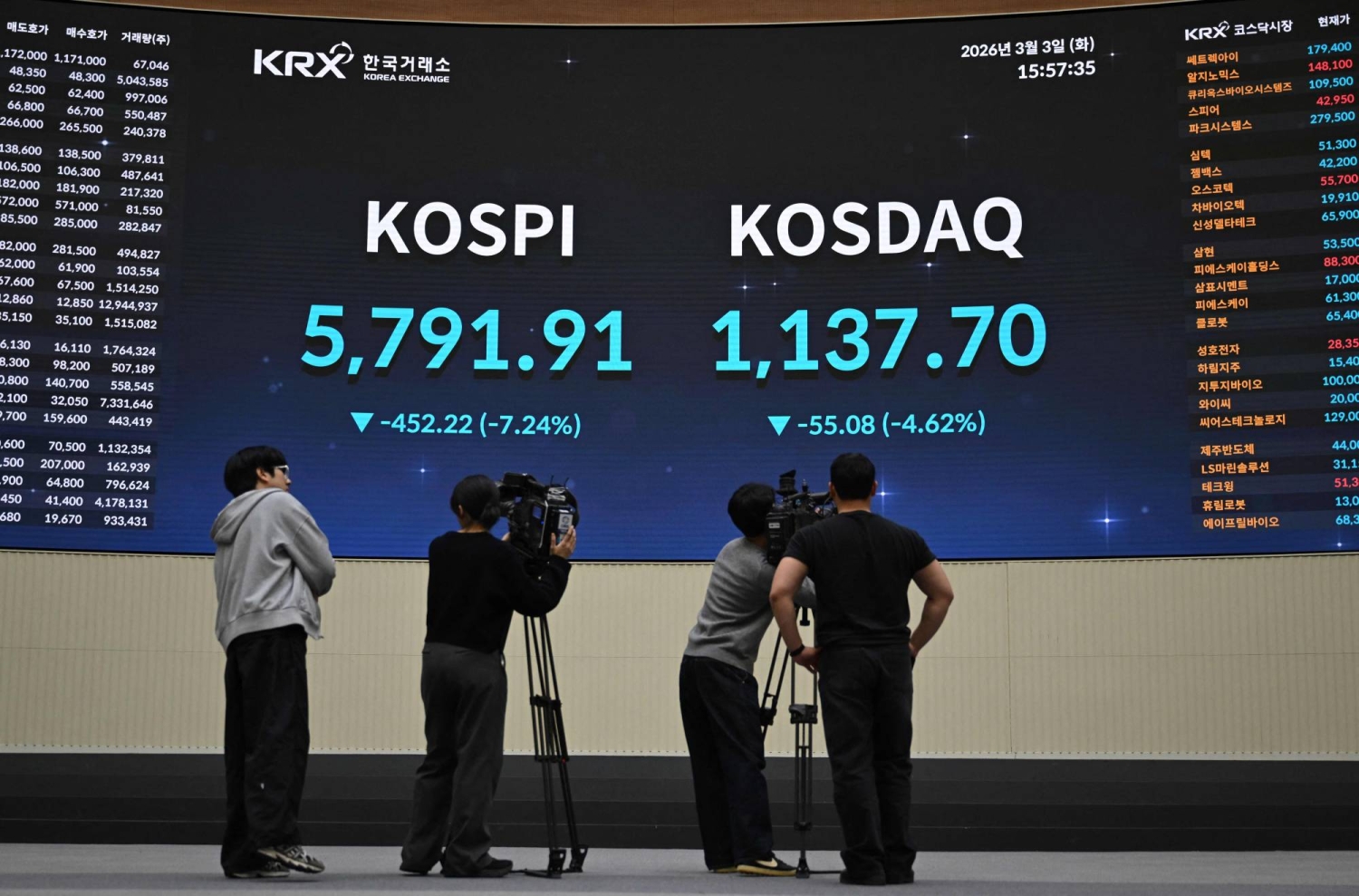
Photo: The Japan Times
Asian stock markets opened the week with mixed momentum on Monday as investors balanced strong technology-driven gains against mounting geopolitical risks tied to the escalating conflict between the United States and Iran.
South Korea’s benchmark Kospi index emerged as the region’s standout performer, climbing to a fresh all-time high amid a rally in semiconductor and technology stocks. However, broader market sentiment remained cautious as oil prices surged sharply following renewed tensions in the Middle East and fears of prolonged disruption to global energy supplies.
The latest escalation came after U.S. President Donald Trump rejected Iran’s newest proposal aimed at ending the war, increasing concerns that diplomatic efforts may stall and keep global markets under pressure.
Oil Prices Jump as Iran Conflict Intensifies
Crude oil prices extended their recent rally after Washington dismissed Tehran’s latest counteroffer regarding the ongoing Middle East conflict.
Iran reportedly submitted a revised proposal to U.S. negotiators that included conditions such as ending military operations across multiple fronts and lifting sanctions imposed on Tehran. However, Trump publicly rejected the proposal, describing the response as “totally unacceptable,” signaling that negotiations remain far from resolution.
At the same time, Israeli Prime Minister Benjamin Netanyahu stated that the conflict with Iran was “not over,” reinforcing expectations that geopolitical tensions could continue escalating in the weeks ahead.
The market reaction was immediate.
West Texas Intermediate crude futures surged nearly 4% to around $99 per barrel, while Brent crude climbed above $104 per barrel as traders priced in higher risks of prolonged supply disruptions. Analysts warned that any extended closure or instability surrounding the Strait of Hormuz could significantly tighten global energy supplies.
The Strait of Hormuz remains one of the world’s most strategically important oil shipping routes, handling roughly 20% of global crude oil exports. Any disruption to tanker traffic through the region has the potential to trigger sharp spikes in fuel prices, shipping costs, and inflation globally.
Gasoline prices in the United States have already risen sharply in recent weeks, while Asian economies heavily dependent on imported energy are increasingly vulnerable to higher import bills and inflationary pressure.
South Korea Leads Regional Gains
Despite geopolitical uncertainty, South Korean equities rallied strongly, driven by optimism surrounding the semiconductor sector and global artificial intelligence demand.
The Kospi index jumped 4.7% shortly after opening, reaching a fresh record high and outperforming most major Asia-Pacific markets. Investors poured into technology stocks following strong gains in U.S. chipmakers during the previous week.
Chip giant SK Hynix surged more than 10%, benefiting from continued enthusiasm around AI infrastructure spending, high-bandwidth memory demand, and expectations for stronger global semiconductor sales throughout the year.
However, the rally was not broad-based. South Korea’s small-cap Kosdaq index slipped 0.3%, reflecting lingering caution among investors about the broader economic outlook and geopolitical risks.
Analysts said foreign institutional inflows into large-cap technology stocks helped support the Kospi’s sharp move higher, particularly as investors continued rotating into AI-linked semiconductor companies across Asia.
Japanese Markets Turn Volatile
Japanese equities traded unevenly as investors assessed both global market volatility and company-specific developments.
The Nikkei 225 fluctuated between gains and losses throughout the session, while the broader Topix index managed a modest gain of around 0.2%.
Gaming giant Nintendo dropped more than 5% after announcing plans to increase prices for its upcoming Switch 2 console while simultaneously forecasting weaker hardware sales. Investors appeared concerned that higher pricing could dampen consumer demand amid slowing global spending conditions.
The decline in Nintendo shares weighed on sentiment across parts of Japan’s consumer electronics and gaming sectors.
China and Hong Kong Markets React to Inflation Data
Chinese mainland markets posted modest gains, while Hong Kong equities weakened as investors digested stronger-than-expected inflation data from China.
The CSI 300 index rose 0.58%, supported by industrial and energy-related stocks, while Hong Kong’s Hang Seng Index slipped nearly 0.5%.
Fresh economic data released over the weekend showed that China’s consumer and producer inflation accelerated more than anticipated in April due to higher commodity prices and rising energy costs linked to the Middle East conflict.
Producer prices in China recorded their strongest increase in nearly three years, reflecting growing pressure on manufacturers from rising raw material and fuel expenses. Analysts said the inflation data highlighted how deeply the Iran conflict and global energy disruptions are now affecting Asian economies.
At the same time, concerns remain over weak domestic demand in China, slowing retail sales, and continued weakness in the property sector.
Australian Stocks Decline on Commodity Concerns
Australia’s S&P/ASX 200 index fell 0.83% as investors worried that higher global oil prices and geopolitical instability could pressure consumer spending and corporate profitability.
The Australian market also faced weakness in mining and financial shares, despite gains in certain energy producers benefiting from higher crude prices.
Economists warned that prolonged energy inflation could complicate monetary policy decisions for central banks across the Asia-Pacific region, especially as many economies are already experiencing slower growth.
Wall Street Momentum Faces New Test
The cautious mood in Asia followed an exceptionally strong week for U.S. markets, where technology shares drove major indexes sharply higher.
The S&P 500 and Nasdaq Composite posted gains of more than 2% and 4%, respectively, during the previous week, with both indexes recording six consecutive weeks of gains for the first time since 2024.
The Dow Jones Industrial Average also advanced, marking gains in five of the last six weeks.
However, futures linked to U.S. indexes moved lower ahead of Monday’s session as investors reassessed geopolitical risks and the impact of surging oil prices on inflation and corporate earnings.
Dow futures fell more than 140 points, while S&P 500 and Nasdaq futures each declined around 0.3%.
Technology stocks have remained a major driver of the broader market rally, particularly companies linked to artificial intelligence, semiconductors, and cloud infrastructure. Yet analysts warned that escalating geopolitical tensions could quickly reverse investor optimism if energy prices continue climbing or supply chain disruptions worsen.
Investors Focus on Trump-Xi Summit
Markets are also preparing for a major diplomatic event later this week, when Trump is expected to meet Chinese President Xi Jinping in Beijing.
The summit is expected to cover trade relations, artificial intelligence regulations, semiconductor restrictions, Taiwan, and the Iran conflict. Investors hope the meeting could help reduce tensions between the world’s two largest economies and potentially stabilize global markets.
At the same time, analysts caution that any signs of confrontation or failed negotiations could deepen volatility across equities, commodities, and currency markets.
For now, investors remain caught between strong momentum in technology stocks and growing fears that geopolitical instability and surging energy costs could undermine the global economic recovery in the months ahead.
.webp)
Popular articles



Subscribe to unlock premium content
Why Estonia’s Old Town Digital Nomad Hubs Are Attracting High-Paying Tech Freelancers

The Tiny Island of Tristan da Cunha and Its Rare Luxury Wildlife Observation Economy

Chocolate Escapes in São Tomé

Why Estonia’s Old Town Digital Nomad Hubs Are Attracting High-Paying Tech Freelancers
The Tiny Island of Tristan da Cunha and Its Rare Luxury Wildlife Observation Economy
Why Estonia’s Old Town Digital Nomad Hubs Are Attracting High-Paying Tech Freelancers


