
Target Bets Big on Premium Baby Shopping Experience to Win Families Back From Walmart and Amazon

Target Bets Big on Premium Baby Shopping Experience to Win Families Back From Walmart and Amazon
By
Rachel Steinberg
Last updated:
May 11, 2026
First Published:
May 11, 2026

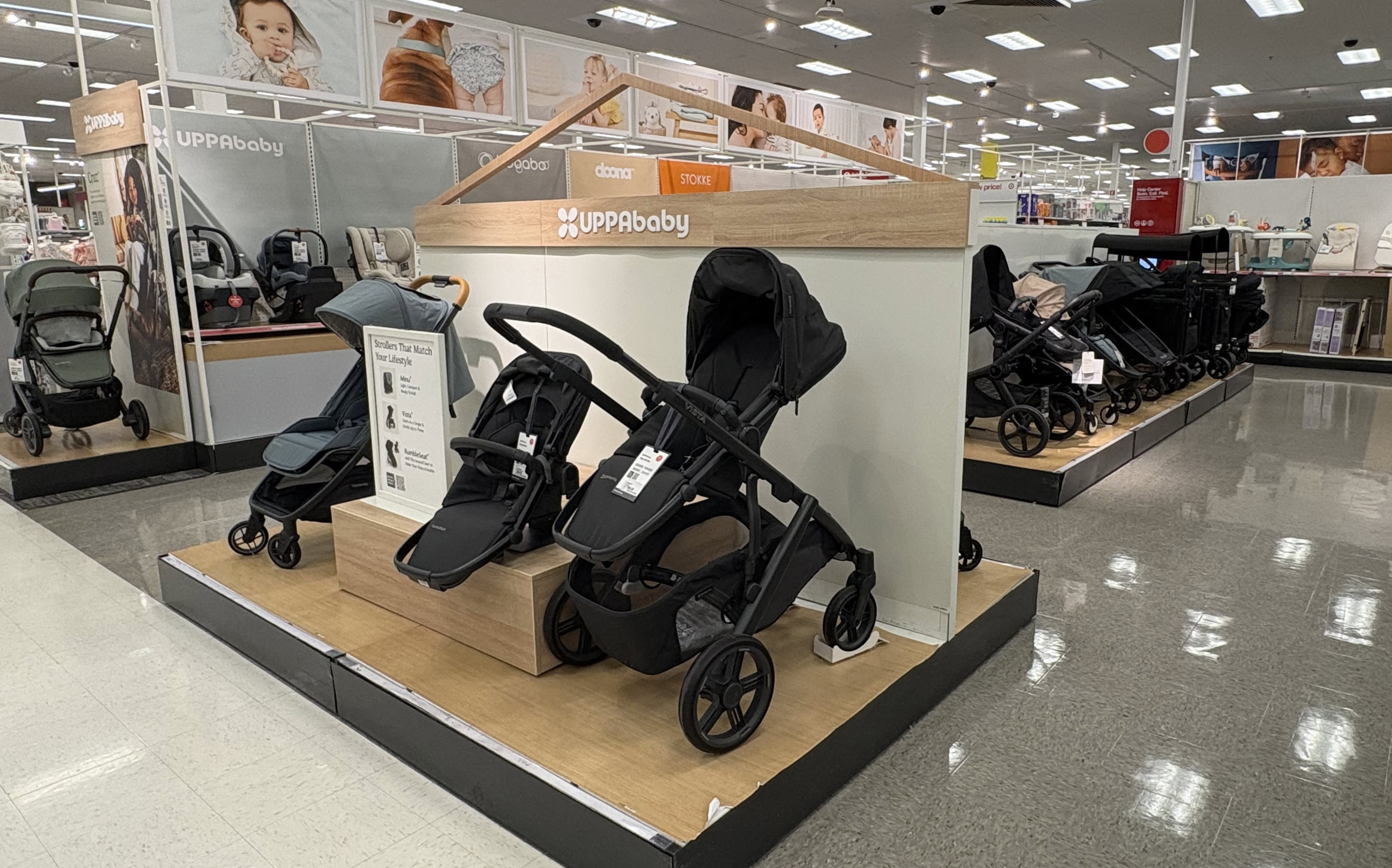
Target is making a major push to reconnect with one of its most important customer groups: busy families with young children.
The retailer has launched a sweeping redesign of its baby departments across approximately 200 stores in the United States, introducing boutique-style shopping areas filled with premium brands, interactive product displays, and expanded baby essentials in an effort to compete more aggressively with rivals like Walmart and Amazon.
The strategy marks one of Target’s biggest investments in the baby category in more than a decade and comes at a critical moment for the company as it attempts to recover from a prolonged sales slowdown and declining store traffic.
Executives believe the baby aisle could become a powerful gateway for rebuilding long-term relationships with younger shoppers who make frequent, high-value purchases across multiple retail categories.
Target Is Turning Baby Sections Into Boutique Experiences
Inside the redesigned stores, Target shoppers can now test premium strollers, high chairs, car seats, and nursery products directly on the sales floor instead of viewing them inside sealed boxes.
The upgraded baby areas feature boutique-inspired layouts and expanded displays from premium brands such as UPPAbaby, Bugaboo, Stokke, and Doona.
Some products now available in stores include luxury strollers priced near $1,000, reflecting Target’s effort to attract customers seeking higher-quality products while still maintaining affordability compared to specialty retailers.
The company has also added nearly 2,000 new baby-related products across stores and online platforms as part of the rollout.
Executives say the goal is to create a more curated and less overwhelming shopping experience for first-time parents navigating hundreds of product decisions during pregnancy and early parenthood.
Why Families Are So Important to Target’s Future
Target’s renewed focus on families comes as the company tries to reverse nearly three years of sluggish sales growth and weaker customer traffic.
According to company executives, households with children under five years old spend roughly twice as much as the average Target shopper and visit stores far more frequently than other customer groups.
That makes young families one of the retailer’s most valuable long-term customer segments.
Executives say internal research revealed that new parents often consolidate their shopping habits after having children, choosing fewer retailers for convenience and efficiency.
If Target can become a trusted destination during the early parenting stage, the company believes it can capture spending not only on diapers and formula, but also groceries, clothing, home goods, toys, beauty products, and household essentials for years afterward.
This strategy is especially important as competition intensifies across the U.S. retail industry.
Walmart and Amazon Have Been Taking Market Share
Target’s baby category overhaul comes after the retailer steadily lost market share to Walmart and Amazon in recent years.
Industry data shows Walmart currently controls the largest share of the U.S. baby products market at roughly 27%, followed by Amazon at approximately 24%. Target’s share has slipped to around 17.6%, down from roughly 18.6% over the past two years.
The category includes products such as:
- Diapers
- Formula
- Baby food
- Strollers
- Car seats
- Nursery equipment
- Feeding products
- Baby gear
Retail analysts say Walmart has benefited from strong pricing power and aggressive grocery expansion, while Amazon continues dominating online convenience and subscription-based shopping.
Target, by contrast, is trying to differentiate itself through shopping experience, design, merchandising, and brand curation rather than purely competing on price.
Target Wants to Offer a More Premium Yet Affordable Experience
One of the retailer’s biggest goals is positioning itself between Walmart’s value-driven approach and specialty baby boutiques that often charge premium prices.
Executives believe many parents are willing to spend more on products tied to safety, convenience, and comfort — especially during the first years of parenting — but still want accessible pricing and one-stop shopping convenience.
That positioning aligns with Target’s broader brand identity, which historically emphasized stylish, affordable merchandise and a more elevated in-store experience compared to traditional discount retailers.
Industry experts say the redesigned baby boutiques are designed to reinforce that image.
Parents can now physically test products like strollers, fold equipment, compare fabrics, and receive personalized guidance before making major purchases — an experience that has become increasingly rare after the collapse of several specialty baby chains.
The Collapse of Specialty Baby Retailers Created an Opportunity
The disappearance of major baby-focused retailers has opened a gap in the market that Target hopes to fill.
Chains such as Buy Buy Baby and Babies R Us either closed locations or faced bankruptcy struggles over recent years, leaving fewer dedicated destinations for parents seeking hands-on shopping experiences.
While some brands have reappeared through partnerships and pop-up stores, the traditional specialty baby retail sector remains significantly smaller than it once was.
Target sees this as a major opportunity to attract customers looking for a combination of convenience, trusted brands, and in-person product interaction.
The company has also launched a pilot “baby concierge” service through Tot Squad, offering free product guidance and baby registry support both online and inside select stores.
Retail Turnaround Efforts Come at a Critical Time
The baby category investment forms part of a much broader turnaround strategy under Target’s new leadership.
Michael Fiddelke, who became CEO earlier this year, is attempting to revive sales growth after several difficult years marked by weaker traffic, inflation pressures, shifting consumer behavior, and tougher competition.
Target has projected a return to annual sales growth this year and expects net sales to rise approximately 2% compared to last year.
The company is also dramatically increasing investments in store remodels, new locations, and operational improvements.
Target plans to spend roughly $5 billion on capital expenditures this fiscal year, more than $1 billion higher than the previous year.
Much of that spending will focus on modernizing stores, improving fulfillment capabilities, and enhancing customer experience.
Economic Pressure Still Creates Risks for Retailers
Despite the optimism surrounding the company’s strategy, analysts caution that Target still faces meaningful economic challenges.
Higher gasoline prices, inflation, and rising household costs are creating pressure on middle-income consumers, many of whom make up a large part of Target’s customer base.
Retail experts say the U.S. economy increasingly resembles a “K-shaped” environment where higher-income consumers continue spending while lower- and middle-income households become more cautious.
That dynamic has generally benefited Walmart, which has attracted more affluent shoppers seeking discounts while still maintaining strong value positioning for budget-conscious households.
Target may face more difficulty navigating those economic pressures because its core customers are often more sensitive to discretionary spending slowdowns.
The company is also dealing with competitive pressure from e-commerce platforms, discount chains, and even secondhand marketplaces such as Facebook Marketplace, where parents frequently buy and sell expensive baby products at lower prices.
Social Media and Parenting Trends Are Changing Retail
The modern parenting market has become increasingly influenced by social media, digital reviews, and influencer-driven product discovery.
Thousands of new baby brands have emerged online over the past decade, giving parents more choices than ever before — but also creating confusion and decision fatigue.
Retail experts say many new parents feel overwhelmed by the volume of available products and conflicting recommendations across social platforms.
That confusion is one reason Target believes curated in-store experiences can become a competitive advantage again.
Instead of navigating endless online listings, parents can physically interact with products, compare options, and simplify purchasing decisions inside stores.
Industry insiders say this hybrid model — combining digital convenience with premium physical experiences — may become increasingly important for retailers competing in categories tied closely to trust and emotional purchasing decisions.
Why the Baby Category Matters So Much to Retailers
Retail analysts often describe the baby category as one of the most strategically important segments in retail.
That’s because parents shopping for newborns frequently develop long-term loyalty patterns that influence spending across multiple product categories for years.
Winning a customer early in parenthood can lead to repeat purchases involving:
- Groceries
- Household products
- Children’s clothing
- Toys
- School supplies
- Pharmacy items
- Home décor
- Seasonal shopping
For Target, rebuilding strength in the baby aisle is not just about selling more diapers or strollers.
It is about rebuilding emotional loyalty with families and positioning the company as a trusted everyday shopping destination again.
And as competition intensifies across the retail industry, Target appears increasingly willing to invest heavily to make that happen.
.webp)
Popular articles



Subscribe to unlock premium content
Why Estonia’s Old Town Digital Nomad Hubs Are Attracting High-Paying Tech Freelancers

The Tiny Island of Tristan da Cunha and Its Rare Luxury Wildlife Observation Economy

Chocolate Escapes in São Tomé

Why Estonia’s Old Town Digital Nomad Hubs Are Attracting High-Paying Tech Freelancers
The Tiny Island of Tristan da Cunha and Its Rare Luxury Wildlife Observation Economy
Why Estonia’s Old Town Digital Nomad Hubs Are Attracting High-Paying Tech Freelancers


