
South Korea’s Kospi Breaks 7,000 Barrier as Samsung-Led Rally Powers Market to Record High

South Korea’s Kospi Breaks 7,000 Barrier as Samsung-Led Rally Powers Market to Record High
By
David Goldfarb
Last updated:
May 6, 2026
First Published:
May 6, 2026

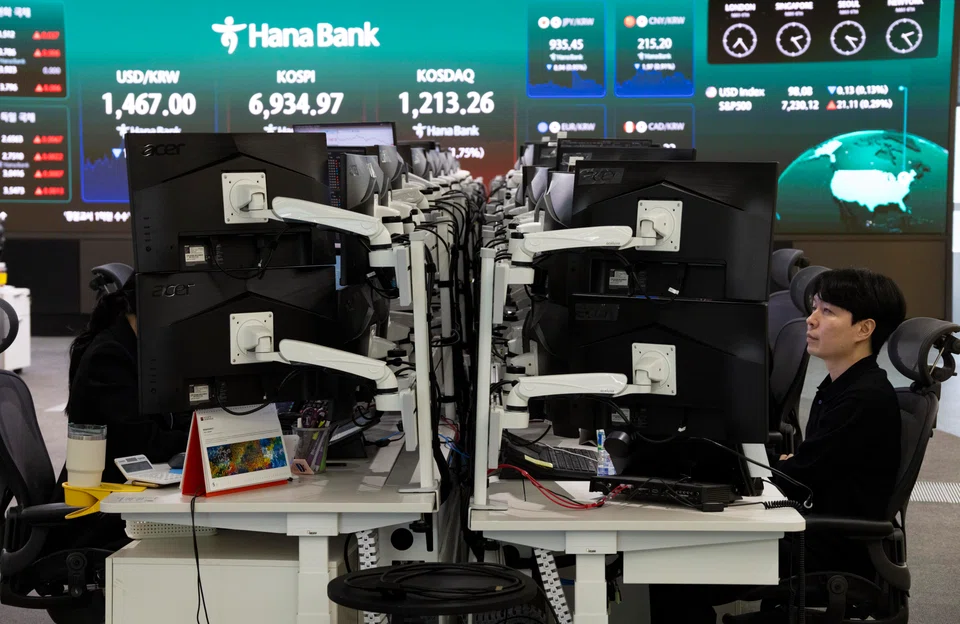
Photo: The Business Times
South Korea’s benchmark Kospi index surged to a historic milestone, crossing the 7,000 level for the first time as a powerful rally in semiconductor stocks lifted the broader market. The sharp move reflects a combination of global tailwinds, including easing oil prices, improving investor sentiment, and strong momentum in technology shares.
The Kospi climbed 6.68 percent in a single session, extending its remarkable run after already gaining more than 70 percent this year. The rally was led by heavyweight technology names, with Samsung Electronics jumping over 15 percent to reach record highs and surpass the $1 trillion market capitalization mark. Chipmaker SK Hynix also delivered a strong performance, rising more than 10 percent and hitting an all-time high.
The surge in South Korean equities comes amid a broader upswing across Asia-Pacific markets. Investors took cues from Wall Street, where major U.S. indices closed at record levels following strong corporate earnings and improved macroeconomic sentiment. The S&P 500 and Nasdaq Composite both notched fresh highs, reinforcing confidence in global equities.
One of the key drivers behind the rally has been a sharp pullback in oil prices. Crude markets weakened after signals of potential de-escalation in the Middle East reduced fears of prolonged supply disruptions. West Texas Intermediate crude dropped below $101 per barrel, while Brent crude fell closer to $108, easing inflation concerns and supporting risk assets globally.
Geopolitical developments also contributed to stabilizing sentiment. The United States indicated a temporary pause in its naval escort operations in the Strait of Hormuz, suggesting progress in diplomatic efforts. The move helped calm markets that had been on edge over potential disruptions to one of the world’s most critical energy transit routes.
Across the region, markets moved higher in tandem. China’s CSI 300 index gained over 1.6 percent as trading resumed following the Labor Day holiday. Hong Kong’s Hang Seng index advanced modestly, while the Hang Seng Tech index posted stronger gains, reflecting continued interest in growth and innovation-driven sectors.
India’s Nifty 50 also edged higher, rising around 0.7 percent, while Australia’s S&P/ASX 200 added close to 0.9 percent. Japan’s markets remained closed for a public holiday, though currency movements showed the yen strengthening against the U.S. dollar, indicating shifting dynamics in global forex markets.
In South Korea, the rally was not uniform across all segments. While large-cap technology stocks drove the main index higher, the small-cap Kosdaq index declined slightly, highlighting a divergence between blue-chip momentum and broader market participation.
The surge in semiconductor stocks reflects a deeper structural trend tied to artificial intelligence. Demand for advanced memory chips, particularly those used in AI data centers and high-performance computing, continues to outpace supply. This has driven up prices and boosted earnings expectations for major players like Samsung and SK Hynix.
Global investors are increasingly positioning for a prolonged upcycle in the semiconductor industry, fueled by AI adoption, cloud expansion, and digital transformation across industries. South Korea, as a major hub for memory chip production, stands at the center of this trend, amplifying the impact on its equity markets.
Looking ahead, market participants will be watching whether the current rally can sustain its momentum. While easing oil prices and strong earnings have provided a near-term boost, uncertainties around geopolitical developments, interest rates, and global growth remain key variables.
For now, the breakout above 7,000 marks a significant psychological and technical milestone for the Kospi, signaling strong investor confidence and reinforcing South Korea’s position as one of the standout performers in the global equity landscape.
.webp)
Popular articles



Subscribe to unlock premium content
How Palau’s Hidden Jellyfish Lakes Are Monetized as Ultra-Premium Adventure Destinations
.png)
When Art Meets Luxury: Louis Vuitton’s Explosive Collaborations
How Slovenia’s Cave Systems Are Monetized as High-End Adventure Tourism Spots

How Palau’s Hidden Jellyfish Lakes Are Monetized as Ultra-Premium Adventure Destinations
When Art Meets Luxury: Louis Vuitton’s Explosive Collaborations
How Palau’s Hidden Jellyfish Lakes Are Monetized as Ultra-Premium Adventure Destinations


