
South Korea Races to Approve U.S. Investment Law After Trump Signals Tariff Hike

South Korea Races to Approve U.S. Investment Law After Trump Signals Tariff Hike
By
Augusta Parker
Last updated:
January 27, 2026
First Published:
April 25, 2026

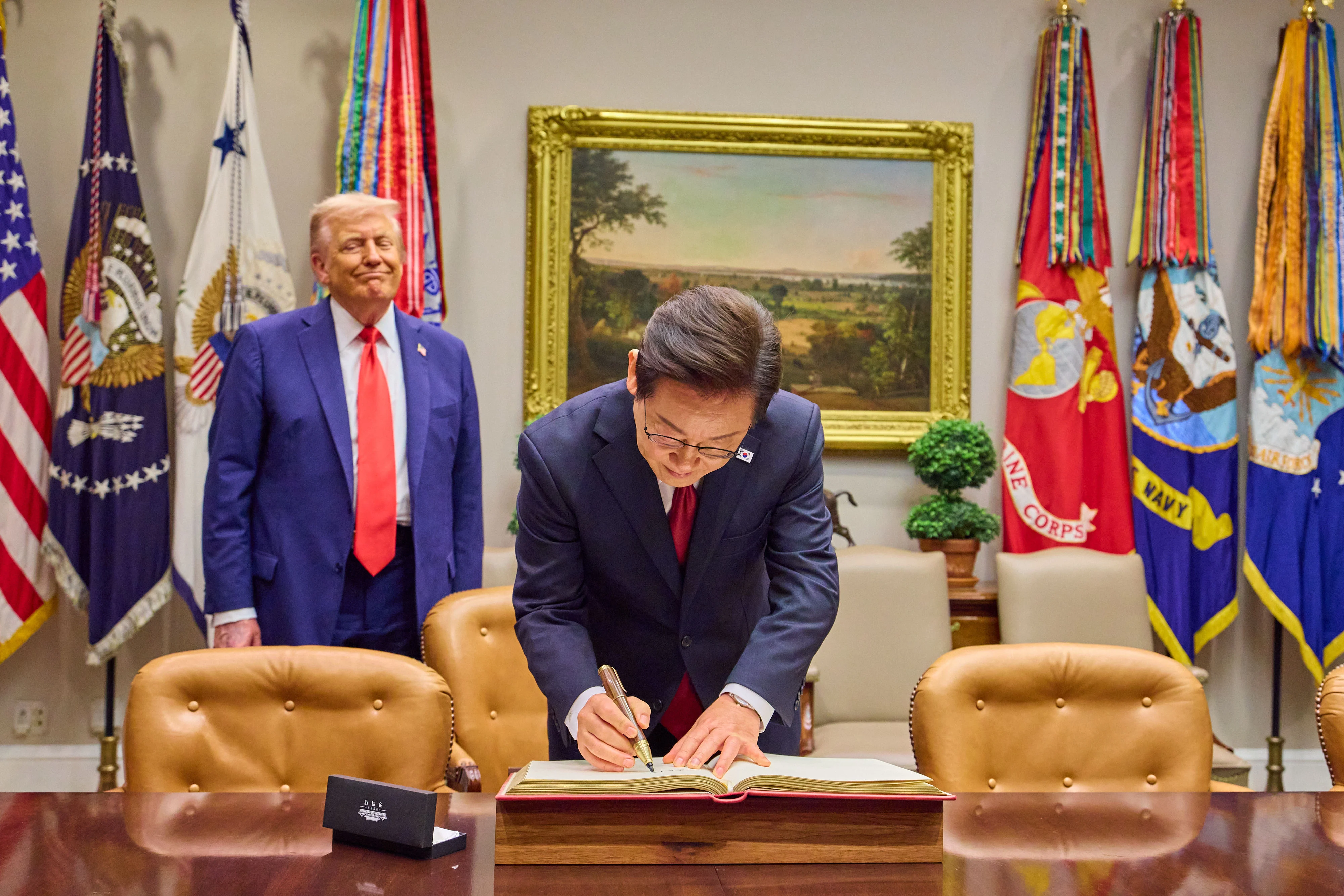
Photo: South China Morning Post
South Korea is scrambling to push through key legislation tied to its trade and investment commitments with the United States after President Donald Trump warned he would sharply raise tariffs on Korean exports, escalating pressure on Seoul to move faster.
Earlier this week, Trump announced plans to increase tariffs on South Korean goods to 25%, up from the current 15%, citing delays in ratifying a trade deal agreed between Washington and Seoul last July. In a post on Truth Social, the U.S. president said South Korea’s National Assembly had yet to approve the agreement, prompting his administration to consider tougher trade measures.
Within hours, South Korea’s ruling Democratic Party said it would move to pass the required legislation by the end of February, signaling an urgent effort to defuse tensions and keep bilateral economic ties on track.
What the bill covers and why it matters
According to Democratic Party officials, Trump’s comments appear to refer to the Special Act on Strategic Investment Management between Korea and the United States, a bill submitted to parliament last November.
At the heart of the legislation is a plan to create a state-backed investment corporation that would oversee South Korea’s massive $350 billion investment pledge to the U.S. The funding is expected to support projects across advanced manufacturing, semiconductors, electric vehicles, batteries, clean energy, and critical supply chains, sectors that both governments see as strategically vital.
Party spokesperson Kim Hyun-jung confirmed that five related bills have already been introduced in the 300-seat National Assembly and are scheduled for review. She added that proposals from both the ruling Democratic Party and the opposition People Power Party should help accelerate the legislative process.
The Democratic Party currently holds 162 seats, giving it a working majority, while the People Power Party controls 107, with four seats vacant. Lawmakers on both sides are now under pressure to demonstrate unity as Seoul seeks to reassure Washington.
“What’s needed now is to quickly confirm the facts behind the U.S. statement and clear up any misunderstandings,” Kim said, calling for bipartisan cooperation to finalize the legislation.
Seoul seeks clarity as markets react
South Korea’s presidential office said it had not received any formal notification from Washington regarding Trump’s tariff announcement, highlighting a lack of official communication even as markets reacted to the headline risk.
The finance ministry said it would keep U.S. counterparts closely informed of progress in the National Assembly, while the trade ministry confirmed that Industry Minister Kim Jung-kwan is preparing to travel to Washington for direct talks aimed at easing tensions and reaffirming Seoul’s commitments.
The prospect of higher U.S. tariffs rattled investors, particularly in export-heavy sectors. Shares of Hyundai Motor and Kia initially slid in early trading before recovering some losses. Hyundai was last down 0.1%, while Kia fell 1.16%. Broader sentiment stabilized as the Kospi rose 1.9% and the tech-heavy Kosdaq gained 0.89%, suggesting investors expect the dispute to be resolved through diplomacy.
South Korea’s economy is deeply exposed to U.S. trade policy. The United States is one of Seoul’s largest export destinations, with bilateral trade exceeding $185 billion annually. Key Korean exports to the U.S. include automobiles, auto parts, semiconductors, consumer electronics, steel, and batteries, industries that collectively employ hundreds of thousands of workers.
A move from 15% to 25% tariffs would significantly raise costs for Korean manufacturers and could disrupt supply chains already strained by geopolitical uncertainty.
Strategic stakes for both sides
For Washington, the investment framework is designed to attract foreign capital into U.S. manufacturing and technology, reinforcing domestic production of chips, EVs, and clean energy components. For Seoul, the agreement helps secure access to the U.S. market while positioning Korean companies at the center of America’s industrial reshoring push.
Major South Korean conglomerates have already announced tens of billions of dollars in U.S. investments over the past two years. Samsung Electronics, SK Group, Hyundai Motor Group, and LG Energy Solution are all expanding operations across Texas, Georgia, Ohio, and other states, building semiconductor fabs, EV plants, and battery factories.
The proposed $350 billion investment structure would formalize and coordinate much of this activity, providing government oversight and long-term planning support.
Analysts say Trump’s tariff warning is likely aimed at speeding up legislative approval rather than signaling a full-scale trade rupture. Still, the episode underscores how quickly political delays can translate into economic risk, particularly for export-driven economies like South Korea.
What comes next
With the end-of-February deadline now in focus, South Korea’s government and lawmakers are moving to finalize the investment bill and reassure U.S. officials that Seoul remains fully committed to the July agreement.
Industry leaders are watching closely, aware that even a short-term tariff hike could affect earnings, investment timelines, and employment across multiple sectors.
For now, Seoul’s message is clear: it intends to act quickly, align political forces at home, and preserve one of its most important economic partnerships, hoping rapid legislative progress will convince Washington to hold off on higher tariffs and keep bilateral trade on stable ground.
.webp)
Popular articles



Subscribe to unlock premium content
Crypto in the Arctic
Iceland’s Seaweed Revolution
Private Island Rentals for Corporate Retreats Hit $1 Billion
Crypto in the Arctic
Iceland’s Seaweed Revolution
Crypto in the Arctic


