South Korea Auto Shares Rally as U.S. Confirms Tariff Reduction to 15 Percent

South Korea Auto Shares Rally as U.S. Confirms Tariff Reduction to 15 Percent
By
Leah Rosenfeld
Last updated:
December 2, 2025
First Published:
April 25, 2026

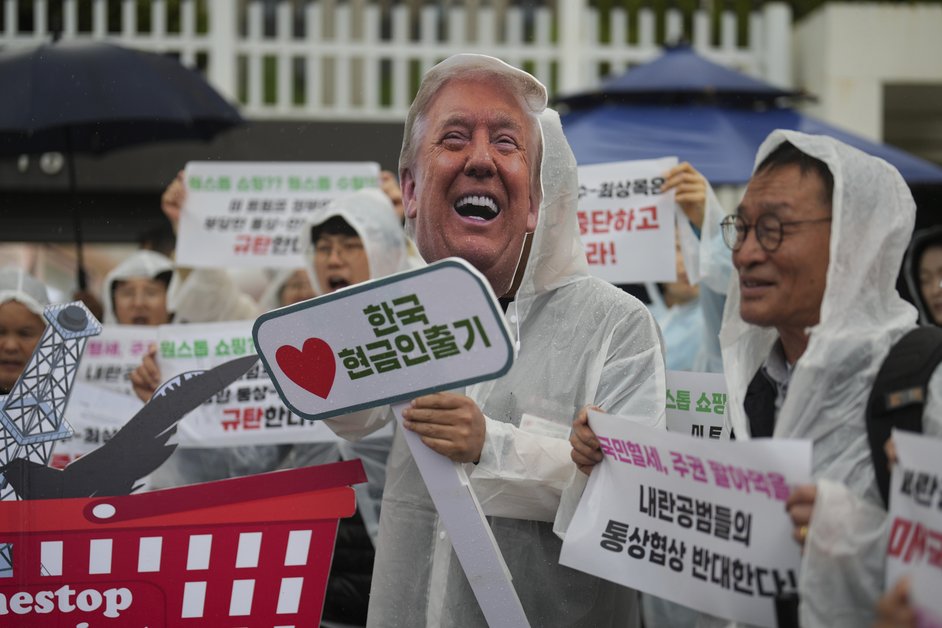
South Korean Automakers Surge After Tariff Announcement
South Korea’s auto sector saw a sharp rise on Tuesday after U.S. Commerce Secretary Howard Lutnick confirmed that U.S. auto tariffs on South Korean vehicles were officially lowered to 15 percent, retroactive to November 1. The announcement, posted through the U.S. Department of Commerce, also included plans to eliminate tariffs on airplane components and align South Korea’s reciprocal tariff rate with those applied to Japan and the European Union.
Hyundai Motor gained nearly 5 percent and Kia Corp advanced around 3 percent, marking one of their strongest sessions in recent weeks. The broader market responded positively as well, with the Kospi jumping 1.74 percent and the Kosdaq adding 0.24 percent.
Inflation Data Supports Steady Monetary Policy
Fresh government data showed South Korea’s headline inflation climbing 2.4 percent year over year in November, slightly above economist forecasts. Core inflation rose 2 percent, matching October’s level. The steady price environment strengthens expectations that the Bank of Korea will maintain its policy rate at 2.5 percent, where it has remained for four consecutive meetings. Stable inflation combined with improving trade conditions provided additional support for equity gains.
Asia-Pacific Markets Mostly Higher
Major benchmarks across the region also traded higher. Japan’s Nikkei 225 advanced 0.54 percent, while the Topix added 0.44 percent, supported by gains in financials, energy and basic materials.
Industrial robot manufacturer Fanuc was among the top performers on the Nikkei 225, rising nearly 6 percent following its announcement of a partnership with Nvidia aimed at integrating advanced AI capabilities into its robotics line. NGK Insulators surged as much as 6 percent, and Fujikura added over 2 percent.
Rising yields in Japan also drew attention. The 10-year Japanese Government Bond climbed to 1.88 percent, its highest level since 2008. Yields on the 20-year JGB reached 2.915 percent, a peak not seen since 1999, while the 30-year JGB hit an all-time high of 3.411 percent. Market speculation continues to build around a potential rate hike by the Bank of Japan before year-end.
Sector Moves Across Asia
SoftBank shares fell nearly 5 percent, marking a third consecutive session of declines as global investors reassessed the valuations of AI-focused companies. CEO Masayoshi Son stated at the FII Priority Asia forum that he had sold Nvidia shares to expand SoftBank’s AI investments, including ventures tied to OpenAI.
In Australia, the S&P/ASX 200 rose 0.12 percent. Hong Kong’s Hang Seng Index added 0.49 percent at the open, while mainland China's CSI 300 slipped 0.17 percent. Alibaba Group climbed nearly 3 percent in Hong Kong after releasing its Quark AI-powered smart glasses—its third straight session of gains.
Indian equities opened lower. The Nifty 50 dipped 0.22 percent, and the BSE Sensex fell 0.37 percent. Bajaj Housing Finance was among the biggest laggards, falling more than 8 percent after Bajaj Finance announced it would reduce its stake in the subsidiary by up to 2 percent.
U.S. Markets Weigh Crypto Pressure
U.S. equity futures were mostly flat during Asian trading hours after all three major Wall Street indices broke their five-day winning streaks. The S&P 500 fell 0.53 percent to 6,812.63, the Nasdaq Composite slipped 0.38 percent to 23,275.92, and the Dow Jones Industrial Average dropped 427 points, or 0.9 percent, closing at 47,289.33.
A sharp sell-off in bitcoin contributed to the downturn. The digital currency dropped about 6 percent overnight, trading below $86,000 and struggling to stay above the $90,000 mark for the first time since April. Major crypto-linked stocks, including Coinbase and Strategy, also declined.
AI-related stocks such as Broadcom and Super Micro Computer pulled back as well, falling more than 4 percent and 1 percent, respectively, suggesting investors may be engaging in further profit-taking across high-growth technology names.
Outlook
The confirmation of reduced U.S. auto tariffs has injected fresh momentum into South Korea’s automotive sector and helped lift broader market sentiment across Asia. While inflation remains stable and policies appear steady, global markets continue to respond to shifts in technology valuations and volatility in the cryptocurrency space.
.webp)
Popular articles



Subscribe to unlock premium content
The Market for Renting Private Libraries Where Only Rare, Unpublished Manuscripts Exist

Living Underwater in the Heart of the City

Frozen Luxury in Europe

The Market for Renting Private Libraries Where Only Rare, Unpublished Manuscripts Exist
Living Underwater in the Heart of the City
The Market for Renting Private Libraries Where Only Rare, Unpublished Manuscripts Exist