Smoothie King Accelerates Expansion as Health Trends Drive Record Growth

Smoothie King Accelerates Expansion as Health Trends Drive Record Growth
By
Rachel Steinberg
Last updated:
May 4, 2026
First Published:
May 4, 2026

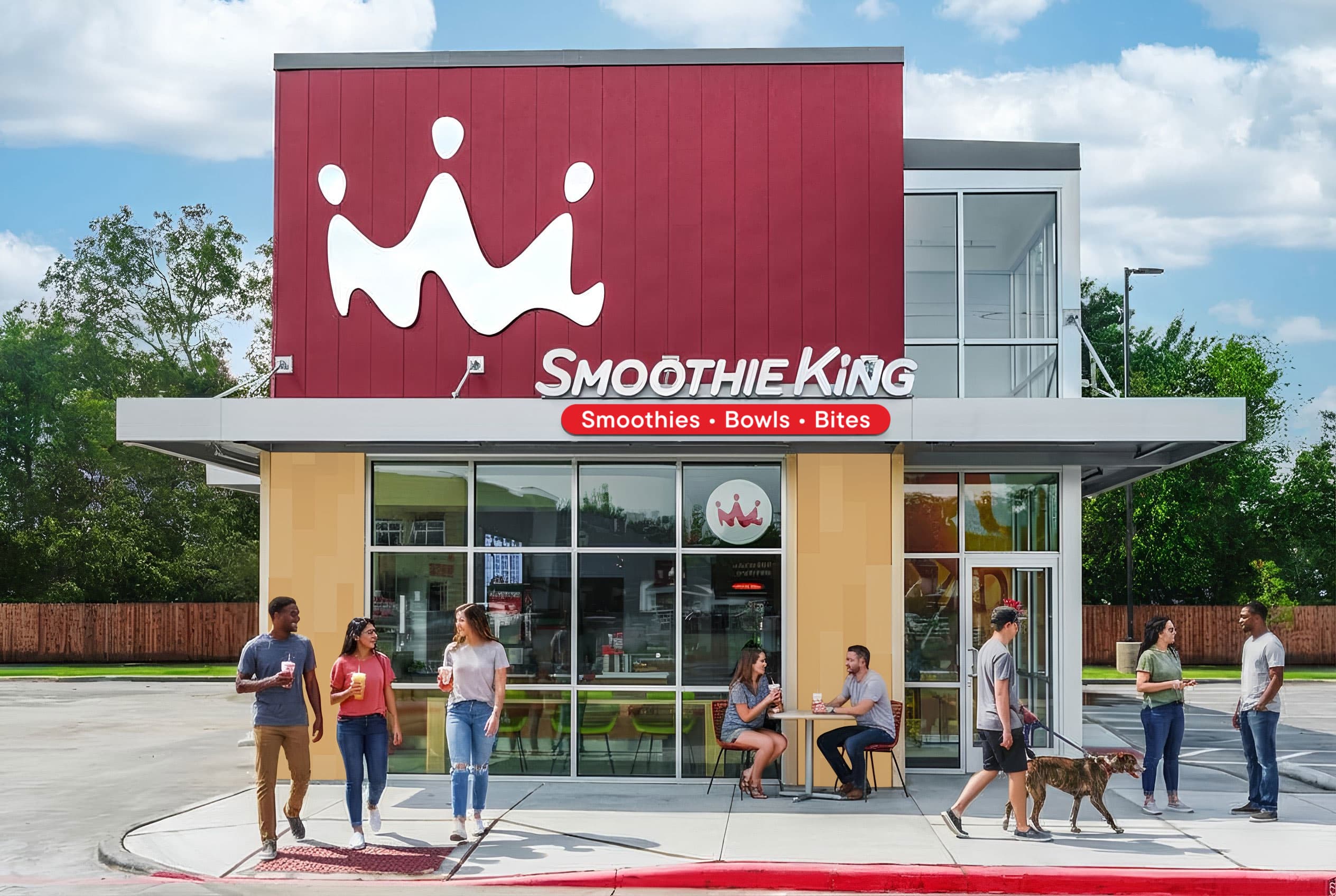
A rendering of Smoothie King’s new store design
Source: Smoothie King
Smoothie King is entering a new phase of growth, capitalizing on a powerful wave of health and wellness trends that are reshaping how consumers eat, drink, and spend. From increased focus on protein and fiber to growing skepticism around artificial ingredients, shifting consumer preferences are creating strong momentum for the smoothie giant’s expansion plans.
The privately held chain has delivered impressive performance in recent years, with system-wide sales climbing approximately 64% over the past five years. During the same period, its store footprint expanded by roughly 23%, bringing its total locations to more than 1,200 globally. Notably, over 96% of these outlets are franchise-operated, highlighting the strength of its asset-light, franchise-driven business model.
This growth trajectory has been consistent since Wan Kim acquired the company in 2012. Since then, Smoothie King has maintained double-digit compound annual growth in system sales, positioning itself as a leader in the fast-growing health-focused quick-service segment.
Financially, the company continues to show steady progress. In 2025, Smoothie King reported revenue of approximately $66 million, reflecting a 4% year-over-year increase. While net income dipped slightly by around 6% to $14.8 million, the broader growth story remains intact, supported by strong franchise performance and increasing consumer demand.
A major driver behind this momentum is the broader shift toward wellness-oriented consumption. Consumers today are more intentional about what they eat, with a heightened focus on nutritional value, ingredient transparency, and functional benefits. Protein intake, fiber content, and clean-label ingredients are now key decision factors, particularly among younger demographics.
The rapid adoption of GLP-1 weight-loss medications has further accelerated this trend. As more consumers prioritize nutrient-dense diets to complement these treatments, demand for smoothies and functional beverages has surged. Smoothie King’s menu, which emphasizes high-protein blends and whole-food ingredients, is well aligned with these evolving preferences.
The company was also an early mover in clean-label innovation. Its “Clean Blends Initiative,” completed in 2019, eliminated artificial flavors, preservatives, and synthetic colors from its products, while also removing genetically modified fruits. This proactive approach has given the brand a competitive edge as scrutiny of ultra-processed foods continues to grow among both consumers and regulators.
Looking ahead, Smoothie King is doubling down on expansion. Franchise partners have committed to opening more than 200 new locations in the coming years, with approximately 90 stores expected to launch in the current year alone. This aggressive rollout reflects strong confidence in the brand’s long-term demand and scalability.
At the same time, the company is investing in a refreshed in-store experience. A new store design—focused on warmth, accessibility, and a more inviting atmosphere—is being gradually introduced across locations. The redesign marks a shift away from the brand’s earlier, more utilitarian aesthetic, aiming to create a stronger emotional connection with customers.
Menu innovation is another key pillar of growth. While smoothies remain the core offering, Smoothie King is expanding deeper into food with new items such as flatbreads, alongside existing options like smoothie bowls, yogurt bowls, and nutrient-packed toasts. This diversification allows the brand to capture a larger share of customer spending and compete more directly with other health-focused dining concepts.
Despite broader economic pressures—including rising fuel costs and cautious consumer spending—Smoothie King has shown resilience. While some major restaurant chains have reported softer sales, the company believes its products fall into a category of “feel-good” purchases that consumers are less likely to cut, even when budgets tighten.
However, competition in the health and wellness space is intensifying. From fast-casual giants to niche health brands, more players are targeting consumers seeking nutritious, convenient options. To stay ahead, Smoothie King is placing greater emphasis on transparency, storytelling, and customer education—highlighting everything from ingredient sourcing to nutritional benefits.
The company also plans to amplify its brand narrative, focusing on its origins, product philosophy, and commitment to clean ingredients. This aligns with a broader industry shift where consumers increasingly expect brands to provide detailed information about what they are consuming and why it matters.
Overall, Smoothie King’s expansion strategy reflects a well-timed alignment with macro consumer trends. As health, wellness, and convenience continue to converge, the company is positioning itself not just as a beverage brand, but as a broader lifestyle and nutrition platform.
With strong franchise momentum, evolving menu offerings, and a clear focus on consumer preferences, Smoothie King appears well placed to sustain its growth trajectory in an increasingly competitive—and increasingly health-conscious—market.
.webp)
Popular articles



Subscribe to unlock premium content
The Billionaire’s Symphony

Flying Above the Rest

Travel Like the Stars

The Billionaire’s Symphony
Flying Above the Rest
The Billionaire’s Symphony