Singapore Posts Fastest Quarterly Growth Since 2021 as Manufacturing Surges

Singapore Posts Fastest Quarterly Growth Since 2021 as Manufacturing Surges
By
Calder Monroe
Last updated:
January 2, 2026
First Published:
January 2, 2026

.jpg)
Photo: Bloomberg.com
Manufacturing Drives a Standout Quarter
Singapore’s economy expanded 5.7% year on year in the fourth quarter, marking its strongest quarterly performance since 2021. The surge was overwhelmingly powered by a rebound in manufacturing, which offset weakness across several domestic-facing sectors.
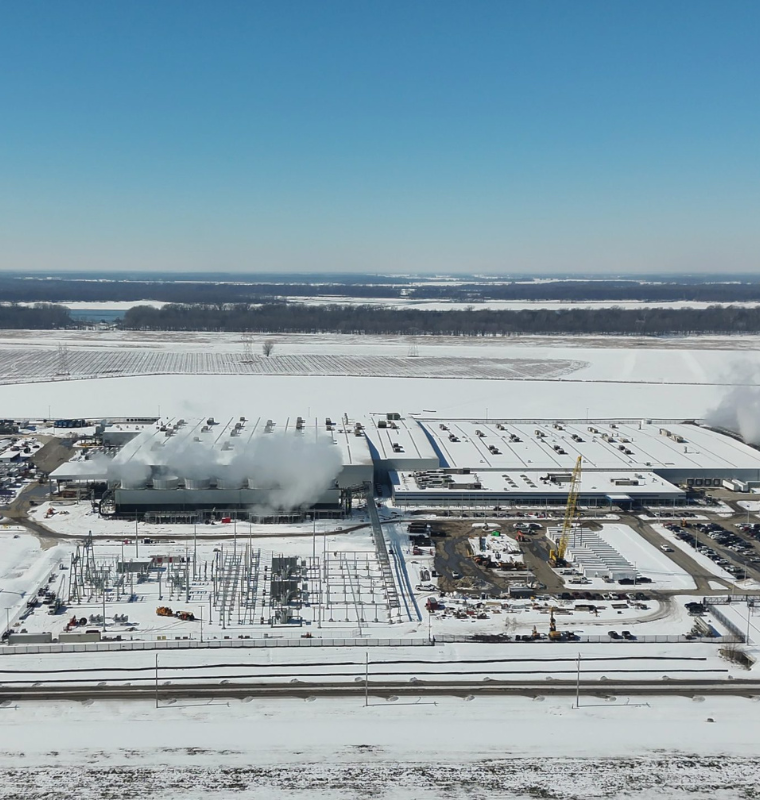
According to the Ministry of Trade and Industry (MTI), manufacturing output jumped 15% in Q4, a dramatic acceleration from 4.9% growth in the third quarter. This upswing was concentrated in high-value segments, particularly biomedical manufacturing and electronics, both of which benefited from improved global demand cycles and inventory restocking.
Manufacturing accounts for roughly 20% of Singapore’s GDP, making it a critical engine of growth when global conditions turn favorable.
Other Sectors Lag Behind
While manufacturing delivered strong momentum, the broader economy remained uneven. Construction and large parts of the services sector contracted during the quarter, highlighting persistent cost pressures, labor constraints, and softer domestic demand.
This divergence underscores Singapore’s reliance on external trade and industrial output to drive headline growth, especially when global demand conditions are supportive.
Full-Year Growth Beats Forecasts
The stronger fourth-quarter performance lifted full-year GDP growth to 4.8%, significantly exceeding MTI’s revised forecast of “around 4%” issued in November. The previous quarter’s growth was revised to 4.3%, further reinforcing the momentum heading into year-end.
Prime Minister Lawrence Wong, in his New Year’s address, described the outcome as better than expected, while cautioning that maintaining this pace would be difficult amid rising global uncertainties.
Outlook Turns More Cautious for 2026
Looking ahead, MTI has projected GDP growth of 1% to 3% in 2026, signaling a return to more moderate expansion. Economists largely share this cautious outlook.
Selena Ling, Chief Economist and Head of Group Research and Strategy at OCBC, said Singapore’s latest performance demonstrated economic resilience, supported by diversified strengths across manufacturing, services, and construction. However, she expects growth to ease to around 2% in 2026, with manufacturing growth slowing to approximately 2.2% year on year due to a high base effect following the strong 2025 rebound.
Trade Risks Remain a Key Threat
Singapore’s growth outlook remains closely tied to global trade conditions. The government has repeatedly warned that external risks are rising, particularly following new U.S. trade measures introduced under President Donald Trump’s administration.
Despite a long-standing free trade agreement with the United States dating back to 2004, Singapore was still subjected to a 10% baseline tariff under the new regime. Wong previously criticized the move, stating that such actions were “not what one does to a friend.”
The exposure is significant. Singapore’s trade-to-GDP ratio exceeded 320% in 2024, one of the highest in the world, making the economy highly sensitive to tariffs, supply chain disruptions, and shifts in global demand.
Policy Response and Economic Resilience
Anticipating potential headwinds, Singapore had earlier warned that zero growth was a possible scenario and eased monetary policy twice in 2025 to cushion against a slowdown. These proactive measures, combined with the manufacturing rebound, helped stabilize growth during a volatile global period.
While the fourth-quarter results highlight Singapore’s ability to capitalize on global industrial upcycles, policymakers and economists agree that future growth will likely be slower, more uneven, and increasingly dependent on external conditions rather than broad-based domestic expansion.
.webp)
Popular articles



Subscribe to unlock premium content
Vertical Luxury
Artisan Indulgence in the Heart of New York

Artisan Indulgence in the Heart of New York
Vertical Luxury
Artisan Indulgence in the Heart of New York
Vertical Luxury