Arm Stock Ticks Up After Nvidia Fully Exits Its Position

Arm Stock Ticks Up After Nvidia Fully Exits Its Position
By
Rachel Steinberg
Last updated:
February 19, 2026
First Published:
April 25, 2026

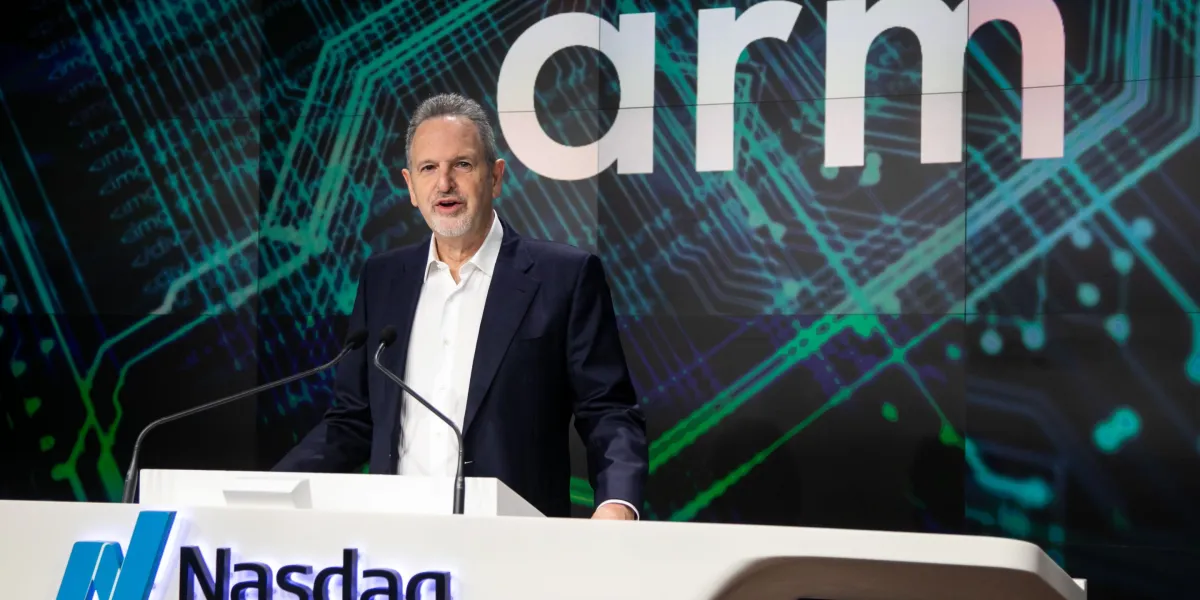
Getty Images
Shares of Arm moved modestly higher after new regulatory filings revealed that Nvidia has sold its entire equity stake in the British chip designer. The move marks the end of a strategic investment that dates back to Arm’s public debut, though the two companies continue to collaborate closely through licensing agreements and technology partnerships.
Market Reaction to the Divestment
Arm’s New York-listed shares rose just over 1% following the disclosure, reflecting a measured response from investors who largely view the sale as a portfolio adjustment rather than a shift in industry dynamics. Nvidia had previously disclosed ownership of about 1.1 million Arm shares valued at roughly $156 million at the end of the third quarter, meaning the position was relatively small compared with Nvidia’s broader balance sheet.
Analysts note that the market often interprets such exits as routine capital reallocation, especially as Nvidia’s market value has expanded dramatically amid surging demand for AI infrastructure.
A Relationship That Began With a Failed Acquisition
Nvidia’s involvement with Arm traces back to its high-profile attempt to acquire the company from SoftBank for $40 billion in 2020. The deal ultimately collapsed in 2022 after intense regulatory scrutiny in the U.S., U.K., and Europe, with authorities citing competition concerns across the semiconductor ecosystem.
When Arm later listed on the Nasdaq in 2023, Nvidia joined a group of cornerstone investors that collectively purchased roughly $735 million in shares. Other strategic backers included Apple, Google, Samsung, and TSMC, underscoring Arm’s central role in the global chip supply chain.
Strategic Ties Remain Strong
Despite exiting its equity position, Nvidia continues to rely heavily on Arm’s architecture. The companies maintain a long-term licensing agreement that extends for decades, and Nvidia’s data-center-focused Grace CPUs are built on Arm’s designs. Nvidia CEO Jensen Huang has previously emphasized that Arm technology remains foundational to the company’s roadmap.
Industry observers say this highlights a broader reality: ownership stakes may change, but technological interdependence in semiconductors often persists for years.
Arm’s Growth Story and AI Momentum
Arm has been benefiting from rising demand for energy-efficient chip architectures, particularly as AI workloads expand beyond traditional data centers into edge devices and smartphones. The company recently reported quarterly revenue of about $1.24 billion, representing roughly 26% year-over-year growth and beating consensus forecasts.
Research from Morgan Stanley pointed to strong AI-related project activity and sustained operating expense growth, suggesting Arm is investing aggressively to capture long-term opportunities. The firm maintains an overweight rating with a price target implying modest upside from recent trading levels.
Arm’s ecosystem includes major customers such as Meta, Microsoft, and Amazon, all of which rely on Arm-based chips across cloud and consumer hardware.
Nvidia’s Broader Investment Portfolio
While exiting Arm, Nvidia remains an active strategic investor across the tech landscape. Regulatory filings show positions in companies including CoreWeave, Intel, Nebius, Nokia, and Synopsys, reflecting a diversified approach to capturing growth across AI infrastructure, networking, and chip design tools.
What It Means for Investors
For Arm shareholders, Nvidia’s exit removes a symbolic link to a potential future acquisition but does little to alter the company’s fundamental outlook. Demand for Arm-based architectures continues to expand across mobile devices, automotive systems, and AI servers, supporting long-term growth expectations.
For Nvidia, the divestment appears to be a capital allocation decision rather than a strategic pivot. The company remains deeply integrated with Arm’s technology stack and continues to benefit from the broader shift toward energy-efficient, AI-optimized computing.
In short, while the equity relationship has ended, the technological partnership that underpins much of the modern semiconductor ecosystem remains firmly in place.
.webp)
Popular articles



Subscribe to unlock premium content
Remote Himalayan Villages Transforming Ancient Traditions into Lucrative Wellness Ventures

Gilded Holidays in Fashion

Frozen Frontiers of Luxury

Remote Himalayan Villages Transforming Ancient Traditions into Lucrative Wellness Ventures
Gilded Holidays in Fashion
Remote Himalayan Villages Transforming Ancient Traditions into Lucrative Wellness Ventures