San Jose Mayor Breaks With Party Line to Oppose California Billionaire Wealth Tax

San Jose Mayor Breaks With Party Line to Oppose California Billionaire Wealth Tax
By
David Goldfarb
Last updated:
January 6, 2026
First Published:
April 25, 2026

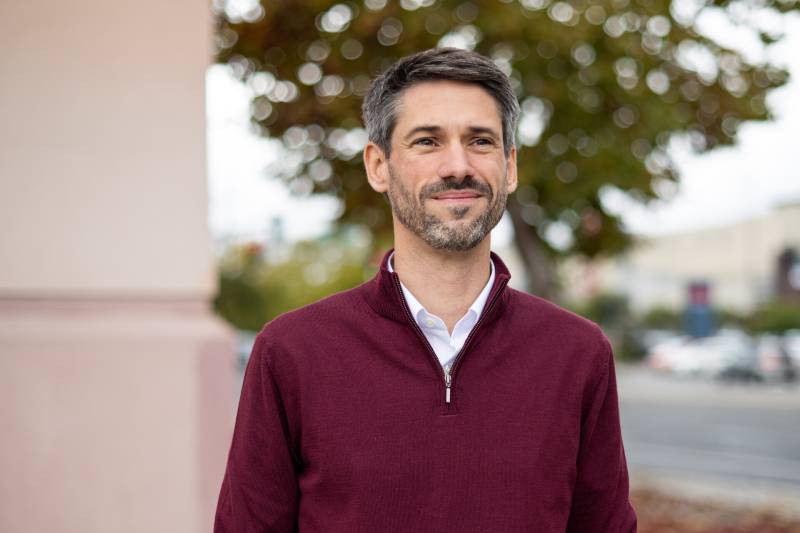
Photo: KQED
A High-Profile Democratic Dissent
Matt Mahan, the Democratic mayor of San Jose, California, has publicly opposed a proposed statewide ballot initiative that would impose a one-time 5 percent tax on the net worth of billionaires residing in the state. The measure, which could appear on the 2026 ballot, has become one of the most polarizing economic proposals in California politics, particularly within Silicon Valley.
Mahan, who assumed office in 2023, leads Silicon Valley’s largest city, home to just under one million residents and a dense concentration of technology companies, startups, and venture capital firms. His opposition places him at odds with some national Democratic figures and labor groups backing the proposal.
Concerns Over Economic Impact
In a series of public statements, Mahan argued that while income inequality remains a serious issue, the proposed tax risks harming the broader California economy. He warned that targeting billionaires could backfire by reducing investment, job creation, and long-term tax revenue.
According to Mahan, the initiative could trigger an exodus of high-net-worth individuals and entrepreneurs, ultimately shifting the tax burden onto middle- and working-class families. He emphasized that California’s economic strength depends on a thriving innovation ecosystem that generates sustained growth rather than short-term revenue fixes.
San Jose, the third-largest city in California after Los Angeles and San Diego, plays a central role in the state’s tech-driven economy, making the mayor’s stance especially influential.
A Flashpoint for Silicon Valley Politics
The proposed tax has also put Democratic Representative Ro Khanna, whose district includes much of Silicon Valley, under intense scrutiny. Khanna supports the measure and has framed it as a way to address widening inequality and fund essential public services, including health care.
However, several prominent technology investors and executives who once supported Khanna have voiced strong opposition. Some have openly discussed backing a primary challenger, arguing that the proposal undermines California’s competitiveness.
Billionaire investor Vinod Khosla has warned that even the prospect of such a tax is enough to prompt wealthy residents to plan relocations, citing concerns that similar measures could follow in the future. Venture capitalist David Sacks has gone further, predicting that cities like Austin could eventually replace San Francisco as the center of the U.S. tech industry.
Reports have also surfaced that high-profile figures such as Peter Thiel and Google co-founder Larry Page have considered leaving California, highlighting the broader anxiety within the tech sector.
Details of the 2026 Billionaire Tax Act
The proposal, known as the 2026 Billionaire Tax Act, is being promoted by the Service Employees International Union–United Healthcare Workers West. The measure would impose a one-time 5 percent levy on the assets of California residents with a net worth exceeding $1 billion.
If approved by voters, the tax would be retroactive to January 1, 2026. Supporters estimate it could raise as much as $100 billion through 2031 by taxing roughly 200 of the wealthiest individuals in the state. Those funds are intended to address projected shortfalls in California’s health care budget.
Before reaching the ballot, the initiative must collect approximately 875,000 valid signatures from registered voters. California’s population stood at more than 39 million at the start of 2025, underscoring the scale of the political effort required.
The Unrealized Gains Debate
One of the most contentious aspects of the proposal is that it would apply to unrealized gains. This means individuals whose wealth is largely tied up in private company shares or illiquid startup equity could face massive tax bills without having sold assets or generated cash.
Tech founders argue this structure is particularly punitive in Silicon Valley, where paper valuations can exceed $1 billion long before a company becomes profitable or goes public. Critics say it could discourage entrepreneurship and early-stage innovation.
Mayor Mahan echoed these concerns, noting that driving billionaires out of California may generate political applause but could reduce the overall tax base and hurt families who rely on public services funded by long-term economic growth.
Calls for Alternative Solutions
While opposing the billionaire tax, Mahan emphasized that addressing inequality remains a priority. He pointed instead to federal reforms, such as closing loopholes that allow wealthy individuals to avoid taxes on certain capital gains.
A spokesperson for Rep. Khanna has said the congressman supports a modest wealth tax but also favors practical exemptions or workarounds for startup founders with illiquid assets, attempting to balance inequality concerns with innovation incentives.
A Defining Test for California’s Economy
The billionaire tax debate has become a broader referendum on California’s economic model. Supporters see it as a bold step to fund essential services and confront inequality. Opponents warn it risks accelerating capital flight and weakening the state’s position as a global technology leader.
With Silicon Valley at the center of the discussion and influential Democrats divided, the outcome of the 2026 ballot initiative could reshape California’s fiscal strategy and redefine its relationship with the technology sector for years to come.
.webp)
Popular articles



Subscribe to unlock premium content
Redefining Luxury Through Experience
.png)
The Rise of Bespoke Adventure on Wheels

Nike’s Custom Sneaker Studios Are Rewriting Urban Culture
.png)
Redefining Luxury Through Experience
The Rise of Bespoke Adventure on Wheels
Redefining Luxury Through Experience