Robinhood Expands Prediction Markets With NFL Parlays and Real Time Player Props

Robinhood Expands Prediction Markets With NFL Parlays and Real Time Player Props
By
David Goldfarb
Last updated:
December 17, 2025
First Published:
December 17, 2025

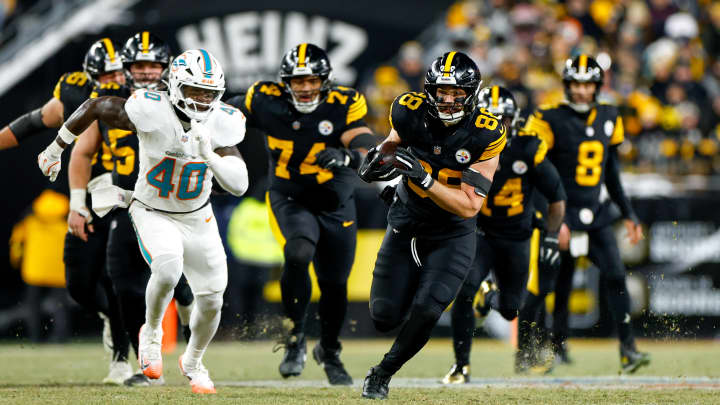
Pat Freiermuth #88 of the Pittsburgh Steelers runs the ball during the fourth quarter of the NFL 2025 game against the Miami Dolphins at Acrisure Stadium on Dec. 15, 2025 in Pittsburgh, Pennsylvania.
Lauren Leigh Bacho | Getty Images
Big Expansion for Robinhood’s Fastest Growing Business
Robinhood is significantly upgrading its prediction markets platform by rolling out NFL focused parlay style bets and real time player propositions, a move that places the brokerage in more direct competition with traditional sports betting platforms while staying within its event trading framework.
The company announced the new capabilities on Tuesday, positioning prediction markets as a core growth engine. Users can now trade preset combinations tied to NFL game outcomes, point spreads, and totals. These products closely resemble parlays, allowing traders to bundle multiple predictions into a single contract with higher potential payouts.
According to Robinhood executives, this is only the beginning of a broader push to turn prediction markets into a multi category trading ecosystem.
From Single Outcomes to Multi Game Combos
At launch, users can trade prebuilt NFL combinations that bundle outcomes from individual games. Looking ahead, Robinhood plans to introduce fully customizable combos in early 2026, enabling users to combine up to 10 outcomes across multiple NFL games into a single trade.
JB Mackenzie, Robinhood’s vice president and general manager of futures and international, described the upcoming feature as having the “look and feel of a traditional parlay,” while still operating within the structure of prediction markets rather than sportsbook wagering.
This capability brings a level of complexity and flexibility that appeals to more advanced users while remaining accessible to casual participants.
Real Time NFL Player Prop Trading
Beyond game outcomes, Robinhood is also introducing real time player based contracts. Users can now trade on individual player performance during live games, including whether a player will score a touchdown or exceed certain passing, rushing, or receiving yard thresholds.
These in game propositions mirror some of the most popular offerings in sports betting but are presented as tradable contracts rather than fixed wagers. The real time element allows users to react to momentum shifts, injuries, and game flow as events unfold.
Robinhood says this feature was built in response to strong user demand for more dynamic and interactive event based trading products.
A Platform Built for More Than Sports
While the NFL rollout is the headline feature, Robinhood has made it clear that parlays and multi outcome combos are not limited to sports. The company is actively exploring combinations that span different event categories, including economic indicators, policy decisions, and global political developments.
Mackenzie noted that future products could allow users to pair outcomes from unrelated domains, such as climate events and elections, or domestic and international economic data releases. This cross category approach could differentiate Robinhood from traditional sportsbooks and pure play prediction market operators.
All major professional sports leagues are under consideration for future expansion, alongside non sports events that appeal to macro focused traders.
Rapid Growth and Rising Revenue
Robinhood’s prediction markets business has grown at a striking pace. The segment is already generating approximately $100 million in annualized revenue, supported by more than 11 billion contracts traded by over 1 million users.
Based on internal figures from October, the business is on track to reach a $300 million annual revenue run rate. November marked the strongest month on record, with more than 3 billion contracts traded, representing a roughly 20 percent increase from October.
To put that growth into context, October saw 2.5 billion contracts traded, while the entire third quarter totaled 2.3 billion contracts. The acceleration highlights both increasing user engagement and expanding event coverage.
Strategic Partnerships Powering Expansion
Robinhood’s entry into prediction markets began ahead of the 2024 U.S. presidential election, when users were able to trade contracts tied to candidates such as Kamala Harris and Donald Trump. That initiative was launched through a partnership with ForecastEx.
Since then, the company has rapidly expanded its footprint. In 2025, Robinhood partnered with prediction market operator Kalshi and later announced a joint venture with Susquehanna International Group, further strengthening liquidity, infrastructure, and regulatory positioning.
These partnerships have helped Robinhood scale quickly while maintaining compliance in a closely scrutinized space.
Analysts See a Long Term Growth Engine
Wall Street analysts have increasingly pointed to prediction markets as a major driver of Robinhood’s stock performance. Piper Sandler has called the segment a significant growth opportunity, while Mizuho analyst Dan Dolev highlighted unusually strong user interest.
In surveys conducted by Mizuho, Robinhood and Coinbase users were found to be roughly nine times more likely than non users to participate in prediction markets. Dolev argues that Robinhood is building a natural hub for event based trading by targeting a user base already inclined toward speculative and interactive financial products.
Prediction markets have been a key factor behind Robinhood shares surging roughly 220 percent in 2025, according to Dolev.
Building the “Gen Z Schwab”
Despite the excitement around prediction markets, analysts emphasize that the business is only one part of Robinhood’s broader strategy. The company continues to expand into retirement accounts, advisory services, and premium offerings such as its gold card.
At the end of 2024, Robinhood reported $193 billion in assets under custody. While that figure is small compared to Charles Schwab’s $10.10 trillion in total client assets, analysts believe Robinhood is positioning itself as a full spectrum financial platform for younger investors.
KeyBanc Capital Markets analyst Alex Markgraff noted that several of Robinhood’s newer initiatives are still in the early stages of scaling, suggesting multiple growth levers beyond prediction markets alone.
As Robinhood blends trading, investing, event speculation, and long term financial tools, its latest NFL focused rollout underscores a broader ambition to sit at the center of the next generation’s financial life.

Popular articles


Subscribe to unlock premium content
Haute Power in the Boardroom

Tapping Into Seasonal Markets for Global Growth

The Secret Billion-Dollar Market of Corporate Carbon Credit Trading

Haute Power in the Boardroom
Tapping Into Seasonal Markets for Global Growth
Haute Power in the Boardroom
.png)