Rising Gas Prices Are Slamming Restaurant Traffic as Consumers Pull Back on Dining

Rising Gas Prices Are Slamming Restaurant Traffic as Consumers Pull Back on Dining
By
Leah Rosenfeld
Last updated:
May 12, 2026
First Published:
May 12, 2026

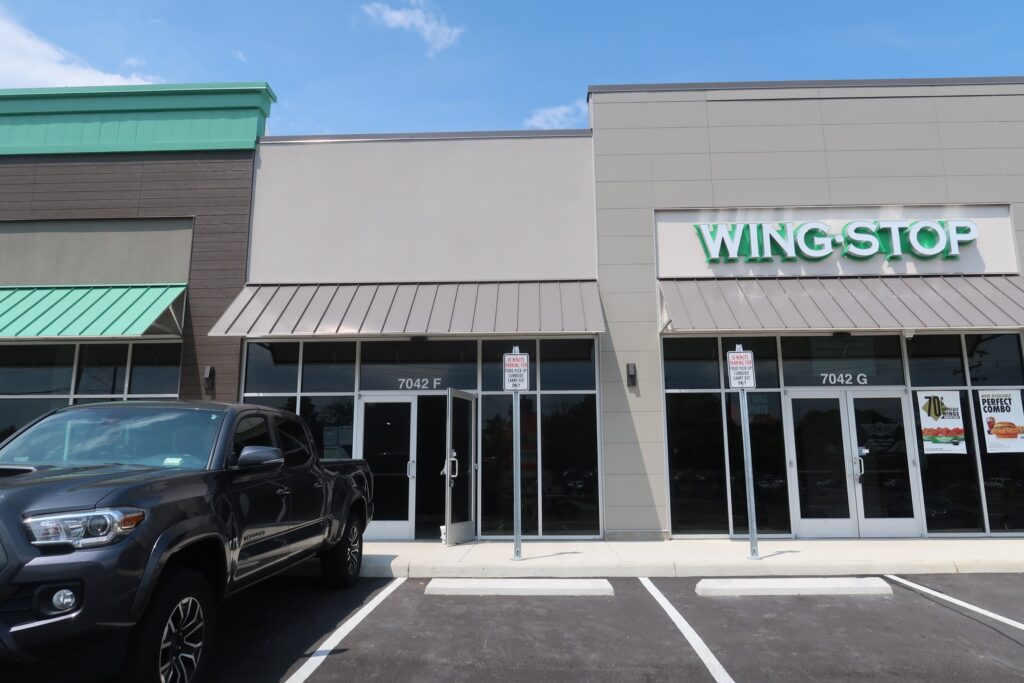
America’s restaurant industry is beginning to feel the financial shockwaves from surging gasoline prices, as rising fuel costs pressure household budgets and force millions of consumers to rethink discretionary spending.
From casual dining brands to fast-food giants, restaurant chains across the United States are reporting softer customer traffic and weaker sales trends as Americans spend more at the pump and less on eating out.
The latest spike in fuel prices follows escalating geopolitical tensions involving Iran and disruptions in global energy markets, which pushed the national average gasoline price above $4.50 per gallon in recent months. For many lower- and middle-income households already struggling with inflation, higher fuel costs are rapidly changing spending habits.
Industry executives say the shift became especially noticeable during March and April, when restaurant traffic began slowing after a relatively stronger start to the year.
According to restaurant analytics firm Black Box Intelligence, customer traffic across the U.S. restaurant industry fell 2.3% in March compared with the same period a year earlier.
At the same time, consumer confidence weakened sharply as rising costs for gasoline, groceries, rent, insurance, and utilities continued weighing on household finances.
A survey conducted by Numerator found that 43% of drivers said they had reduced spending on dining out or takeout after fuel prices started climbing.
Restaurant chains serving more price-sensitive customers appear to be under the greatest pressure.
Dine Brands Global, the parent company of Applebee's and IHOP, said customer spending softened noticeably during the later part of the quarter as fuel costs rose.
CEO John Peyton said value-focused consumers began dining out less frequently and increasingly shifted toward cheaper alternatives or stayed home entirely.
“We know that when gas prices start to go past $3.50, that affects that guest for us,” Peyton said.
To respond, Applebee’s is expanding aggressive value promotions aimed at budget-conscious diners. The company recently accelerated the rollout of its all-you-can-eat meal deals, offering unlimited shrimp, boneless wings, riblets, and fries for under $16 as chains battle for shrinking consumer spending.
The restaurant industry is increasingly leaning on discounts, bundled meals, loyalty rewards, and limited-time promotions to keep traffic from deteriorating further.
However, the impact of higher fuel prices has not been uniform across the sector.
Some chains have managed to outperform despite the difficult environment, while others are using the slowdown as an opportunity to gain market share from weaker competitors.
Chipotle Mexican Grill surprised investors by reporting stronger-than-expected same-store sales growth during the first quarter, even though executives acknowledged temporary softness toward the end of March.
Company executives said traffic improved again after the initial slowdown tied to geopolitical headlines and rising gasoline prices.
Similarly, Shake Shack reported relatively stable customer demand throughout the quarter, with only modest signs of weakening in late March.
Other restaurant groups, including Bloomin' Brands, Wendy's, and Sweetgreen, also said sales trends improved sequentially during parts of the quarter, helped partly by easing winter weather disruptions.
Still, even companies showing sales improvement reported ongoing declines in customer traffic overall, highlighting how widespread the pressure on discretionary spending has become.
The financial strain is particularly severe among lower-income consumers, many of whom were already under pressure from years of inflation.
Executives across the restaurant sector say rising fuel prices are now acting as an additional tax on consumer behavior.
McDonald's CEO Chris Kempczinski said elevated gasoline costs are disproportionately impacting low-income customers, forcing many households to cut back on nonessential spending.
“Gas prices and inflation are clearly impacting consumers,” Kempczinski said, adding that the pressure is expected to continue in the coming months.
Despite those challenges, McDonald’s still delivered same-store sales growth of 3.7% during the quarter, helped by strong demand for value meals alongside premium menu offerings.
The company has increasingly adopted what analysts describe as a “barbell strategy” — balancing deeply discounted value promotions for cost-conscious consumers while simultaneously targeting higher-income diners willing to spend more on premium products.
That strategy is becoming increasingly common throughout the fast-food industry.
Restaurant operators are discovering that consumers are becoming far more selective with spending, but many are still willing to dine out if they perceive strong value.
Some chains are even benefiting from the broader industry slowdown.
Brinker International, the parent company of Chili's, said it has been gaining market share even as the overall casual dining industry slows.
CEO Kevin Hochman said customers have become more cautious with spending, often skipping alcoholic drinks, appetizers, or desserts. However, he believes stronger brands with compelling value propositions will emerge from the slowdown in a stronger competitive position.
“The strong players are going to get stronger,” Hochman said.
Industry analysts increasingly agree that the restaurant sector is entering a period of widening separation between winners and losers.
Chains with strong loyalty programs, operational efficiency, aggressive pricing strategies, and recognizable brands appear far better positioned to withstand economic pressure than weaker competitors struggling with declining traffic and rising labor costs.
Restaurant Brands International CEO Josh Kobza described the current environment as one where the “dispersion in outcomes” between restaurant brands is becoming increasingly noticeable.
The company’s Burger King chain posted U.S. same-store sales growth of 5.8%, outperforming several major rivals during the quarter.
Kobza said the strongest restaurant concepts are being driven more by execution, branding, and value positioning than by broader economic conditions alone.
Meanwhile, industry-wide concerns continue growing around the possibility of sustained high energy prices.
Oil markets remain volatile amid geopolitical tensions in the Middle East, with analysts warning that any prolonged disruption to global crude supplies could push gasoline prices even higher heading into peak summer travel season.
That could create additional pressure on consumer-facing industries already navigating slower discretionary spending.
Restaurants are especially vulnerable because dining out is often among the first expenses consumers cut when budgets tighten.
The industry is also facing rising labor costs, elevated food prices, higher delivery expenses, and increased competition for customer loyalty. Chains operating with weaker margins or limited pricing flexibility may struggle if economic conditions worsen further.
At the same time, consumer behavior is clearly evolving rather than collapsing entirely.
Many Americans are not eliminating restaurant visits altogether — they are trading down, visiting less frequently, ordering fewer add-ons, or choosing brands perceived as offering stronger value.
That shift is reshaping competitive dynamics across the entire restaurant landscape.
As fuel costs continue influencing household budgets, analysts say the next several quarters could determine which restaurant brands are strong enough to adapt to a more cautious and value-focused consumer environment.
.webp)
Popular articles



Subscribe to unlock premium content
Crypto in the Arctic
Iceland’s Seaweed Revolution

Private Island Rentals for Corporate Retreats Hit $1 Billion

Crypto in the Arctic
Iceland’s Seaweed Revolution
Crypto in the Arctic