
Congress Pushes National Park Overhaul Ahead of America’s 250th Birthday as Funding Fight Intensifies

Congress Pushes National Park Overhaul Ahead of America’s 250th Birthday as Funding Fight Intensifies
By
Leah Rosenfeld
Last updated:
May 12, 2026
First Published:
May 12, 2026

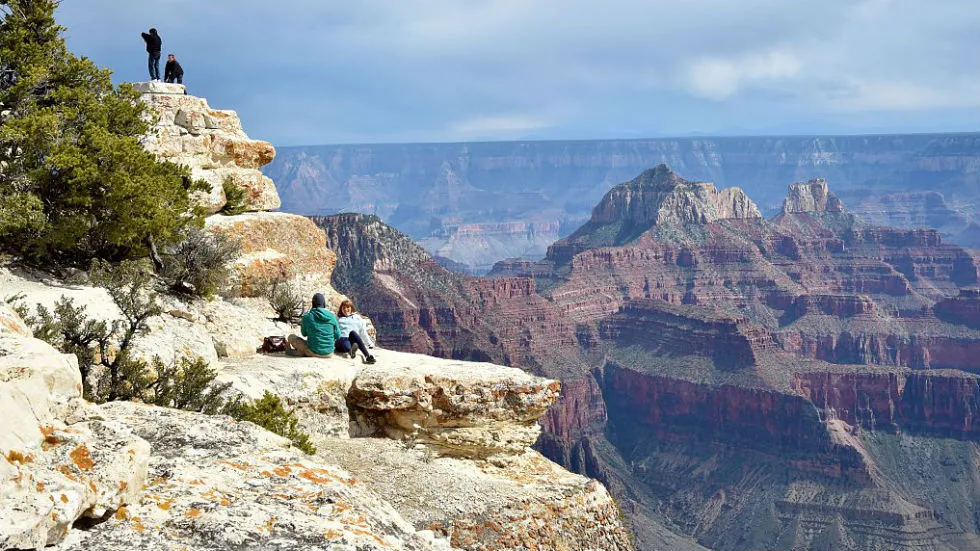
Photo: The Hill
America’s aging national parks are heading toward one of the largest restoration efforts in decades as lawmakers race to modernize roads, trails, bridges, campgrounds, and historic landmarks ahead of the nation’s 250th anniversary celebrations. But while support for rebuilding the park system remains overwhelmingly bipartisan, the battle over how to fund the multibillion-dollar effort is becoming increasingly contentious.
Members of Congress are now debating a successor to the landmark Great American Outdoors Act, the bipartisan legislation signed during the first administration of Donald Trump that aimed to reduce the National Park Service’s massive maintenance backlog.
Although the original law directed billions toward repairs and conservation projects, lawmakers say the backlog has continued to grow as infrastructure across the park system ages rapidly and visitor numbers continue climbing.
Today, the National Park Service faces deferred maintenance costs estimated at well over $23 billion, according to recent government and conservation group estimates. The backlog includes deteriorating roads, aging water systems, damaged visitor centers, unsafe bridges, outdated campgrounds, and historic structures requiring urgent restoration.
Congress now wants to accelerate improvements before nationwide celebrations tied to America’s 250th birthday, but Republicans and Democrats remain divided over how the federal government should pay for it.
Republican lawmakers are exploring several new revenue sources, including tolls on federally operated roads around Washington and additional entrance surcharges for international visitors at America’s most popular national parks.
Representative Bruce Westerman, chairman of the House Committee on Natural Resources, has proposed creating a “Next 250 Fund” to finance long-term park restoration and modernization efforts.
Westerman argues that tolling certain federally maintained roadways could provide a stable stream of funding while easing pressure on the federal budget.
“If we could find a way to use tolls on federal roads, that’s one way you could fund it,” he said.
The proposal has quickly become one of the most controversial elements of the debate.
Many of the roads being discussed are heavily used commuter corridors around the nation’s capital, including routes connected to the Capital Beltway and the George Washington Memorial Parkway. Tens of thousands of drivers rely on those roads every day, and local lawmakers say imposing tolls would likely face intense public backlash.
Representative Jared Huffman, the top Democrat on the Natural Resources Committee, called the toll proposal politically unworkable.
“All the colleagues I’ve talked to that represent those areas say it’s a nonstarter,” Huffman said, warning that the idea could become a “poison pill” that derails broader bipartisan negotiations.
Democrats argue the federal government already has a responsibility to maintain national parks and should not require additional fees or politically sensitive offsets to fulfill that obligation.
Huffman described the maintenance backlog as a debt that already exists, saying lawmakers should focus on funding repairs directly rather than searching for controversial new revenue mechanisms.
The debate comes at a complicated moment for the National Park Service itself.
Trump’s proposed 2027 federal budget includes major cuts to the agency, reducing the National Park Service’s overall funding by roughly 34% and slashing construction-related spending by more than 70% compared with 2025 levels.
Those proposed cuts follow substantial workforce reductions within the agency after staffing levels reportedly fell by nearly one-quarter in 2025, according to conservation groups tracking federal employment data.
Despite those cuts, the White House has continued supporting the idea of restoring the Legacy Restoration Fund, the central funding mechanism behind the original Great American Outdoors Act.
The administration has also endorsed additional fees for foreign tourists visiting major national parks.
Officials estimate international visitor surcharges could generate hundreds of millions of dollars in new funding over time. The National Park Service has already implemented a $100 daily surcharge for non-U.S. residents visiting certain high-demand parks, and the administration wants Congress to formally codify the policy.
Supporters argue that international tourism fees are common around the world and could help reduce pressure on American taxpayers while funding park upgrades.
However, critics warn that rising fees could discourage tourism at a time when international travel demand to the United States is already facing pressure.
Recent congressional research showed international arrivals declined nearly 6% during Trump’s return to office amid growing geopolitical tensions, stricter visa scrutiny, and global economic uncertainty.
While House Republicans debate new funding ideas, the Senate is taking a different approach.
The Senate version of the legislation, known as the “America the Beautiful Act,” avoids proposals involving road tolls and instead seeks to revive the same funding structure used under the original Great American Outdoors Act.
That framework channels oil and gas royalty revenue from federal energy development into a dedicated restoration fund used for park maintenance and infrastructure repairs.
The Senate bill, backed by lawmakers including Senator Steve Daines and Senator Angus King, has already attracted support from more than 50 senators, highlighting the unusually bipartisan nature of national park legislation.
Beyond politics, the debate carries enormous economic significance for the outdoor recreation industry.
America’s outdoor economy has become a massive commercial force tied directly to tourism, retail, apparel, sporting goods, transportation, hospitality, and wellness industries.
According to the Outdoor Recreation Roundtable, outdoor recreation now contributes roughly $1.2 trillion annually to the U.S. economy and supports approximately 5 million American jobs. Recreation activities on federal lands and waterways alone generate an estimated $351 million in economic activity every single day.
That economic impact explains why major retailers and outdoor brands are aggressively supporting new park funding.
Companies such as REI, Patagonia, Walmart, Target, Lululemon, Abercrombie & Fitch, and VF Corporation all benefit from growing interest in outdoor travel, hiking, camping, and recreational activities.
For retailers, well-maintained parks translate directly into stronger demand for outdoor gear, apparel, footwear, camping equipment, bicycles, hydration products, backpacks, and sporting goods.
Neil Saunders, managing director at GlobalData, said national parks represent one of the rare issues that brands can publicly support without significant political risk.
“Most Americans see national parks as a national asset,” Saunders explained, noting that support for conservation also aligns naturally with consumer interest in sustainability, wellness, and outdoor lifestyles.
The broader wellness economy has become another major driver behind the push for investment.
Consumer interest in physical health, mental wellness, and outdoor experiences accelerated dramatically during the Covid-19 pandemic and remains elevated years later. National parks experienced record-breaking visitor traffic during and after the pandemic as millions of Americans turned to hiking, camping, and outdoor travel.
In 2025 alone, U.S. national parks recorded hundreds of millions of recreational visits, continuing a trend of sustained high demand despite broader economic slowdowns.
At the same time, outdoor retail sales have cooled after the pandemic-era boom, largely because consumers already purchased large amounts of equipment during lockdown years and discretionary spending has weakened amid inflation pressures.
Industry analysts believe a major national park modernization campaign tied to America’s 250th anniversary could help revive demand across the outdoor economy by encouraging new tourism campaigns, outdoor events, and recreation spending.
Saunders said fresh government investment could provide retailers with an important economic boost at a time when consumer spending remains uneven.
“The market’s been a little sluggish,” he said. “Retailers see this as a nice boost at the right time.”
As negotiations continue in Congress, lawmakers face a balancing act between fiscal concerns, political realities, public access, and long-term economic opportunity.
What remains clear is that America’s national parks are no longer just conservation projects — they are increasingly viewed as major economic assets tied to tourism growth, consumer spending, national identity, and the future of the outdoor recreation industry.
.webp)
Popular articles



Subscribe to unlock premium content
Crypto in the Arctic
Iceland’s Seaweed Revolution
Private Island Rentals for Corporate Retreats Hit $1 Billion

Crypto in the Arctic
Iceland’s Seaweed Revolution
Crypto in the Arctic


