Prosecutors Say Former South Korean President Sought North Korea Tensions to Defend Martial Law

Prosecutors Say Former South Korean President Sought North Korea Tensions to Defend Martial Law
By
David Goldfarb
Last updated:
December 16, 2025
First Published:
December 16, 2025

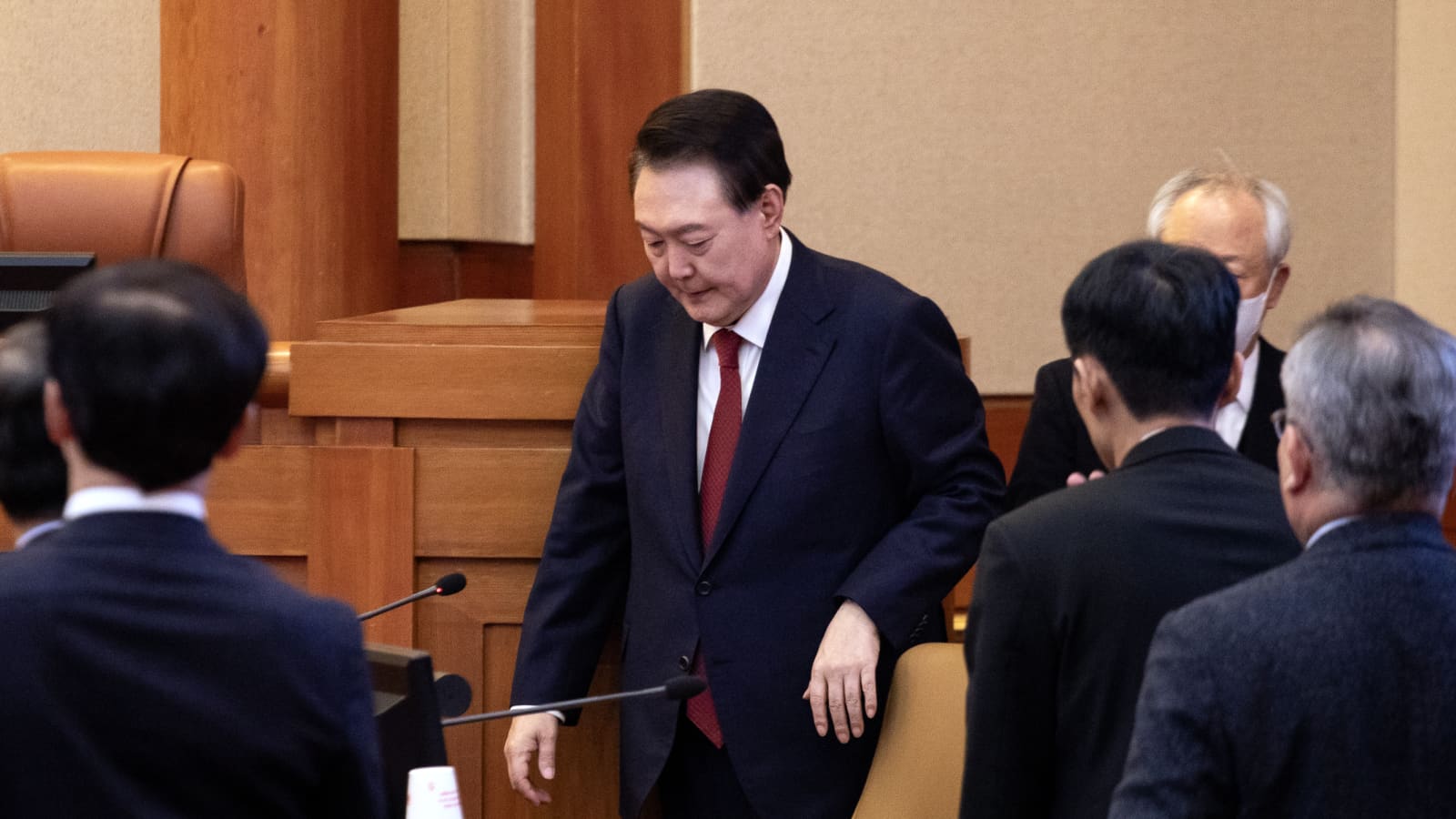
Yoon Suk Yeol, South Korea’s president, arrives for a hearing at the Constitutional Court of Korea in Seoul, South Korea, on Tuesday, Jan. 21, 2025.
Bloomberg | Bloomberg | Getty Images
Prosecutors Detail Alleged Provocation Strategy
South Korean prosecutors have accused former President Yoon Suk Yeol of attempting to provoke North Korea into military action in order to justify the imposition of martial law. According to domestic media reports released Monday the allegations stem from a six month investigation led by special counsel Cho Eun suk into Yoon’s short lived declaration of emergency rule.
Speaking to reporters Cho said Yoon and senior military commanders pursued actions designed to lure Pyongyang into an armed response against South Korea. The effort ultimately failed as North Korea did not escalate to direct military force despite heightened tensions.
Insurrection Charges and Expanding Indictments
The special counsel has now indicted 24 individuals on insurrection related charges including Yoon himself and five former cabinet members. Prosecutors describe the case as one of the most serious constitutional crises in South Korea’s modern democratic history.
Insurrection is among the gravest offenses under South Korean law and carries a maximum penalty of death. Yoon was formally charged after being removed from office earlier this year following impeachment proceedings.
Alleged Military and Political Maneuvers
Investigators allege that Yoon’s administration explored multiple avenues to justify emergency rule. Cho stated that in October 2023 Yoon masterminded a plan to suspend the powers of the National Assembly and replace it with an emergency legislative body under executive control.
Separate reports have also suggested that Yoon sought to frame the April 2024 general election which his ruling party lost as the result of electoral fraud orchestrated by what prosecutors describe as anti state forces. That election left the Democratic Party led by current President Lee Jae Myung with a continued majority in parliament.
North Korea Angle Under Scrutiny
Earlier this year President Lee publicly suggested that North Korea’s launch of trash balloons into South Korea may have been provoked by actions taken under Yoon’s leadership although he did not provide details at the time. Lee has since pledged strict accountability for those responsible for the failed martial law attempt with investigations and trials still ongoing.
In July prosecutors sought the detention of the head of a South Korean military drone unit amid allegations that Yoon had ordered a covert drone operation into North Korea. The alleged objective was to raise tensions between the two countries and strengthen the case for emergency powers.
Timeline of the Martial Law Crisis
Yoon abruptly declared martial law in a late night address on Dec. 3 last year citing national security concerns. Lawmakers including members of his own party rushed to the National Assembly and voted to overturn the order within hours. Facing overwhelming political resistance Yoon withdrew the decree roughly six hours after announcing it.
The move triggered immediate impeachment proceedings. Yoon was impeached on Dec. 14 and formally removed from office on April 4 following a ruling by the Constitutional Court.
Wider Legal Fallout
The legal net has continued to widen. Prosecutors are reportedly seeking a 15 year prison sentence for former Prime Minister Han Duck soo. Other senior officials including the former defense minister and the former head of the National Intelligence Service have already been arrested in connection with the attempt to impose military rule.
A Defining Test for South Korea’s Democracy
The case against Yoon represents a defining moment for South Korea’s political and legal institutions. Analysts say the outcome will shape future limits on executive power and civil military relations in the country.
As court proceedings move forward prosecutors argue that the evidence shows a deliberate effort to manufacture a national security crisis for political survival while Yoon and his allies continue to deny wrongdoing. The trials are expected to extend well into next year with significant implications for South Korea’s governance and rule of law.

Popular articles


Subscribe to unlock premium content
Haute Power in the Boardroom

Tapping Into Seasonal Markets for Global Growth

The Secret Billion-Dollar Market of Corporate Carbon Credit Trading

Haute Power in the Boardroom
Tapping Into Seasonal Markets for Global Growth
Haute Power in the Boardroom
.png)