Pre–Lunar New Year shipping surge drives container volumes up 40% year over year as U.S.-bound cargo exceeds 2024 and 2025 levels

Pre–Lunar New Year shipping surge drives container volumes up 40% year over year as U.S.-bound cargo exceeds 2024 and 2025 levels
By
Augusta Parker
Last updated:
February 12, 2026
First Published:
February 12, 2026

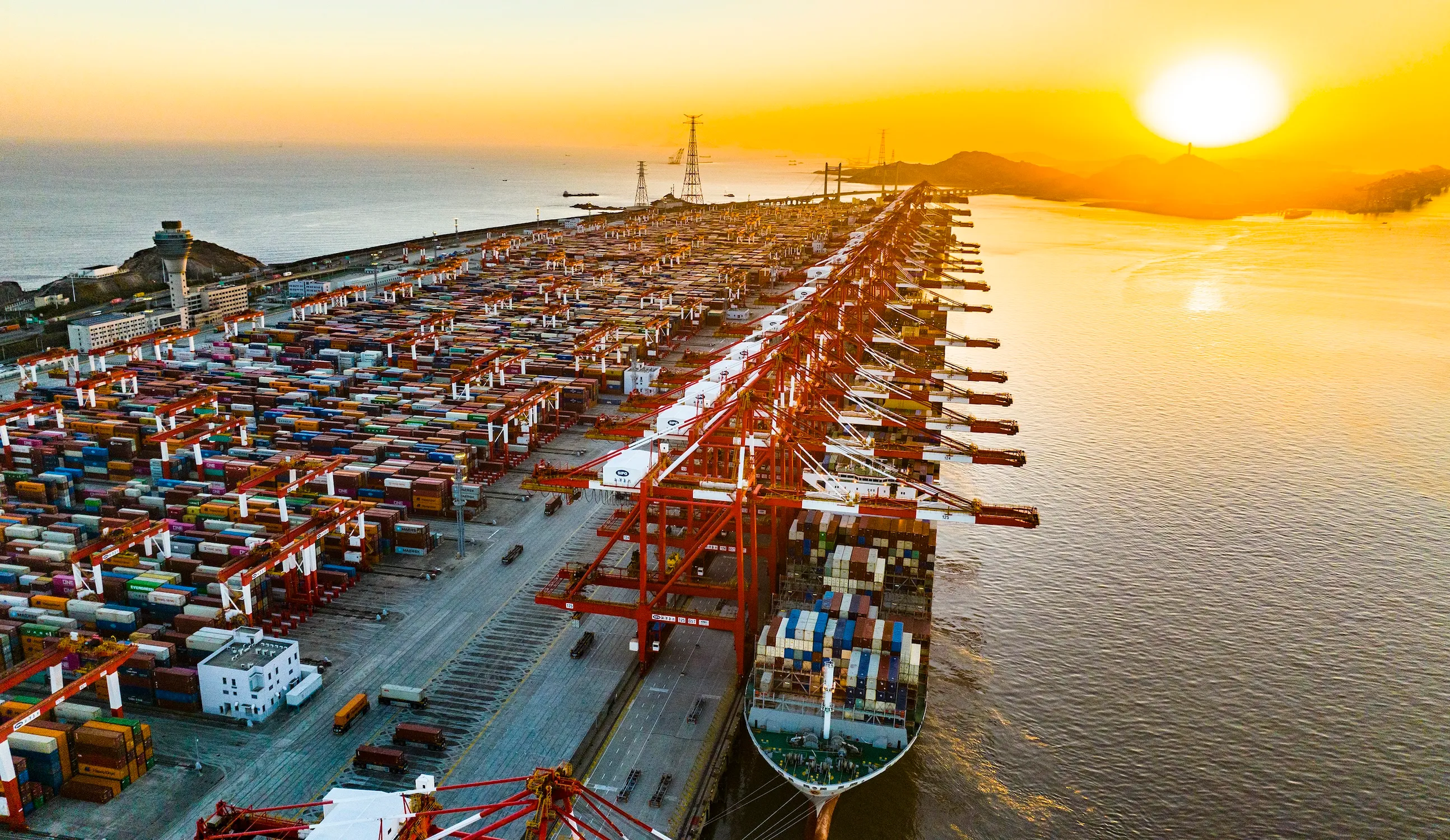
Photo: Sourcing Journal
Twelve months after U.S. tariffs rattled exporters and triggered waves of panic buying, production freezes and supply chain recalculations, China’s factories and ports are once again operating at full throttle. As the Lunar New Year approaches, the traditional pre-holiday manufacturing rush has returned in force, pushing container volumes sharply higher and lifting freight rates across key global routes.
On the ground in major industrial hubs such as Dongguan, Ningbo and Shenzhen, factory managers describe a familiar scene: long production lines, packed warehouses and trucks lining up at port terminals. For many exporters, it feels as though the tariff shock that dominated much of last year has faded into the background.
Factories Running Near Capacity
The start of each calendar year typically marks a production sprint in China, as manufacturers accelerate shipments before workers leave for the week-long Lunar New Year holiday. In 2026, that surge appears as strong as ever.
Executives in southern China report that electronics, automotive components, consumer goods and sporting equipment factories are running at or near full capacity. In Guangdong province, which accounts for a significant share of China’s exports, some plants are operating six days a week to clear backlogs.
One Dongguan-based electronics manufacturer that sends more than 50% of its output to the United States says production volumes are roughly in line with pre-tariff levels seen before last year’s escalation. Orders from U.S. buyers have normalized, and in some cases accelerated, as customers move quickly to secure inventory ahead of the holiday shutdown.
Independent economic trackers support this picture. Private-sector surveys show industrial output in January rising year over year, with both domestic and export orders accelerating on a monthly and annual basis. Official data for the combined January–February period is expected in March, but forward indicators suggest a strong start to the year for manufacturing.
Container Traffic Surges at Major Ports
Nowhere is the rebound more visible than at China’s seaports. According to shipping analysts, major ports recorded container volumes up roughly 40% year over year during the week ending February 1, marking the fastest annual growth rate in more than a year. That compares with average weekly growth of about 10% throughout 2025.
At Ningbo, one of the world’s busiest maritime hubs and a critical node for U.S.-bound exports, terminals have reportedly been operating beyond capacity. Some vessels were overbooked by more than 20%, and temporary suspensions of container gate-in were implemented to manage congestion. Similar conditions have been reported in Shanghai and Shenzhen.
Truck traffic feeding into ports has intensified as well. Logistics experts note that severe congestion has driven domestic trucking rates up by as much as 80% in certain corridors. Freight forwarders are racing to clear shipments before factories close for the holiday period, typically halting operations for five to seven days.
The surge in bookings is not limited to one trade lane. Advisories issued to shippers in Europe, North America and across Asia indicate a broad pre-holiday pull-forward of orders from China, reflecting importers’ efforts to secure goods ahead of seasonal production stoppages.
Freight Rates Climb Above Historical Averages
The burst of activity has had a measurable impact on shipping costs. The Shanghai Containerized Freight Index, a widely tracked benchmark for export container rates, has fluctuated between roughly 1,400 and 1,656 in early January. That places it above the 15-year average range of approximately 1,337 to 1,568.
Analysts note that freight rates peaked nearly three weeks earlier than historical seasonal patterns would suggest, signaling that exporters front-loaded shipments sooner than usual this year. This shift reflects both holiday timing effects and a desire to avoid logistical bottlenecks.
Shipments to the United States stand out in particular. Large container volumes bound for U.S. ports ran above comparable periods in both 2024 and 2025 throughout most of January and into early February. Air freight lanes to the U.S. and Europe also recorded higher rates year over year, with outbound indices from Shanghai Pudong climbing more than 5% week over week in early February.
Part of the surge can be attributed to calendar effects. This year’s Lunar New Year falls in mid-February, compared with late January the year prior, creating a low-base comparison and extending the production window. Still, industry experts emphasize that the scale of the rebound exceeds what timing alone would explain.
From Panic to Pragmatism
Last year’s tariff escalation sparked dramatic swings in trade flows. Importers rushed to stockpile inventory during windows of lower duties, only to freeze orders when uncertainty spiked. Supply chains were repeatedly disrupted as companies scrambled to adjust sourcing strategies.
Now, the tone has shifted from panic to pragmatism. Following high-level talks in late 2025, Beijing and Washington reached a one-year trade truce that kept tariffs on Chinese goods at lower levels than initially feared. While tensions have not disappeared, the relative stability has given businesses enough clarity to resume planning.
Executives say that product development pipelines, which had stalled during periods of uncertainty, are moving again. American customers who paused new product launches are revisiting projects, signing contracts and placing forward orders. The appetite for innovation, particularly in electronics and consumer goods, appears to have recovered significantly.
De-Risking Without Decoupling
Despite the renewed buzz in Chinese factories, global companies are not abandoning diversification efforts. The “China-plus-one” strategy remains a central feature of corporate supply chain planning. Multinationals are expanding production in Southeast Asia, exploring near-shoring options in Mexico and strengthening regional hubs in Europe.
However, diversification has not translated into wholesale withdrawal. For many sectors, China’s manufacturing ecosystem—spanning skilled labor, component suppliers, logistics infrastructure and port efficiency—remains difficult to replicate at scale.
Industry consultants who toured factories across southern China in recent weeks describe facilities bustling with foreign buyers placing orders for the next production cycle. Automotive, consumer goods and sports equipment manufacturers are working through accumulated backlogs while fielding fresh inquiries, including from U.S. firms.
In practical terms, companies appear to be hedging rather than exiting. They are spreading risk across multiple geographies while continuing to rely on China as a core production base.
A Resilient Trade Machine
The data points to a clear conclusion: one year after tariffs sent shockwaves through global supply chains, China’s export engine is operating at high speed once again. Container throughput is surging, freight rates are firming, and factories are running near capacity.
While long-term structural shifts in global trade remain underway, short-term momentum suggests that Chinese manufacturing retains significant resilience. For now, the pre–Lunar New Year rush has delivered a powerful reminder that even amid tariff pressures and geopolitical tensions, China remains central to global trade flows.
.webp)
Popular articles



Subscribe to unlock premium content
Visa and the Invisible Engine Powering Global Digital Money

Disney’s Streaming Empire Built on Regional Storytelling Power

The Slow Revolution of Steel and Memory Across Eastern Europe

Visa and the Invisible Engine Powering Global Digital Money
Disney’s Streaming Empire Built on Regional Storytelling Power
Visa and the Invisible Engine Powering Global Digital Money