McDonald’s Tops Earnings Forecasts as Value Deals and Viral Promotions Drive Traffic

McDonald’s Tops Earnings Forecasts as Value Deals and Viral Promotions Drive Traffic
By
Rachel Steinberg
Last updated:
February 12, 2026
First Published:
February 12, 2026

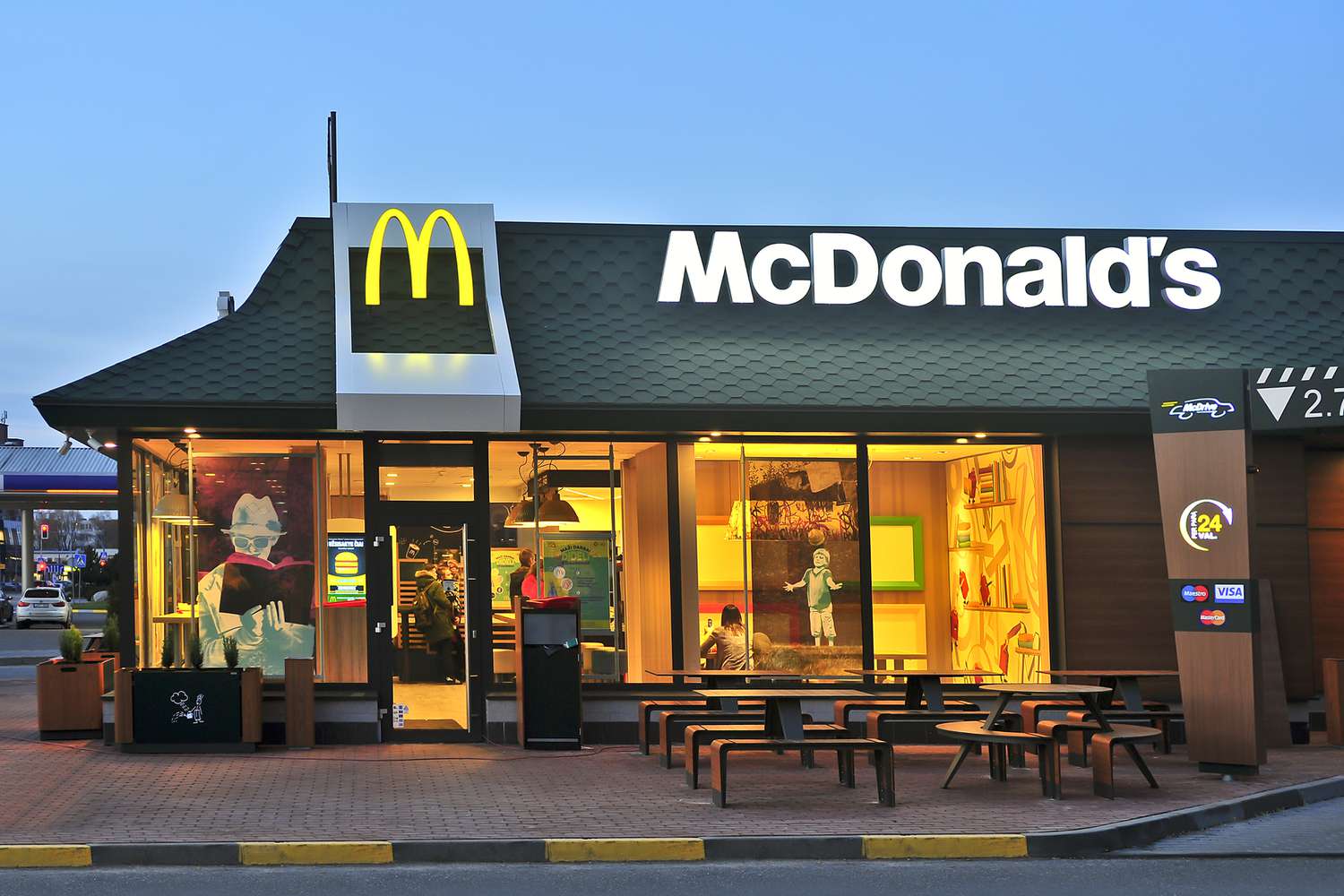
Photo: Investopedia
McDonald’s delivered stronger-than-expected fourth-quarter results, beating Wall Street estimates on both earnings and revenue as its renewed focus on affordability and high-profile promotions drew customers back into restaurants.
The fast-food giant reported adjusted earnings per share of $3.12, exceeding analyst expectations of $3.05. Revenue climbed to $7 billion, ahead of the projected $6.84 billion. Net income rose to $2.16 billion, or $3.03 per share, compared with $2.02 billion, or $2.80 per share, in the same quarter a year earlier.
Revenue increased 10% year over year, underscoring a rebound in consumer traffic after a challenging period marked by cautious spending among lower-income households.
Value strategy pays off amid cautious consumers
CEO Chris Kempczinski credited the company’s renewed emphasis on affordability for the improved performance, noting that traffic and value perception scores strengthened throughout the quarter.
For more than a year, McDonald’s has warned that lower-income consumers were pulling back on discretionary spending due to inflationary pressures and higher borrowing costs. As one of the world’s largest quick-service restaurant chains, McDonald’s is often viewed as a barometer of consumer health.
In response, the company leaned into value messaging and expanded discount offerings. The relaunch of Extra Value Meals — offering approximately 15% savings on combo purchases — resonated with budget-conscious diners.
The strategy appears to be working. Global same-store sales rose 5.7%, outperforming Wall Street expectations of 3.9%. The growth was fueled largely by strong performance in the United States.
U.S. recovery boosts overall results
Domestic same-store sales increased 6.8%, a sharp turnaround from the prior year’s 1.4% decline, which had been impacted by an E. coli outbreak that dampened traffic during part of the quarter.
This year, consumer engagement was lifted by attention-grabbing promotions. The limited-time Grinch Meal proved especially powerful. The campaign included collectible merchandise, including branded socks, which became an unexpected retail phenomenon. According to executives, McDonald’s sold approximately 50 million pairs of socks globally within days of launch.
The promotion contributed to the company’s highest single sales day on record, according to CFO Ian Borden. For nearly a week, McDonald’s became the largest seller of socks worldwide — an unusual distinction for a restaurant chain but a testament to the campaign’s viral reach.
The long-running Monopoly promotion also helped stimulate repeat visits and incremental spending.
International markets show steady growth
Outside the U.S., McDonald’s posted positive same-store sales growth across nearly all regions.
The company’s international operated markets segment, which includes countries such as Germany and Australia, reported same-store sales growth of 5.2%. Meanwhile, its international developmental licensed markets division recorded a 4.5% increase.
The broad-based growth indicates that McDonald’s value messaging and promotional strategy are resonating across diverse consumer markets, even as global economic conditions remain uneven.
2026 outlook: expansion and menu innovation
Looking ahead, McDonald’s executives said the company is off to a strong start in 2026 but expects first-quarter same-store sales growth to moderate compared with the fourth quarter. Winter storms in late January temporarily closed some U.S. restaurants and reduced foot traffic.
For the full year, McDonald’s plans capital expenditures between $3.7 billion and $3.9 billion. A significant portion of that investment will fund approximately 2,600 new restaurant openings globally, resulting in about 2,100 net new locations.
The expansion is expected to increase systemwide sales by roughly 2.5%, excluding currency fluctuations.
About 750 of the new restaurants will open in the U.S. and other international operated markets, while licensees and affiliates will add more than 1,800 locations in additional global markets.
Despite expansion plans, management remains cautious about broader industry conditions. Executives noted that quick-service restaurant environments in the U.S. and several international markets are expected to remain competitive and economically challenging.
New beverages and chicken push aim to lift sales
Beyond value pricing, McDonald’s is investing in menu innovation to capture shifting consumer preferences.
Later this year, the chain plans to roll out new beverage offerings in the U.S. and select international markets, including energy drinks, fruity refreshers and specialty sodas. These initiatives build on insights gained from its recently shuttered CosMc’s spinoff concept and a 500-restaurant beverage test conducted last summer.
Competitors such as Taco Bell and Chick-fil-A have demonstrated that premium and customizable beverages can drive incremental visits and higher ticket averages, and McDonald’s aims to tap into that same momentum.
The company is also increasing its focus on chicken, which continues to outperform beef in consumer preference surveys. Several Chicago-area locations are currently testing hand-breaded chicken strips, wings and grilled sandwiches. While still in early stages, executives see potential for expanded chicken offerings to support long-term growth.
Catering to health-conscious consumers
Another emerging focus area is menu positioning for consumers using GLP-1 weight-loss medications, which have gained widespread adoption. Executives indicated that McDonald’s may introduce items tailored to those customers while highlighting the high-protein content of existing menu options.
Management emphasized that product development will be guided by customer demand, but noted that the current menu already offers a variety of options that can fit evolving dietary preferences.
A bellwether regains momentum
With $7 billion in quarterly revenue, double-digit sales growth and expanding global footprint, McDonald’s latest results suggest that its value-focused strategy is resonating in a price-sensitive environment.
While macroeconomic headwinds persist and consumer spending remains uneven, the company’s blend of affordability, viral marketing and menu innovation appears to be driving renewed traffic.
As one of the largest restaurant operators in the world, McDonald’s performance offers a clear signal: even in challenging economic climates, compelling value and cultural relevance can meaningfully move the needle.

Popular articles


Subscribe to unlock premium content
Gigi Hadid x Tommy Hilfiger

ED by Ellen Redefines Celebrity Media

Oprah’s Empire of Influence

Gigi Hadid x Tommy Hilfiger
ED by Ellen Redefines Celebrity Media
Gigi Hadid x Tommy Hilfiger