Panama Canal Becomes New Battleground in Escalating U.S.–China Rivalry

Panama Canal Becomes New Battleground in Escalating U.S.–China Rivalry
By
Alina Sinclair
Last updated:
February 6, 2026
First Published:
February 6, 2026

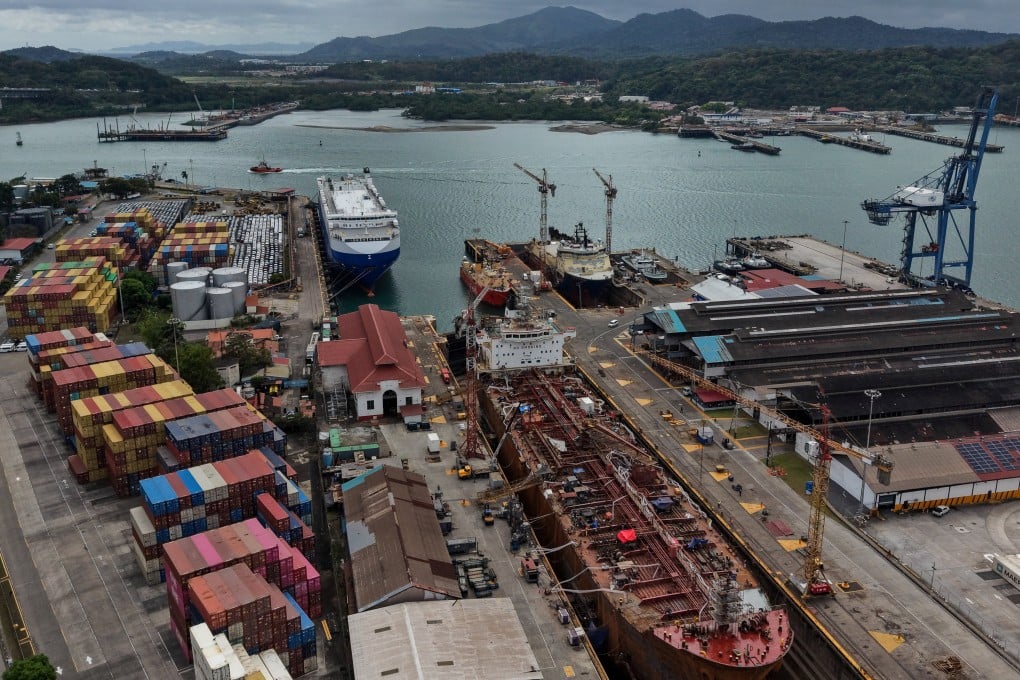
Photo: South China Morning Post
The Panama Canal, one of the world’s most strategic shipping corridors linking the Atlantic and Pacific Oceans, has been thrust back into the geopolitical spotlight as tensions between the United States and China intensify.
At the center of the dispute is a recent decision by Panama’s top court to revoke the operating license of a subsidiary of Hong Kong-based CK Hutchison, which had been running two key container terminals at either end of the canal. The ruling immediately drew international attention, with Washington viewing it as a major strategic win and Beijing responding with unusually sharp criticism.
Roughly 40% of all U.S. container traffic passes through the Panama Canal each year, making the waterway a vital artery for American trade and supply chains. In total, the canal facilitates an estimated $270 billion in cargo annually, underscoring why control and influence over its ports carry enormous economic and political weight.
Court Ruling Reshapes Control of Critical Ports
Panama’s Supreme Court invalidated CK Hutchison’s concession to operate the Balboa and Cristóbal terminals, effectively removing the Hong Kong-linked firm from two of the canal’s most important access points.
The decision was widely interpreted as aligning with U.S. efforts to limit China’s footprint in the Western Hemisphere. The White House has increasingly framed infrastructure ownership and port operations as national security concerns, particularly in regions historically viewed as within Washington’s strategic orbit.
China reacted forcefully. Beijing warned that Panama would “pay a heavy price politically and economically” if it did not reverse course. China’s Hong Kong and Macao Affairs Office went further, calling the ruling “logically flawed” and “utterly ridiculous.”
Panama’s President José Raúl Mulino rejected the criticism, stating that Panama is a rule-of-law nation and that judicial decisions are independent of the executive branch. He emphasized that his government would respect the court’s ruling despite external pressure.
CK Hutchison has since initiated international arbitration proceedings, saying it strongly disagrees with the court’s determination and will pursue legal remedies.
A Prolonged Legal and Political Standoff Ahead
Analysts expect the fallout to stretch on for months, if not years.
Scott Kennedy, senior advisor at the Center for Strategic and International Studies, said the episode appears less about technical port management and more about geopolitical dominance in Latin America. He expects a drawn-out legal fight across multiple jurisdictions, accompanied by sustained political and economic pressure from both Washington and Beijing.
The dispute comes amid already strained U.S.–China relations. Over the past year, tensions have deepened following sweeping U.S. tariffs on Chinese exports, China’s tightening of rare earth shipments, disagreements over Taiwan, Beijing’s support for Russia in the Ukraine war, and U.S. military actions in Venezuela and Iran.
Together, these flashpoints have set the stage for the Panama Canal to become yet another arena in a broader power struggle.
China Signals Retaliation as Panama Deals Stall
The court ruling has also complicated CK Hutchison’s broader plans.
Last year, the company negotiated a $23 billion agreement to sell its non-Chinese port assets to a BlackRock-led consortium. Beijing publicly criticized the move, accusing CK Hutchison of yielding to U.S. pressure. Chinese regulators subsequently pushed for the deal to undergo China’s merger review process and reportedly floated the idea of state-owned shipping giant Cosco joining the buyer group.
Signs of escalation are already emerging. China has instructed state-owned firms to pause discussions on new projects in Panama and encouraged shipping companies to explore alternative routes. Chinese customs authorities are also expected to increase inspections of Panamanian imports, including agricultural products such as bananas and coffee.
Despite these measures, analysts believe Beijing’s options are limited. Jack Lee of China Macro Group said China’s response is likely to remain calibrated and largely symbolic, aimed at signaling displeasure rather than forcing Panama to reverse its decision. He added that the episode exposes Beijing’s vulnerability when U.S. pressure directly challenges its regional economic interests.
China’s Expanding Maritime Footprint Raises Alarm
The Panama dispute comes as China continues to expand its global maritime presence.
Beijing has invested heavily in ports and logistics infrastructure across Latin America, Africa, Europe, and Asia. One prominent example is Peru’s Port of Chancay, majority owned and operated by Cosco, which is expected to cut shipping times between South America and Asia by nearly half.
According to analysts at the Foundation for Defense of Democracies, China now controls or operates more than 100 overseas ports and dominates key components of the global shipping ecosystem. Chinese firms manufacture over 95% of the world’s shipping containers and approximately 70% of ship-to-shore cranes. In shipbuilding, Chinese yards accounted for nearly two-thirds of global orders in 2025.
Given that around 40% of U.S. containerized trade flows through the Panama Canal, experts warn that any further expansion of China’s maritime influence could leave the U.S. and its allies exposed to the same kinds of strategic dependencies already seen in rare earths and critical minerals.
Calls for a More Balanced Global Order
The growing rivalry has drawn concern from international leaders.
United Nations Secretary-General António Guterres recently warned that global challenges cannot be resolved by a single dominant power or a rigid two-pole system centered on Washington and Beijing. He argued that lasting stability requires a multipolar world where influence is more broadly distributed.
His comments reflect mounting unease that disputes like the one unfolding in Panama could accelerate fragmentation in global trade and deepen divisions between major economic blocs.
Why the Panama Canal Matters More Than Ever
More than a century after its completion, the Panama Canal remains indispensable to global commerce. Beyond its economic role, it has once again become a strategic chokepoint in great-power competition.
As legal battles proceed and diplomatic pressure intensifies, Panama finds itself navigating a delicate balance between two superpowers. For the U.S. and China, the outcome will signal how far each is willing to go to secure influence over the infrastructure that underpins global trade.
What began as a court ruling over port operations now stands as a powerful symbol of a shifting world order, where control of supply chains and maritime routes is increasingly central to geopolitical strategy.
.webp)
Popular articles



Subscribe to unlock premium content
Soaring Above Luxury

A Taste of Italy Redefined

Designing the World, One Market at a Time

Soaring Above Luxury
A Taste of Italy Redefined
Soaring Above Luxury