Pandora Surges as Jewelry Giant Moves to Cut Silver Dependence and Protect Margins

Pandora Surges as Jewelry Giant Moves to Cut Silver Dependence and Protect Margins
By
Rachel Steinberg
Last updated:
February 6, 2026
First Published:
February 6, 2026

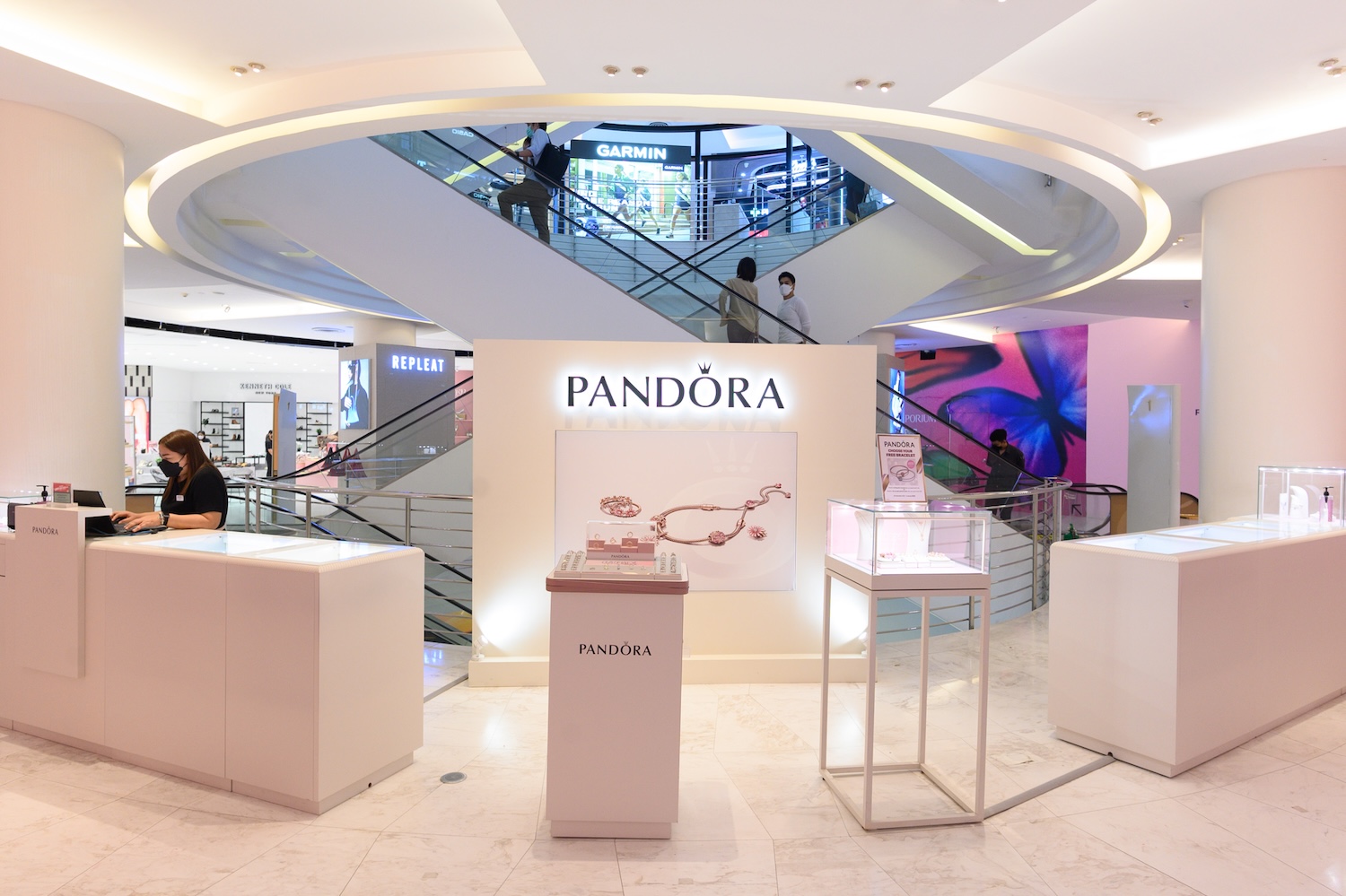
Photo: Bangkok Post
Shares of Pandora jumped sharply after the world’s largest jeweler by volume unveiled plans to reduce its heavy reliance on silver, signaling a strategic shift aimed at stabilizing costs and defending profitability amid extreme precious-metal volatility.
The Copenhagen-listed company climbed as much as 7% following its earnings release, before paring gains to trade about 4.9% higher. The rally came as Pandora outlined a move toward platinum-plated materials and a wider product mix, while also forecasting largely flat organic growth for 2026.
The announcement directly addresses one of investors’ biggest concerns: silver prices have more than doubled over the past year, creating major pressure on margins for a business that still generates roughly 60% of its sales from silver-based jewelry.
Silver shock forces strategic rethink
Spot silver was trading around $80 an ounce this week. While prices slipped more than 12% intraday on Thursday, the metal remains up over 150% from roughly $30 a year ago, one of the sharpest rallies in recent commodity history.
That surge has been a persistent headwind for Pandora, whose cost base is tightly linked to precious metals.
“If you look at the volatility of silver, one of the things we have to do for the company is decouple ourselves from that trading,” CEO Berta de Pablos-Barbier told CNBC. “Varying our basket with new metals is going to help us, because we will not be so dependent on only one metal, which today is silver.”
De Pablos-Barbier, who stepped into the CEO role last month, said the transition toward platinum-plated jewelry and an expanded portfolio will help Pandora preserve operating margins in the low-20% range, even as raw material costs fluctuate.
Analysts have long warned that silver’s wild price swings pose a structural risk to the Danish jeweler. Some have described the metal’s inflation as a “pernicious problem,” particularly at a time when consumer demand for discretionary goods is already under pressure.
Jefferies analysts noted earlier this week that recent moves in silver have made investors cautious about re-entering the stock, adding that even if prices normalize, Pandora is likely to remain significantly cheaper than it was a year ago.
Pandora shares are still down roughly 60% over the past 12 months, highlighting how deeply the metals shock and slowing demand have weighed on sentiment.
Guidance reflects cautious consumers
Alongside its strategic update, Pandora provided a subdued outlook for the year ahead. The company expects organic growth in 2026 to range between negative 1% and positive 2%, with earnings before interest and tax margins forecast between 21% and 22%.
That guidance reflects a challenging retail environment, particularly in the United States, which accounts for about one-third of Pandora’s global revenue.
In the fourth quarter, organic growth came in at 4%, but demand in the U.S. remained soft. Like-for-like sales, which track performance at comparable stores, were flat for both the quarter and the first month of 2026.
“The reality is that we are seeing the lowest consumer sentiment since the 1960s in that market,” de Pablos-Barbier said. “That’s not something I can control. What I can control is what I bring to the brand, how much excitement and how many new products we offer U.S. consumers, so they stay loyal and continue to visit our stores.”
Expansion beyond charms shows early strain
Pandora has been working to diversify beyond its iconic charm bracelets through its “Fuel with More” strategy, which focuses on faster growth in categories such as rings, necklaces, and lab-grown diamonds.
However, Citi analysts pointed out that the latest quarter marked the first instance of negative like-for-like growth in this strategically important segment since late 2022, raising questions about near-term momentum.
They also flagged that extreme inflation in precious metals has materially reduced earnings visibility, while roughly 80% of Pandora’s sales are exposed to volatile U.S. and European macroeconomic conditions. The analysts added that there are emerging signs of softer overall jewelry consumption and potential brand fatigue in key markets.
Slowing growth underscores turnaround challenge
Pandora reported 6% organic growth for 2025, a figure it preannounced in January. That marked a sharp slowdown from 13% growth the previous year and missed the company’s own guidance range of 7% to 8%.
With silver prices still elevated, consumer confidence fragile, and competition intensifying across the global jewelry market, Pandora’s pivot toward platinum-plated materials and a broader product lineup represents a critical effort to regain control over its cost structure.
For investors, the strategy signals a clear attempt to stabilize margins, reduce exposure to a single volatile commodity, and reignite growth through new designs and categories. While the near-term outlook remains cautious, management is betting that diversification, innovation, and tighter cost management can help the company navigate one of the most challenging periods in its recent history.
.webp)
Popular articles



Subscribe to unlock premium content
Zara’s Hyper-Fast Fashion Supply Chain Is Changing Global Retail
The Rise of Apple Stores as Experiential Brand Centers Worldwide
Boutique Eco-Lodges in Costa Rica Redefining Ultra-Luxury Travel

Zara’s Hyper-Fast Fashion Supply Chain Is Changing Global Retail
The Rise of Apple Stores as Experiential Brand Centers Worldwide
Zara’s Hyper-Fast Fashion Supply Chain Is Changing Global Retail