Oracle Stock Craters After Revenue Miss, Triggering Sell-Off Across AI Leaders Including Nvidia and CoreWeave

Oracle Stock Craters After Revenue Miss, Triggering Sell-Off Across AI Leaders Including Nvidia and CoreWeave
By
Leah Rosenfeld
Last updated:
December 11, 2025
First Published:
December 11, 2025

Getty Images
Oracle shares tumbled more than eleven percent in after-hours trading after the company reported quarterly revenue that fell short of expectations, even as demand for its artificial intelligence infrastructure continued to surge. The disappointing results sent tremors across the broader AI and semiconductor sector, pushing Nvidia, Advanced Micro Devices and CoreWeave lower in extended trading.
Oracle’s mixed performance has intensified investor concerns about whether the company’s massive financial commitments to AI infrastructure can deliver sustainable returns. Despite achieving stronger than expected earnings per share, its top line growth failed to meet Wall Street’s forecasts—raising questions around the pace of its cloud and AI monetization.
Oracle posted adjusted earnings per share of two dollars and twenty six cents, well above the dollar sixty four analysts projected. However, revenue totaled sixteen point zero six billion dollars, slightly below the sixteen point twenty one billion consensus. For the upcoming fiscal third quarter, the company expects adjusted earnings between one dollar seventy and one dollar seventy four and revenue growth of nineteen to twenty one percent, broadly in line with market expectations but not enough to ease concerns after the shortfall.
Oracle’s fiscal second quarter, which ended November thirtieth, showed a fourteen percent year over year increase in revenue. Net income surged to six point fourteen billion dollars, compared with three point fifteen billion a year earlier. Adjusted results exclude stock based compensation.
Cloud revenue came in at seven point ninety eight billion dollars, narrowly beating forecasts. Cloud infrastructure revenue rose sixty eight percent to four point one billion as Oracle expanded AI workloads across global enterprise clients. The company cited growing cloud demand from major firms such as Airbus, Canon, Deutsche Bank, London Stock Exchange Group, Panasonic and Rubrik, highlighting the accelerating shift toward high performance compute environments.
Software revenue, however, fell three percent to five point eighty eight billion dollars, missing expectations and indicating pressure across Oracle’s legacy business lines.
Perhaps the most striking figure in the report was Oracle’s remaining performance obligations—a key measure of contracted future revenue—which soared an unprecedented four hundred thirty eight percent to five hundred twenty three billion dollars. This spike was driven by large multiyear commitments from Meta, Nvidia and other hyperscale AI customers. These contracts provide Oracle with a massive backlog but also require the company to build out infrastructure at a pace far faster than in previous business cycles.
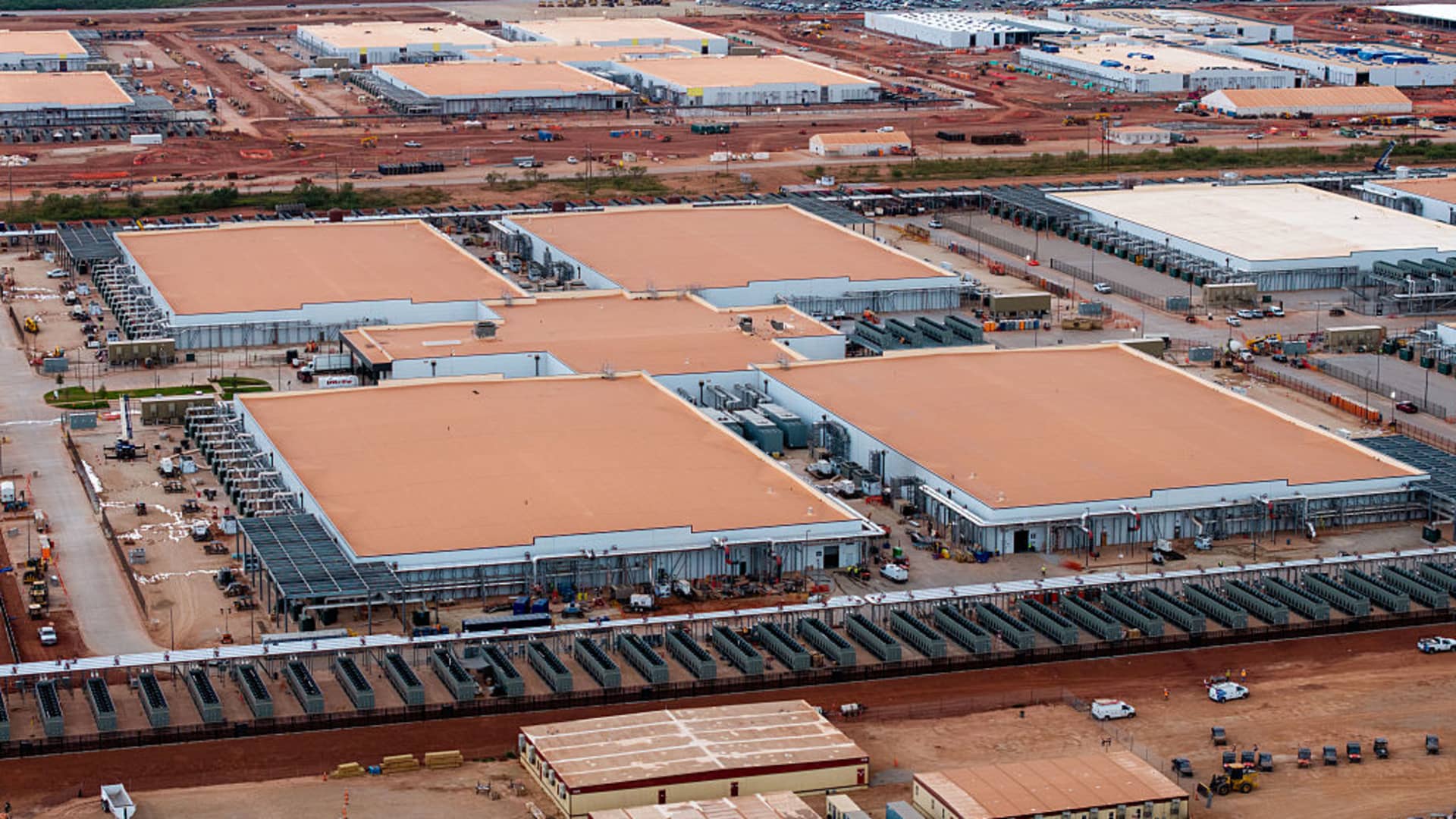
Oracle has aggressively positioned itself as a central player in the AI infrastructure market, competing directly with Amazon Web Services, Microsoft Azure and Google Cloud. The company has committed to building large scale, GPU rich data centers worldwide to meet accelerating AI compute needs. OpenAI alone has committed to spending more than three hundred billion dollars on Oracle’s infrastructure over five years, one of the largest commitments of its kind in the AI ecosystem.
Despite the rapid backlog expansion, Oracle faces mounting financial pressures. The company disclosed that full year capital expenditures are now expected to reach approximately fifty billion dollars, up sharply from September’s estimate of thirty five billion. For comparison, fiscal twenty twenty five capex was just over twenty one billion. This represents one of the largest year over year capex expansions in Oracle’s history, and investors have become increasingly wary of the rising debt levels associated with these build-outs.
Free cash flow for the quarter was negative ten billion dollars, significantly worse than the negative five point two billion analysts had anticipated. Executives acknowledged investor concerns during the earnings call and reiterated their commitment to maintaining Oracle’s investment-grade credit rating. They also emphasized alternative financing structures, including customer supplied chips and supplier leasing arrangements, which could reduce the company’s borrowing requirements.
Oracle’s stock performance has reflected shifting sentiment. Shares plunged twenty three percent in November—their steepest monthly decline since 2001. As of Wednesday’s close, the stock is thirty two percent below its all time high reached in September, though it remains up thirty four percent year to date, outperforming the Nasdaq’s twenty two percent rise during the same period.
The company also underwent leadership changes during the quarter, appointing Clay Magouyrk and Mike Sicilia as its new CEOs to succeed Safra Catz. Oracle introduced new AI agents designed to automate finance, HR and sales functions, showcasing the company’s ambition to advance AI driven enterprise solutions.
A major development in the quarter was Oracle’s sale of its stake in chip designer Ampere for a pre tax gain of two point seven billion dollars. SoftBank agreed earlier this year to acquire Ampere for six and a half billion. Chairman and co founder Larry Ellison stated that Oracle exited its chip design efforts to adopt a policy of chip neutrality, allowing customers to use any AI processors they choose—whether from Nvidia, AMD or custom silicon providers.
The earnings miss and the company’s massive capital needs have prompted a reevaluation of Oracle’s near-term financial outlook. While Oracle’s multiyear AI contracts signal robust future demand, the scale of investment required to fulfill these commitments continues to pressure the stock and the broader AI infrastructure market.
As Oracle pushes deeper into the AI arms race, investors are increasingly focused on whether the company can convert massive backlog growth into sustained revenue and positive cash flow without overextending its balance sheet.
.webp)
Popular articles



Subscribe to unlock premium content
The Rise of Micro-Cruises Offering Boutique Cultural Experiences in the Mediterranean

Iceland’s Adventure Lodges Are Redefining Remote Work

Inside London’s Private Wealth Advisory Firms Catering to Millennial Investors

The Rise of Micro-Cruises Offering Boutique Cultural Experiences in the Mediterranean
Iceland’s Adventure Lodges Are Redefining Remote Work
The Rise of Micro-Cruises Offering Boutique Cultural Experiences in the Mediterranean