
OpenAI’s Founders Become Fierce Competitors in the Global AI Power Race

OpenAI’s Founders Become Fierce Competitors in the Global AI Power Race
By
David Goldfarb
Last updated:
December 12, 2025
First Published:
April 25, 2026

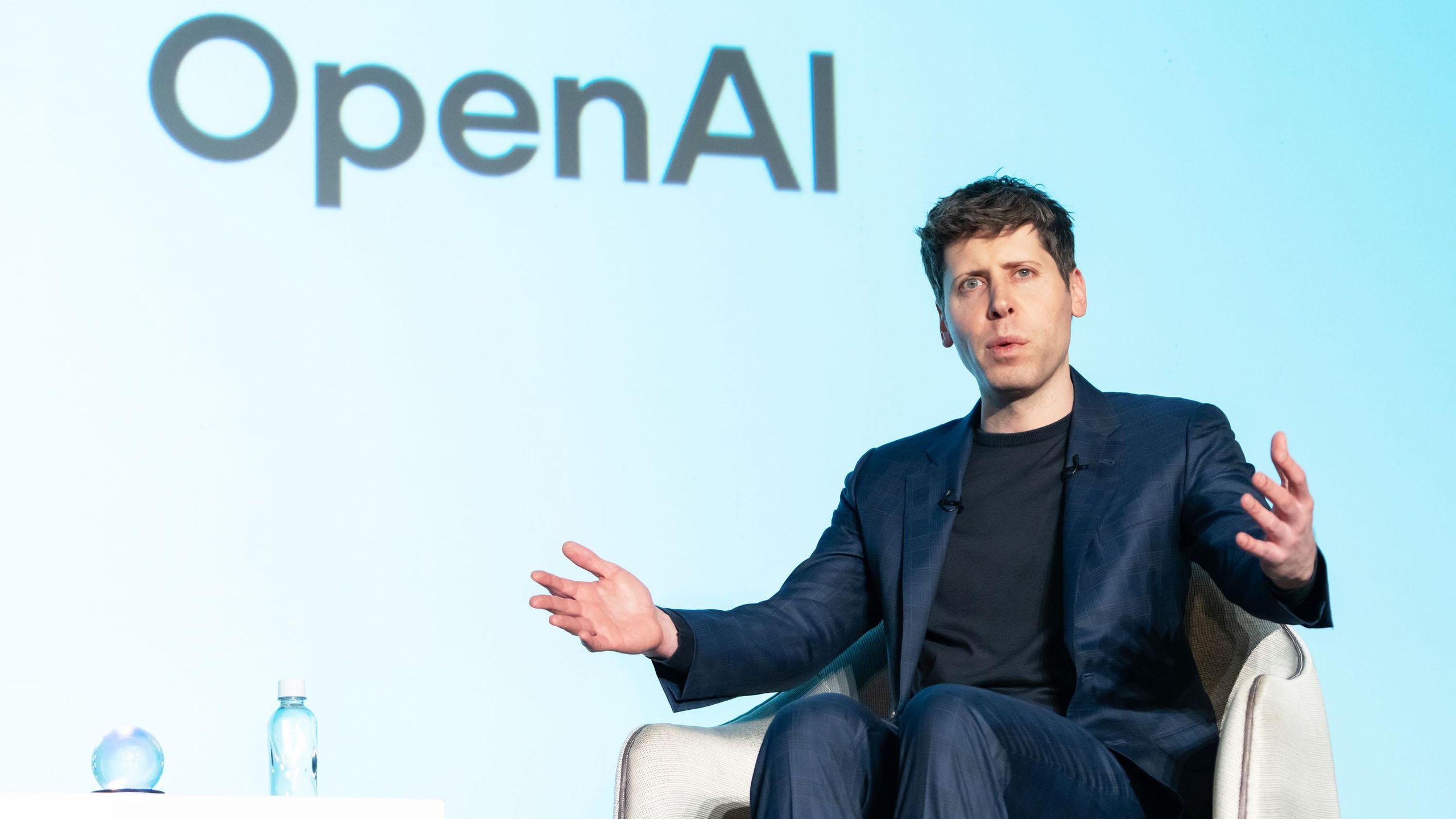
A Decade that Reshaped the AI Landscape
When OpenAI launched on December 11, 2015, it was introduced as a nonprofit research center backed by a $1 billion pledge from Elon Musk, Peter Thiel, Reid Hoffman and other Silicon Valley figures. Its mission was unambiguous: advance artificial intelligence for the good of humanity, outside commercial pressure and shareholder demands. Ten years later that idealistic vision has largely receded, replaced by one of the most capital-intensive corporate battles in modern technology.
OpenAI is now valued near $500 billion in private markets, with over 800 million weekly users engaging with ChatGPT. Almost all of that valuation has materialized in the three years since ChatGPT’s launch. Tech titans including Oracle, AMD, Broadcom and Nvidia now structure multi-year capital expenditure plans around OpenAI’s product roadmap, and the company’s future economic impact is being measured in trillions. Its infrastructure ambitions alone have ballooned to an estimated $1.4 trillion, largely to finance hyperscale data centers and custom compute clusters.
Meanwhile, Elon Musk — now the world’s richest individual — has become OpenAI’s most visible critic. He departed the organization in 2018 and now leads xAI, which is on track to close a $15 billion funding round at a valuation of roughly $230 billion. The two companies have become primary rivals in a market that includes Google, Meta and Anthropic, as the AI race expands from text-based chat to advanced video, agentic systems and enterprise-grade autonomous tools.
How the OpenAI Mission Broke Down
Despite its nonprofit framing, OpenAI was facing internal friction as early as 2016. Nvidia CEO Jensen Huang has recalled delivering a DGX-1 supercomputer worth $300,000 — and costing billions to develop — to OpenAI’s Mission District office, surprised to learn that the buyer was a nonprofit with no commercial structure. Behind the scenes Elon Musk expressed growing discomfort.
In a 2017 email to co-founders, Musk said he had reached his “final straw,” threatening to stop funding if the organization shifted into a commercial tech startup. Sam Altman replied that he remained committed to nonprofit principles, but the divergence in vision was already clear.
By early 2018 Musk formally exited the board, publicly citing conflicts of interest as Tesla expanded into AI. The full picture was more complex. In 2024 Musk sued OpenAI and Altman, alleging they abandoned their founding mission and formed overly close ties with Microsoft. He also challenged the company’s transition into a controlled for-profit entity and attempted to buy OpenAI outright for $97.4 billion.
OpenAI completed a major recapitalization in October that cemented its structure: a nonprofit parent with control over a public benefit corporation that conducts its commercial operations.
New Rivals and New AI Frontiers
Musk is not OpenAI’s only noteworthy defector. Dario and Daniela Amodei left the organization in 2020 and founded Anthropic, whose Claude model family is now a core competitor to OpenAI’s GPT platform. Anthropic recently secured major investments from Microsoft and Nvidia, and its valuation from the latest round could reach $350 billion.
Competition is no longer limited to model performance. It is now playing out in capital expenditure. Anthropic has committed approximately $100 billion to long-term compute infrastructure, while OpenAI has outlined plans more than ten times larger. Analysts say the wager assumes global AI adoption will continue escalating at record speed.
Industry researchers have raised questions about whether such large investments are sustainable. Some analysts have characterized OpenAI’s scale as a “fantastical” set of commitments, while noting that Anthropic’s growth trajectory is better aligned with its capital position. Yet OpenAI leaders argue demand fully justifies the company’s expansion.
Scale, Revenue and the Next Phase of Competition
OpenAI CEO Sam Altman said the firm expects annualized revenue to reach $20 billion by year-end and grow into the hundreds of billions by the decade’s close. Oracle recently signed a roughly $500 billion five-year infrastructure contract with OpenAI, while AMD, Broadcom and Nvidia have factored sustained OpenAI demand into their multi-year forecasts.
Still, not all market reactions have been positive. Oracle shares dropped 11 percent after reporting weaker-than-expected revenue, triggering declines across AI-linked companies. Investors have expressed concerns about escalating debt across the hyperscale ecosystem, despite aggressive long-term commitments from AI leaders.
Venture capitalists argue the spending frenzy is rational given the scale of the opportunity. Some describe the combination of multimodal AI models, increasingly specialized chips and global data center proliferation as a once-in-a-generation wave capable of producing trillion-dollar outcomes.
OpenAI recently unveiled ChatGPT-5.2, a faster model designed for professional workflows, and finalized a three-year $1 billion content and equity agreement with Disney to accelerate the Sora video-generation platform. Internally, Altman declared a “code red” to reallocate resources toward making ChatGPT more responsive and personal, especially after Google’s Gemini 3 release. He expects the company to exit code red in January.
Altman maintains that OpenAI remains well-positioned. He acknowledged competitive pressure but emphasized that early data suggests the impact of Gemini was smaller than initially expected.
The Road Ahead
OpenAI and xAI have become symbolic opposites in the global AI race — one leading a vast ecosystem of partners and enterprise deployments, the other presenting itself as a purist competitor promising unfiltered AGI development. Both are operating in a market characterized by unprecedented capital intensity, rapid shifts in technical capability and competition from every major technology company.
Whether OpenAI becomes a foundational platform akin to Google or ends up more like an early internet pioneer remains unresolved. What is clear is that the rivalry between Altman and Musk is shaping the direction of the industry, influencing regulatory debates, determining compute supply chain priorities and accelerating the march toward autonomous AI systems that will define the next decade of technological progress.
.webp)
Popular articles



Subscribe to unlock premium content
How Finland Uses Ice Swimming Festivals to Boost Winter Tourism and Local Economies

The Boom of Luxury Personal Libraries Renting Rare Books to the Ultra-Wealthy

Why Bhutan’s Hand-Woven Textiles Are Gaining Global Collector Value

How Finland Uses Ice Swimming Festivals to Boost Winter Tourism and Local Economies
The Boom of Luxury Personal Libraries Renting Rare Books to the Ultra-Wealthy
How Finland Uses Ice Swimming Festivals to Boost Winter Tourism and Local Economies


