
Nvidia Expands Self-Driving Ecosystem with New Global Automaker Partnerships

Nvidia Expands Self-Driving Ecosystem with New Global Automaker Partnerships
By
Leah Rosenfeld
Last updated:
March 17, 2026
First Published:
April 25, 2026

Getty Images
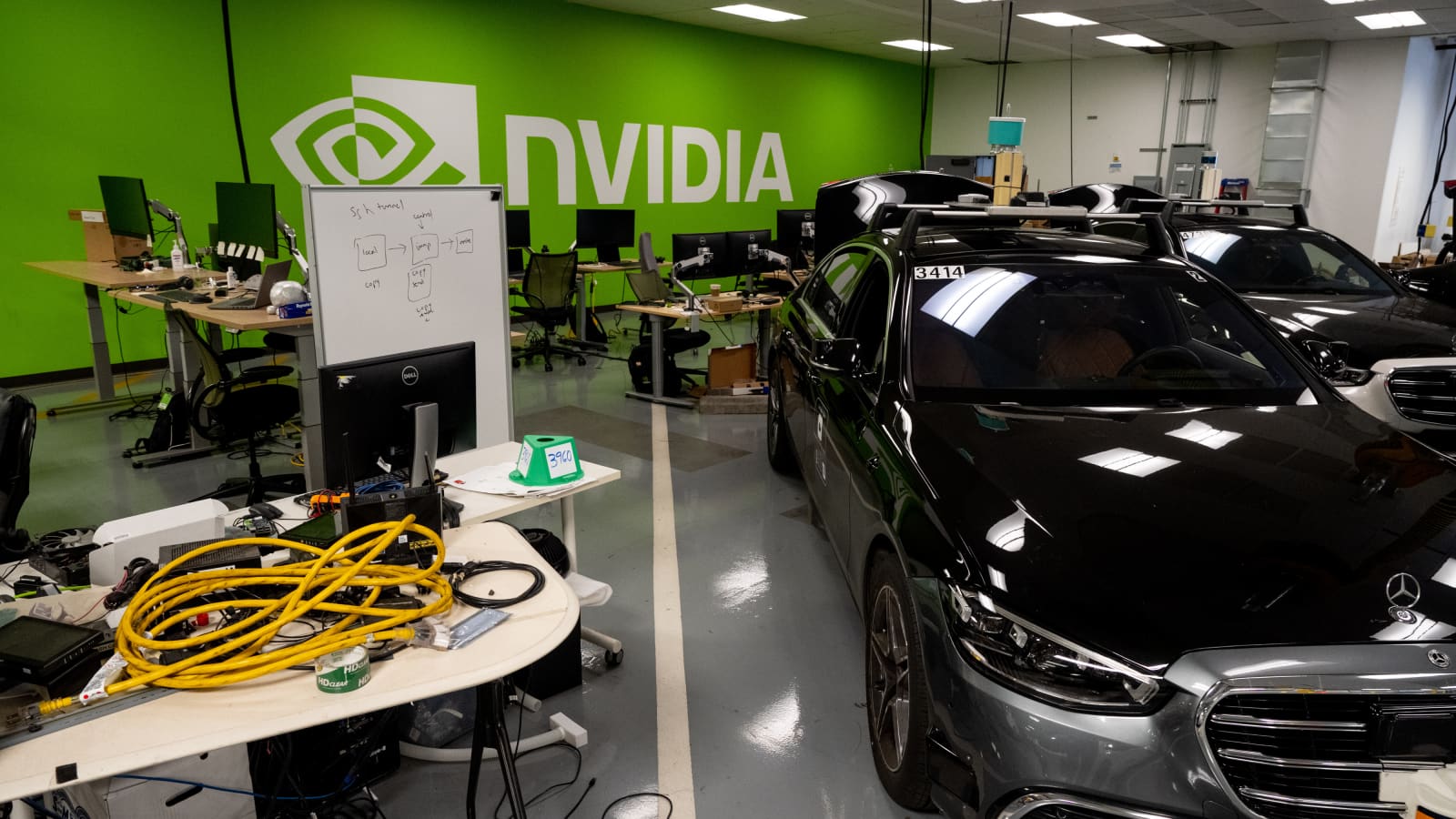
Nvidia is accelerating its ambitions in the autonomous vehicle space, announcing a new wave of partnerships with major global automakers as it positions itself at the center of the self-driving revolution. The chipmaker is extending its autonomous driving platform to companies including Hyundai Motor, Nissan Motor, Isuzu, BYD, and Geely.
These partnerships center around Nvidia’s Drive Hyperion platform, a comprehensive system designed to enable advanced driver-assistance and fully autonomous capabilities. The platform supports Level 4 autonomy, meaning vehicles can operate without human intervention in controlled environments such as specific urban zones or dedicated routes.
A Strategic Bet Beyond Artificial Intelligence
While Nvidia is widely recognized for its dominance in artificial intelligence chips, autonomous vehicles represent one of its most important growth frontiers outside of traditional AI data center applications. The automotive sector offers long-term, high-value opportunities, with industry estimates projecting autonomous mobility as a multi-trillion-dollar market over the next decade.
Nvidia’s approach is not to manufacture vehicles, but to provide the full technology stack that powers them. Its ecosystem includes high-performance in-vehicle processors, AI training systems in data centers, and large-scale simulation tools that allow automakers to test millions of driving scenarios virtually before deploying vehicles on the road.
Inside the Drive Hyperion Platform
Drive Hyperion is designed as an end-to-end solution, integrating hardware and software into a unified architecture. It enables automakers to build intelligent systems capable of handling complex driving conditions, from highway navigation to dense urban traffic.
The platform combines real-time sensor processing, AI-based decision-making, and continuous over-the-air updates. This allows vehicles to improve performance over time, a feature that has become increasingly important as competition intensifies in the EV and smart mobility space.
By offering a scalable and modular system, Nvidia allows automakers to accelerate development timelines while reducing the cost and complexity of building autonomous systems from scratch.
Growing Network of Industry Partners
The addition of new automakers significantly expands Nvidia’s already extensive network of collaborators. Existing partners include companies across the mobility spectrum, from self-driving startups like Aurora and Nuro to major global players such as Uber, Stellantis, Lucid Group, and Sony Group.
This broad ecosystem reflects Nvidia’s strategy of becoming the backbone technology provider for autonomous mobility rather than competing directly with automakers.
The Race Toward Fully Autonomous Driving
Despite rapid technological progress, fully autonomous vehicles remain a work in progress. Most cars on the road today operate at Level 2 autonomy, requiring constant driver supervision. Even advanced systems marketed as “self-driving” still rely heavily on human oversight.
However, companies like Waymo have already deployed Level 4 robotaxi services in select cities, demonstrating the potential of the technology. Meanwhile, competitors such as Tesla, Amazon (through Zoox), and Uber continue to invest heavily in catching up.
The path to widespread adoption is complex, involving not only technological breakthroughs but also regulatory approval, infrastructure readiness, and public trust.
Industry Challenges and Setbacks
The autonomous vehicle sector has faced significant hurdles over the years, including high development costs, safety concerns, and operational challenges. One of the most notable setbacks came when General Motors shut down its Cruise robotaxi division after investing more than $10 billion, following safety controversies.
These challenges have made partnerships and shared platforms increasingly important. By collaborating with technology providers like Nvidia, automakers can distribute risk and accelerate innovation without bearing the full burden of development alone.
AI as the Driving Force Behind the Future
Artificial intelligence remains the core enabler of autonomous driving. Advances in machine learning, computer vision, and real-time data processing are making it possible for vehicles to interpret and respond to complex environments with increasing accuracy.
Nvidia’s leadership believes the industry is approaching a tipping point, where self-driving technology could scale more rapidly than in previous years. The integration of AI across the entire development pipeline—from simulation to real-world deployment—is expected to play a critical role in this transition.
A Long-Term Vision for Mobility
With its expanding list of partners and a comprehensive technology stack, Nvidia is positioning itself as a central player in the future of mobility. The addition of major automakers from Asia and beyond highlights the global nature of the autonomous driving race and the growing demand for scalable, high-performance solutions.
As the industry moves closer to commercialization, the companies that can combine advanced technology with strong partnerships will be best placed to lead. For Nvidia, the strategy is clear: power the autonomous future without building the cars itself, and in doing so, capture a significant share of one of the most transformative markets in modern transportation.
.webp)
Popular articles



Subscribe to unlock premium content
How Finland Uses Ice Swimming Festivals to Boost Winter Tourism and Local Economies

The Boom of Luxury Personal Libraries Renting Rare Books to the Ultra-Wealthy

Why Bhutan’s Hand-Woven Textiles Are Gaining Global Collector Value

How Finland Uses Ice Swimming Festivals to Boost Winter Tourism and Local Economies
The Boom of Luxury Personal Libraries Renting Rare Books to the Ultra-Wealthy
How Finland Uses Ice Swimming Festivals to Boost Winter Tourism and Local Economies


