Nvidia and Unitree Join Forces to Accelerate Humanoid Robotics Research

Nvidia and Unitree Join Forces to Accelerate Humanoid Robotics Research
By
Alina Sinclair
Last updated:
June 1, 2026
First Published:
June 1, 2026

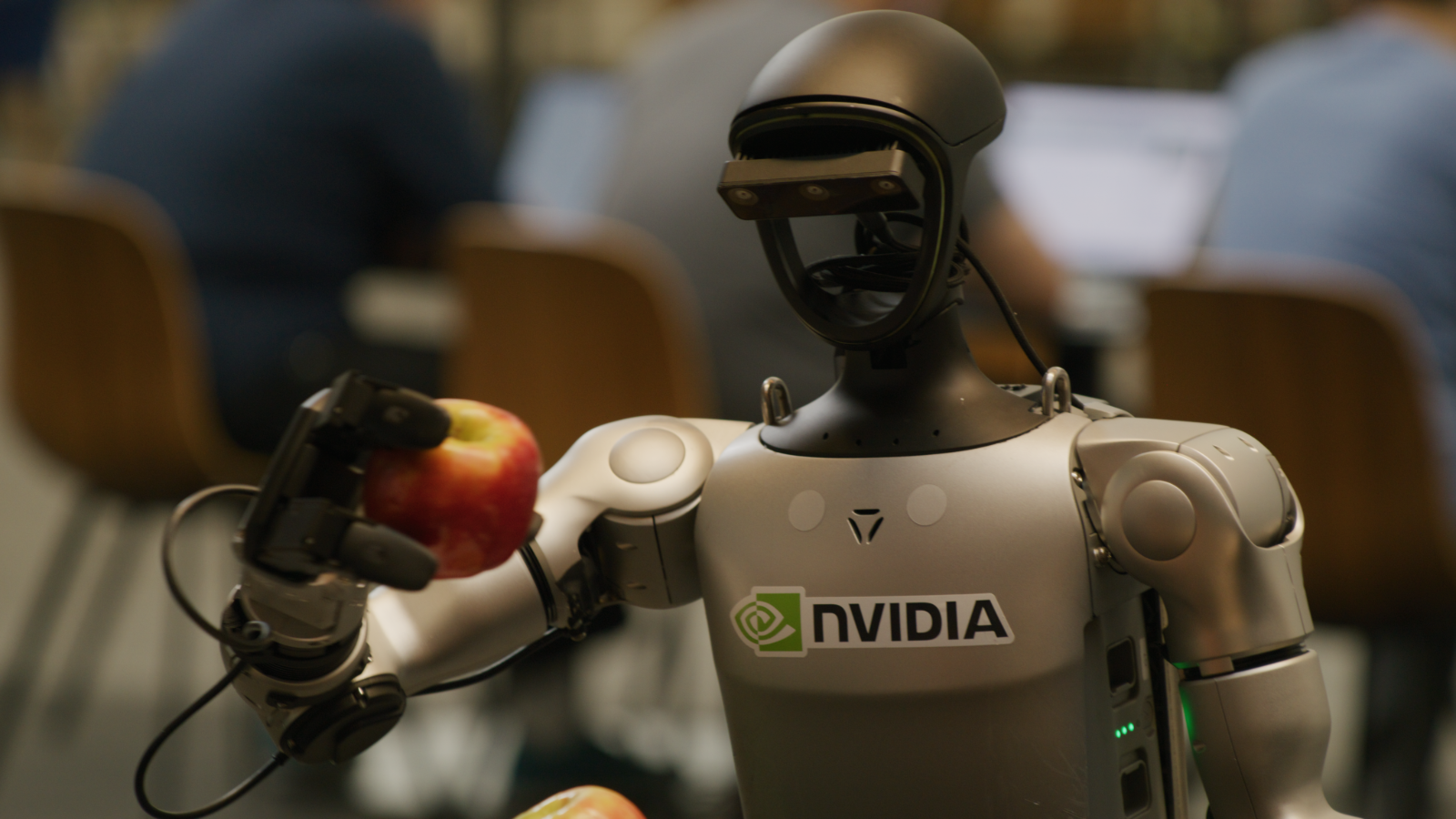
Nvidia is deepening its push into the rapidly expanding humanoid robotics industry through a new partnership with Chinese robotics company Unitree Robotics. The collaboration marks the launch of Nvidia’s first fully integrated humanoid robotics platform designed specifically for universities, research institutions, and advanced AI laboratories around the world.
The newly announced system combines Unitree’s nearly six-foot-tall humanoid robot with Nvidia’s cutting-edge Jetson Thor computing platform, creating a powerful research tool capable of accelerating the development of next-generation physical AI applications.
The announcement comes at a pivotal moment for Unitree, which is pursuing a major public listing in China while expanding its international presence in the increasingly competitive humanoid robotics market.
Nvidia’s Vision for Physical AI Takes Shape
The new robotics platform represents a significant milestone in Nvidia’s broader strategy to become the foundational technology provider for the emerging physical AI economy.
At the heart of the system is Nvidia’s Jetson Thor processor, powered by the company’s latest Blackwell GPU architecture. The platform is designed to deliver advanced on-device artificial intelligence capabilities, allowing humanoid robots to process information, make decisions, and interact with the physical world in real time.
The robot itself is based on Unitree’s H2 humanoid platform, which stands approximately six feet tall and weighs around 150 pounds. It features sophisticated mobility systems and advanced dexterity capabilities intended to support complex research and development projects.
The platform also integrates Nvidia’s Isaac GR00T AI models, simulation tools, synthetic data generation technologies, and runtime software environment, creating a complete ecosystem for robotics research.
Industry experts view this as an important step toward standardizing humanoid robot development by providing researchers with a ready-made platform instead of requiring years of hardware and software integration work.
Built for Universities and Research Labs
Unlike many commercial robotics products aimed at industrial automation, Nvidia’s new humanoid platform is specifically targeted at higher education institutions and research organizations.
According to Nvidia, building a fully functional humanoid robot with advanced AI capabilities from scratch remains a highly complex and expensive undertaking. By offering a pre-integrated system, the company hopes to lower barriers to entry and allow researchers to focus on innovation rather than infrastructure.
Several leading institutions have already committed to using the platform, including:
• Allen Institute for AI (Ai2) in Seattle
• ETH Zurich
• Stanford Robotics Center
• UC San Diego Advanced Robotics and Controls Laboratory
The early adoption by these organizations highlights growing academic interest in humanoid robotics and embodied AI systems.
Advanced Hardware Designed for Human-Like Interaction
One of the platform’s standout features is its focus on dexterity and human-like movement.
The humanoid robot incorporates sophisticated robotic hands developed by Singapore-based Sharpa. Each hand offers approximately 25 degrees of freedom, while the robot itself provides 31 degrees of freedom throughout its body.
This level of articulation allows researchers to explore more advanced tasks involving object manipulation, navigation, and human-robot interaction.
Combined with Nvidia’s AI software stack, the platform is designed to help researchers train robots to perform increasingly complex real-world activities through both simulation and physical testing.
Unitree Expands Global Ambitions Ahead of IPO
The partnership with Nvidia arrives as Unitree seeks to strengthen its position in the global robotics industry.
The company is currently pursuing a 4.2 billion yuan (approximately $620 million) listing on Shanghai’s STAR Market, one of China’s premier exchanges for technology-focused companies.
Unitree has rapidly emerged as one of the most prominent names in humanoid robotics, competing with both Chinese and international rivals in a market that is attracting substantial investment.
A notable aspect of the company’s business is its growing international footprint. More than 40% of Unitree’s revenue now originates from outside China, demonstrating strong demand for its robotics products across global markets.
The company also plans to release the upgraded H2 Plus humanoid robot in October, expanding access to its technology beyond research institutions and opening the door to wider adoption among developers and organizations.
Humanoid Robotics Industry Moves Toward Commercial Reality
The announcement underscores the increasing momentum behind humanoid robotics as advances in artificial intelligence continue to improve machine capabilities.
Major technology companies and startups worldwide are investing billions of dollars into developing robots capable of performing tasks traditionally handled by humans. Industry leaders see opportunities across manufacturing, logistics, healthcare, retail, hospitality, and eventually household applications.
However, the sector remains in its early stages. While AI-powered humanoids have begun appearing in warehouses and industrial environments, widespread deployment remains limited by challenges related to safety, reliability, cost, and privacy.
Companies such as 1X Technologies, Tesla, and Unitree are all racing to develop increasingly capable general-purpose humanoid robots that can operate effectively in real-world environments.
The Bigger Picture
Nvidia’s decision to partner with Unitree signals the company’s growing confidence in the future of physical AI. Rather than focusing solely on supplying chips, Nvidia is positioning itself as a comprehensive platform provider for robotics development, combining hardware, software, simulation tools, and AI models into a unified ecosystem.
As humanoid robotics moves from research labs toward commercial deployment, partnerships like this could play a crucial role in accelerating innovation and lowering development barriers for institutions worldwide.
With Unitree preparing for a major IPO and Nvidia expanding its robotics ambitions, the collaboration highlights how competition in the AI era is increasingly extending beyond data centers and into the physical world.
.webp)
Popular articles



Subscribe to unlock premium content
The Future of Urban Luxury Driving
Micro-Experience Convenience Stores Are Reinventing Quick Stops

Immortalizing Life in the Ultimate Luxury

The Future of Urban Luxury Driving
Micro-Experience Convenience Stores Are Reinventing Quick Stops
The Future of Urban Luxury Driving