Nikkei 225 Breaks 58,000 as Japan’s Election-Driven Rally Gathers Pace

Nikkei 225 Breaks 58,000 as Japan’s Election-Driven Rally Gathers Pace
By
Leah Rosenfeld
Last updated:
February 12, 2026
First Published:
February 12, 2026

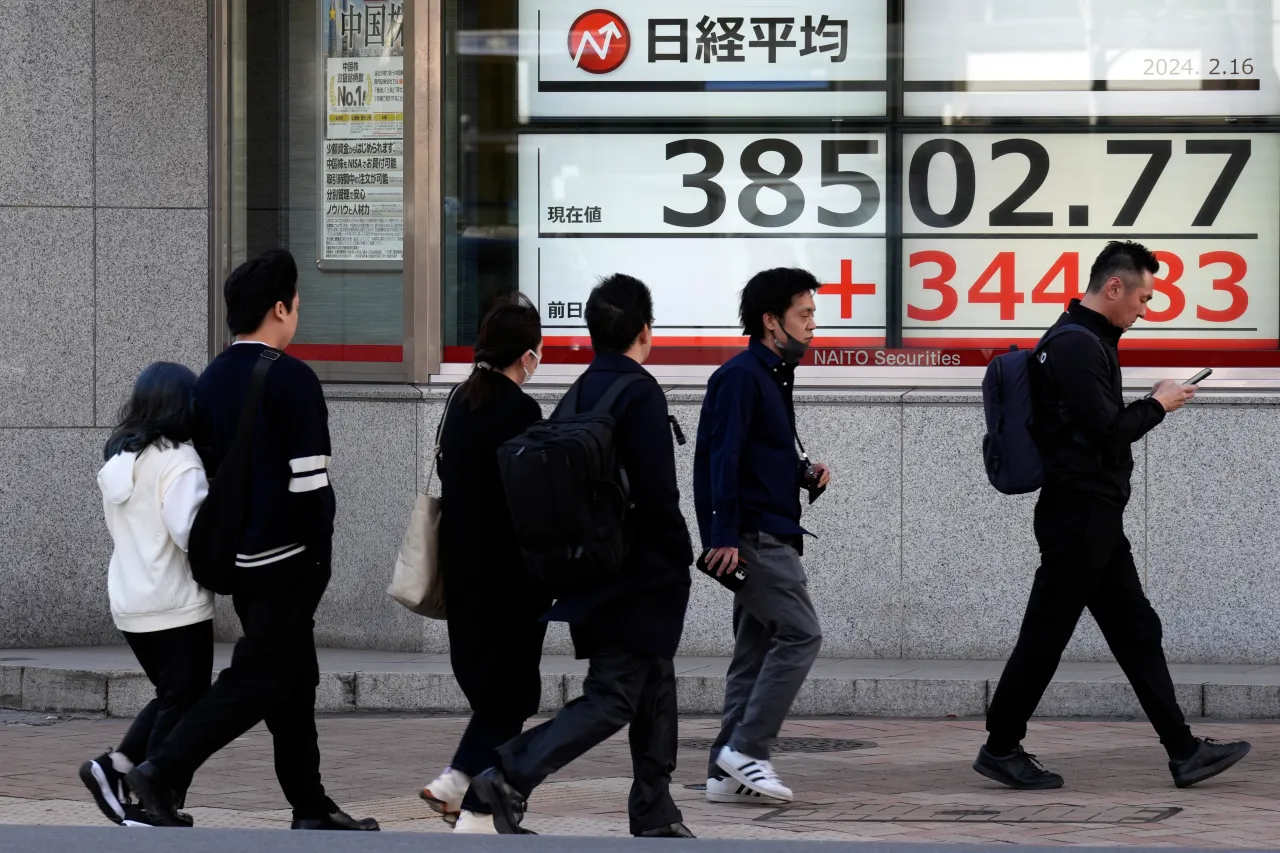
Photo: WROC
Japan’s equity market reached a historic milestone on Thursday, with the Nikkei 225 surging past the 58,000 mark for the first time ever. The move extends a powerful post-election rally that has pushed Japanese stocks to repeated record highs in recent sessions, driven by renewed political clarity and expectations of pro-growth economic reforms.
Although the benchmark later trimmed gains to trade around 57,663, the psychological breakthrough above 58,000 underscores the scale of investor optimism. The broader Topix index climbed 0.68%, reflecting broad-based participation across financials, industrials and exporters.
The rally highlights a sharp shift in sentiment toward Japan’s markets, which have been buoyed by what traders are calling the “Takaichi trade” following Prime Minister Sanae Takaichi’s landslide Lower House victory.
Political mandate fuels market confidence
Market participants see Takaichi’s decisive win as a turning point for domestic policy stability. With a strengthened multi-year mandate, investors anticipate continuity in corporate governance reforms, capital market liberalization and fiscal support measures aimed at sustaining economic growth.
Global asset managers note that the clarity provided by the snap-election outcome reduces policy uncertainty, a key factor that often weighs on equity valuations. A stable administration is viewed as supportive for structural reforms, including incentives for shareholder returns, digital transformation and industrial competitiveness.
The Nikkei’s rally has been accompanied by steady inflows from both domestic retail investors and international funds reallocating capital toward Japan. Foreign investors have been net buyers of Japanese equities in recent weeks, betting that political stability combined with improving earnings momentum will continue to lift valuations.
Currency dynamics remain a watchpoint. While equity investors appear reassured, some analysts caution that if the yen weakens toward the 160-per-dollar level, authorities could consider intervention to stabilize currency markets. A weaker yen has historically benefited exporters but raises import costs and inflationary pressure.
Asia-Pacific markets track higher
The bullish tone in Tokyo helped set the pace for broader gains across Asia-Pacific markets, even as stronger-than-expected U.S. labor data tempered hopes for imminent Federal Reserve rate cuts.
In South Korea, the Kospi jumped as much as 2.1% to a record high of 5,466.9 before easing to trade about 1.82% higher. Technology and semiconductor names led the advance, reflecting optimism around global demand for AI-related components and memory chips. The small-cap Kosdaq index was relatively unchanged.
Singapore’s benchmark index crossed the 5,000 threshold for the first time, marking a historic high as financial and industrial stocks rallied. In Australia, the S&P/ASX 200 added 0.42% in early trading, supported by gains in mining and energy shares.
Not all markets joined the rally. Hong Kong’s Hang Seng Index slipped 0.23%, while mainland China’s CSI 300 edged up 0.12%, reflecting a more cautious tone among investors assessing domestic economic signals.
U.S. jobs data reshapes rate expectations
Overnight on Wall Street, U.S. equities retreated modestly after the January nonfarm payrolls report significantly exceeded expectations. The Bureau of Labor Statistics reported job growth of 130,000 for the month, well above the 55,000 forecast by economists. December’s figure was revised down to 48,000.
The stronger labor market reading reduced the probability of near-term Federal Reserve interest rate cuts, reinforcing the narrative that U.S. monetary policy may remain tighter for longer. As a result, the Dow Jones Industrial Average slipped 0.13% to close at 50,121.40, snapping a three-day winning streak. The S&P 500 was nearly flat at 6,941.47, while the Nasdaq Composite declined 0.16% to 23,066.47.
The payrolls data followed weaker-than-expected consumer spending figures earlier in the week, which showed December spending flat versus expectations for a 0.4% monthly increase. The mixed economic signals have created uncertainty over the timing and magnitude of future Fed easing.
Despite the U.S. volatility, Asian markets largely looked past the data, focusing instead on regional drivers such as political developments, corporate earnings and sector-specific momentum.
Structural tailwinds for Japanese equities
Japan’s stock surge reflects more than short-term political enthusiasm. Structural factors have also played a role. Corporate governance reforms introduced in recent years have pressured companies to improve capital efficiency, boost share buybacks and increase dividends. Return-on-equity metrics for major Japanese firms have steadily improved, narrowing the gap with U.S. and European peers.
Additionally, domestic pension funds and retail investors have increased allocations to equities amid persistent low interest rates. The Bank of Japan’s gradual normalization of monetary policy has not derailed risk appetite, as borrowing conditions remain accommodative by historical standards.
Technology, automation, robotics and export-oriented manufacturers have been among the strongest performers in the rally. Financial stocks have also benefited from expectations that a modest steepening of the yield curve could support bank profitability.
Outlook remains constructive but cautious
While the Nikkei’s breach of 58,000 represents a milestone moment for Japanese markets, analysts caution that volatility may persist. Global macroeconomic factors, currency fluctuations and U.S. rate expectations remain key variables.
For now, however, investor sentiment toward Japan appears firmly anchored in optimism. With political stability, structural reforms and renewed global capital flows converging, the country’s equity market is enjoying one of its most dynamic periods in decades.
Whether the rally extends further will depend on earnings growth, policy execution and external conditions. But the record-breaking move signals that Japan has reclaimed its place at the center of global equity market attention.
.webp)
Popular articles



Subscribe to unlock premium content
Zara’s Hyper-Fast Fashion Supply Chain Is Changing Global Retail

The Rise of Apple Stores as Experiential Brand Centers Worldwide

Boutique Eco-Lodges in Costa Rica Redefining Ultra-Luxury Travel

Zara’s Hyper-Fast Fashion Supply Chain Is Changing Global Retail
The Rise of Apple Stores as Experiential Brand Centers Worldwide
Zara’s Hyper-Fast Fashion Supply Chain Is Changing Global Retail