New York Pushes Luxury Second-Home Tax as Budget Pressures Mount and Housing Debate Intensifies

New York Pushes Luxury Second-Home Tax as Budget Pressures Mount and Housing Debate Intensifies
By
David Goldfarb
Last updated:
May 13, 2026
First Published:
May 13, 2026


Zohran Mamdani is moving forward with plans to impose a new tax on luxury second homes in New York City as officials search for ways to close growing budget gaps without raising taxes on middle-class homeowners.
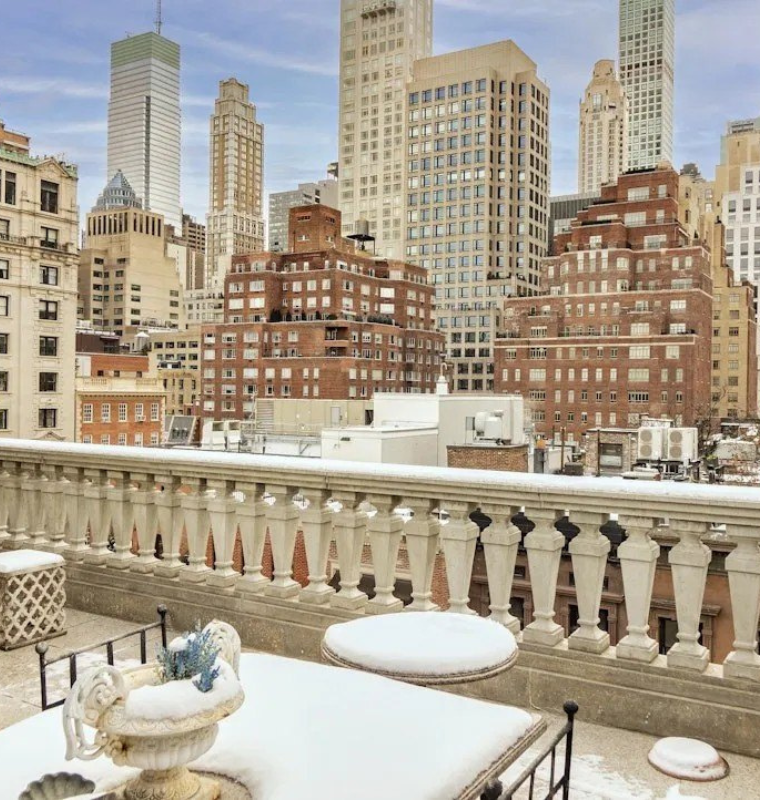
The proposed “pied-à-terre” tax, backed by both Mamdani and Kathy Hochul, would apply annually to non-primary residences valued at $5 million or more, targeting wealthy property owners who maintain high-end apartments in Manhattan and other luxury neighborhoods but do not permanently live there.
Supporters argue the policy could help raise hundreds of millions of dollars while also discouraging vacant luxury properties that contribute little to the city’s housing supply.
Critics, however, warn that the measure may generate far less revenue than projected, have minimal impact on affordability, and potentially damage New York’s reputation among wealthy investors and business leaders.
The debate has quickly become one of the most closely watched housing and taxation battles in the United States as cities around the world experiment with similar taxes on vacant and underused homes.
New York Turns to Luxury Property Taxes to Fill Budget Gaps
The push for the new tax comes as New York City faces mounting fiscal pressure tied to rising operational costs, housing demands, infrastructure spending, and slowing revenue growth.
In his latest budget proposal, Mamdani dropped a controversial plan that would have raised property taxes more broadly on middle-class homeowners — a politically sensitive move in a city already struggling with affordability concerns.
Instead, the administration chose to focus on taxing ultra-luxury second homes owned by wealthy individuals who spend limited time in the city.
City officials estimate the tax could generate as much as $500 million annually.
The proposal specifically targets non-resident properties worth at least $5 million, many of which are concentrated in Manhattan’s luxury condominium market.
These homes are often owned by international investors, hedge fund executives, billionaires, and high-net-worth individuals who use them occasionally or hold them primarily as investment assets.
Political Tensions Escalate Around the Proposal
The issue has already triggered sharp political backlash from parts of New York’s business and financial community.
Tensions intensified after Mamdani released a public video outside a property linked to billionaire hedge fund manager Ken Griffin, one of the city’s most prominent wealthy residents and a vocal critic of higher taxation policies.
Griffin warned that aggressive taxation and anti-wealth rhetoric could discourage investment and eventually push businesses and high-income individuals away from New York.
The clash reflects a broader ideological divide emerging in major global cities over how governments should address inequality, housing shortages, and rising living costs.
Despite those concerns, New York’s luxury real estate market has remained relatively resilient so far, with high-end property sales continuing even amid elevated interest rates and economic uncertainty.
Global Cities Have Already Tried Similar Taxes
New York is far from the first city to experiment with taxes on second homes and vacant luxury properties.
Cities including Vancouver, London, Paris, Toronto, and Singapore have all implemented versions of vacancy taxes, second-home levies, or foreign buyer surcharges over the past decade.
The policies were introduced as governments faced growing public frustration over rising rents, declining affordability, and luxury properties sitting largely empty while housing shortages worsened.
Vancouver’s Empty Homes Tax became one of the most closely watched examples globally after city officials claimed it helped push more vacant units into the rental market while generating additional tax revenue for affordable housing programs.
Singapore has taken an even more aggressive approach, imposing some of the world’s highest foreign buyer taxes, with surcharges in certain cases reaching 60%.
Paris is also moving toward steeper vacancy penalties as officials attempt to bring more unused housing back into circulation.
Experts Say Housing Supply Remains the Bigger Issue
While policymakers increasingly favor second-home taxes politically, many economists argue such measures are unlikely to solve deeper housing problems.
Housing experts say affordability challenges in major cities are driven primarily by limited housing supply, restrictive zoning rules, construction constraints, and population growth rather than luxury investment properties alone.
Paul Cheshire, professor of economic geography at the London School of Economics, said second-home taxes are now well established internationally but warned that policymakers often overestimate their impact.
According to Cheshire, the largest misconception is the belief that taxing luxury second homes will significantly improve affordability in major global cities.
He argued that housing shortages are primarily caused by policy constraints that limit new development rather than by vacant luxury apartments.
Experts also note that second homes typically represent a relatively small portion of overall housing stock, even in expensive urban markets.
In many cities, second homes account for roughly 10% to 15% of housing inventory at most, limiting the overall scale and financial impact of such taxes.
Revenue Expectations May Be Too Optimistic
One of the biggest concerns surrounding New York’s proposal is whether the city can actually collect as much revenue as projected.
Although Mamdani’s administration estimates the tax could raise around $500 million annually, several economists and city analysts believe the final figure may end up significantly lower.
New York City’s comptroller recently released an analysis suggesting more realistic revenue estimates may fall between $340 million and $380 million after accounting for behavioral changes and legal adjustments by property owners.
Analysts expect many wealthy homeowners to restructure ownership arrangements, convert units into rentals, transfer occupancy claims to family members, or potentially sell properties to avoid the tax.
Legal challenges are also expected once the policy moves closer to implementation.
Evidence from other global cities suggests vacancy and second-home taxes often generate less revenue than initially forecast because wealthy property owners adapt relatively quickly.
Even in Vancouver — one of the most aggressive examples globally — vacancy taxes ultimately accounted for only a small percentage of overall city revenue.
Limited Impact on Housing Prices and Rents
Research from cities that already implemented similar policies suggests the taxes may modestly reduce vacancy rates without dramatically improving affordability.
Economists say luxury real estate markets often operate separately from broader housing markets, limiting how much vacant high-end condos affect average rents and home prices.
Thomas Brosy, senior research associate at the Urban-Brookings Tax Policy Center, said evidence from cities like Vancouver and Paris shows these taxes can lower vacancies somewhat and generate additional revenue, but they have generally failed to meaningfully reduce overall housing costs.
Many luxury apartments targeted by these taxes are priced far beyond what middle-income renters or buyers could realistically afford even if they entered the market full time.
As a result, the broader housing crisis often remains largely unchanged.
Wealth Migration Concerns Continue Growing
Another major question surrounding the policy is whether higher taxes could accelerate the departure of wealthy residents and investors from New York.
Experts say a single tax alone is unlikely to trigger mass migration, but cumulative financial pressures can influence long-term decisions about where wealthy individuals choose to live, invest, and hold assets.
Cities such as Dubai, along with low-tax U.S. states including Florida and Texas, have increasingly attracted affluent residents seeking lower taxes and business-friendly environments.
Analysts point to broader migration trends already underway in the United States, where high-income earners have increasingly relocated from high-tax states such as New York and California toward lower-tax jurisdictions.
Still, most economists believe New York’s global status, financial ecosystem, cultural influence, and luxury real estate appeal are unlikely to disappear because of a single property tax policy.
A Symbolic Policy With Strong Political Appeal
For many policymakers, the political attractiveness of a pied-à-terre tax may outweigh its financial limitations.
Unlike broad-based tax increases that affect middle-class homeowners or renters, second-home taxes focus narrowly on ultra-wealthy property owners, making them politically easier to support publicly.
The policy also allows city leaders to present themselves as addressing inequality and housing concerns without imposing widespread tax hikes on full-time residents.
Critics argue the measure may ultimately function more as a symbolic political statement than a transformative housing solution.
Still, as housing affordability continues deteriorating across major global cities, taxes targeting vacant luxury properties are becoming increasingly common tools for governments searching for both revenue and political momentum.
For New York City, the success or failure of the proposal could shape future debates over housing policy, taxation, and wealth in one of the world’s most expensive urban markets.
.webp)
Popular articles



Subscribe to unlock premium content
Living History Like Never Before

Capturing the Night Like Never Before

Transforming Small Spaces Into Personal Sanctuaries

Living History Like Never Before
Capturing the Night Like Never Before
Living History Like Never Before