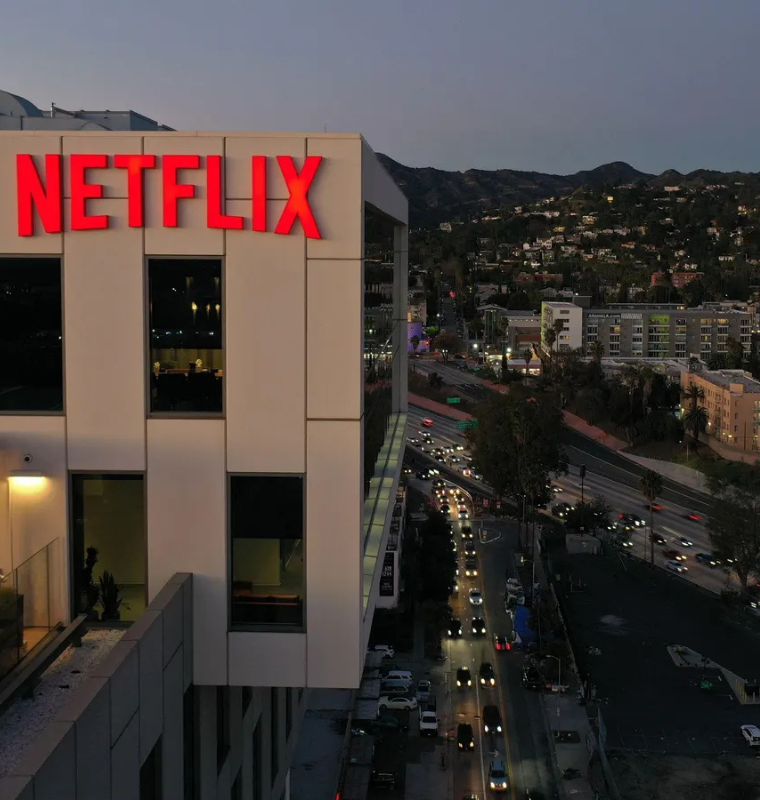
Netflix Ends Warner Bros. Discovery Talks After Washington Visit by CEO

Netflix Ends Warner Bros. Discovery Talks After Washington Visit by CEO
By
Augusta Parker
Last updated:
February 27, 2026
First Published:
February 27, 2026


Photo: The Guardian
Timing Draws Attention as Deal Collapses
Netflix’s pursuit of key assets from Warner Bros. Discovery came to an abrupt end the same day co-CEO Ted Sarandos visited the White House for discussions tied to the proposed transaction. The meeting, which involved senior administration staff rather than the president, took place amid heightened scrutiny of the media industry’s consolidation wave and its potential regulatory implications.
Within hours of Sarandos’ arrival in Washington, Warner Bros. Discovery disclosed that its board had determined a competing acquisition proposal from Paramount Skydance represented a superior offer under the terms of its agreement with Netflix. The announcement effectively shifted the balance of negotiations and set the stage for Netflix’s withdrawal.
A Competing Bid Changes the Equation
Paramount Skydance’s proposal — covering the entirety of Warner Bros. Discovery rather than select assets — materially increased the financial value for shareholders. The revised offer triggered contractual provisions allowing WBD to reconsider its prior arrangement, giving Netflix a limited window to respond with an improved bid.
Instead of escalating the bidding war, Netflix opted to step back, signaling that the higher price required to remain competitive would undermine the strategic and financial logic of the deal.
Political and Regulatory Context
Sarandos’ trip to Washington occurred against a backdrop of growing political interest in media consolidation and corporate governance. While the meeting did not involve direct negotiations with the president, it reflected the reality that large-scale entertainment mergers increasingly intersect with public policy discussions around competition, jobs, and content distribution.
Industry observers note that as streaming platforms grow into global media powerhouses, regulatory engagement has become a routine part of major transactions, particularly those involving legacy studios and national broadcast assets.
Netflix Emphasizes Financial Discipline
Following the board’s determination and its own internal review, Netflix announced it would terminate the agreement rather than match the revised terms. Company leadership stated that the transaction had always been contingent on maintaining attractive economics and a clear path to long-term value creation.
Executives reiterated that while acquiring Warner Bros. Discovery’s studio and streaming operations could have accelerated content production and expanded intellectual property ownership, the revised valuation shifted the risk-reward balance.
Market and Industry Implications
The collapse of the deal underscores the increasingly competitive landscape for premium content libraries and distribution platforms. With global streaming penetration still rising and advertising models evolving, scale remains a central strategic priority across the industry.
For Warner Bros. Discovery, the superior proposal opens the door to a broader merger that could reshape the competitive hierarchy among major entertainment companies. For Netflix, the decision reinforces a strategy centered on organic growth, disciplined capital deployment, and continued investment in original programming.
What the Episode Signals for Future Deals
The rapid sequence of events — from a high-level policy meeting to a board determination and immediate termination — highlights how quickly large transactions can pivot when competing offers emerge. It also illustrates the growing complexity of dealmaking at the intersection of technology, media, and regulation.
While the proposed transaction is now off the table, the episode provides a clear example of how strategic priorities, shareholder value considerations, and political context collectively influence the outcome of modern media mergers.
.webp)
Popular articles



Subscribe to unlock premium content
The Rise of Heritage Manor Stays in the United Kingdom Countryside

H&M’s Circular Fashion Model Is Redefining Fast Fashion’s Future

Samsung’s Ecosystem Strategy Beyond Smartphones

The Rise of Heritage Manor Stays in the United Kingdom Countryside
H&M’s Circular Fashion Model Is Redefining Fast Fashion’s Future
The Rise of Heritage Manor Stays in the United Kingdom Countryside