Mitsubishi Heavy Industries Rallies on Landmark Warship Deal with Australia

Mitsubishi Heavy Industries Rallies on Landmark Warship Deal with Australia
By
Augusta Parker
Last updated:
April 20, 2026
First Published:
April 20, 2026

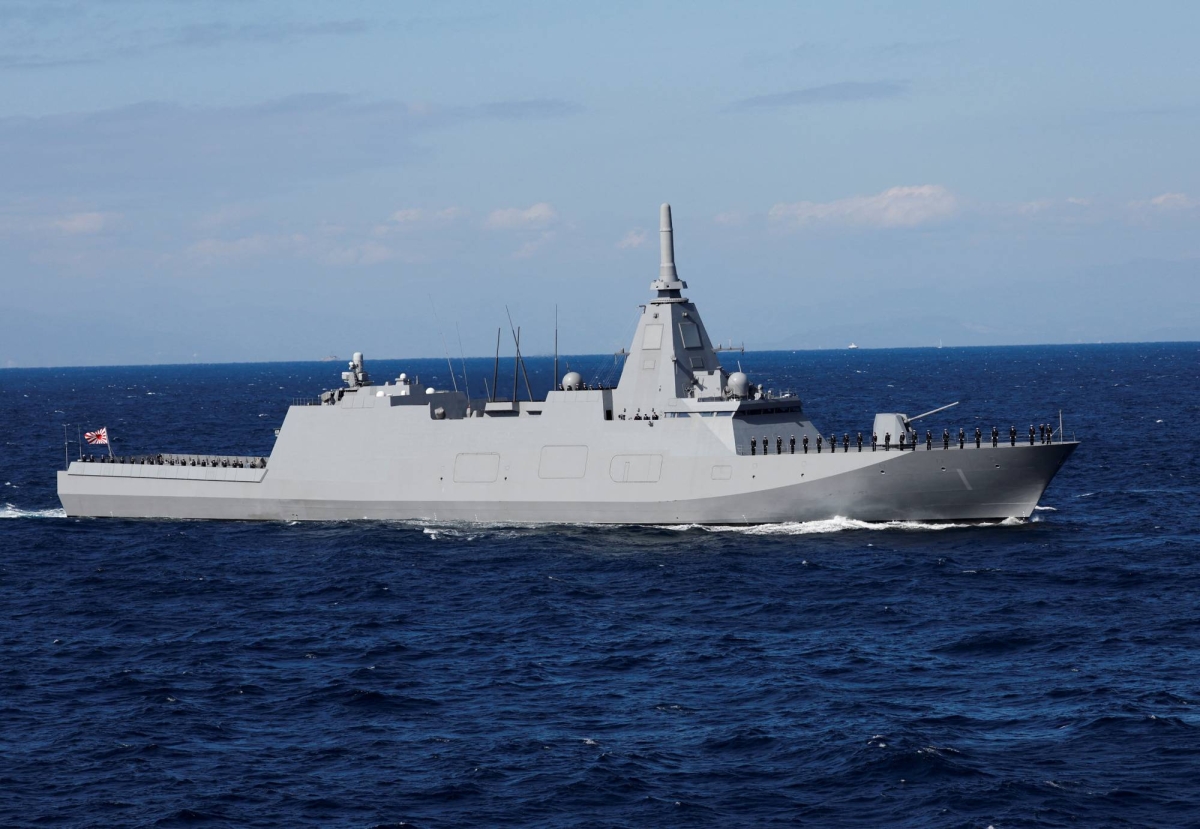
Photo: The Japan Times
Shares of Mitsubishi Heavy Industries surged nearly 4% after Japan finalized a historic agreement with Australia to build advanced naval frigates, marking a turning point for the country’s defense industry and export policy.
The deal, valued at around AU$10 billion (approximately $7.1 billion), represents Japan’s first-ever export of a complete warship system. Under the agreement, Mitsubishi Heavy Industries will construct the first three general-purpose frigates, with the initial vessel expected to be delivered to the Royal Australian Navy by 2029. The remaining ships will be built domestically in Australia as part of a broader AU$20 billion naval expansion program covering a total of 11 vessels.
This milestone underscores a significant evolution in Japan’s long-standing restrictions on arms exports. For decades, strict policies limited the country’s ability to sell defense equipment overseas. However, growing geopolitical tensions and shifting security priorities have prompted Tokyo to gradually ease these rules, opening the door for deals of this scale.
The frigates will be based on an upgraded version of Japan’s Mogami-class design, known for its stealth capabilities, modular architecture, and advanced combat systems. These next-generation warships are set to replace Australia’s aging ANZAC-class fleet, many of which have been in service since the late 1980s, signaling a major modernization effort within the Royal Australian Navy.
Mitsubishi Heavy Industries secured the contract after outcompeting Germany’s ThyssenKrupp Marine Systems in a closely watched bidding process. Reports indicate that Japan’s willingness to prioritize delivery timelines—potentially supplying Australia with new vessels ahead of its own naval requirements—played a decisive role in winning the deal.
The project will also involve several major Japanese technology firms. NEC Corporation, Mitsubishi Electric, and Hitachi are expected to provide key systems, including radar, communications infrastructure, and advanced electronic components. Following the announcement, Mitsubishi Electric shares rose more than 3%, while Hitachi posted modest gains and NEC saw a slight dip.
Investor sentiment around Mitsubishi Heavy Industries has been increasingly positive, with the company’s stock climbing roughly 75% over the past year. The surge reflects broader global trends, including rising defense spending and increased demand for advanced military technology amid escalating geopolitical uncertainty.
Australia’s decision to strengthen its naval capabilities comes at a time of heightened tension in the Indo-Pacific region. In its latest defense strategy, Canberra highlighted China’s expanding military presence and growing assertiveness in contested waters such as the South and East China Seas. The report pointed to more frequent and sometimes unsafe interactions involving the People’s Liberation Army and China Coast Guard with foreign military forces operating under international law.
Against this backdrop, the Japan-Australia agreement goes beyond a commercial transaction. It represents a deepening strategic partnership aimed at enhancing regional security, ensuring maritime stability, and counterbalancing emerging threats in one of the world’s most critical geopolitical corridors.
As Japan steps further into the global defense export market, this deal could serve as a blueprint for future collaborations, positioning its defense industry as a more active player on the international stage.
.webp)
Popular articles



Subscribe to unlock premium content
Oprah’s Empire of Influence

Capsule Hotels Reinvented for the Elite
Sky-High Living in Singapore

Oprah’s Empire of Influence
Capsule Hotels Reinvented for the Elite
Oprah’s Empire of Influence