
Middle East Conflict Reshapes India’s Future Trade Corridor to Europe

Middle East Conflict Reshapes India’s Future Trade Corridor to Europe
By
Leah Rosenfeld
Last updated:
March 12, 2026
First Published:
April 25, 2026

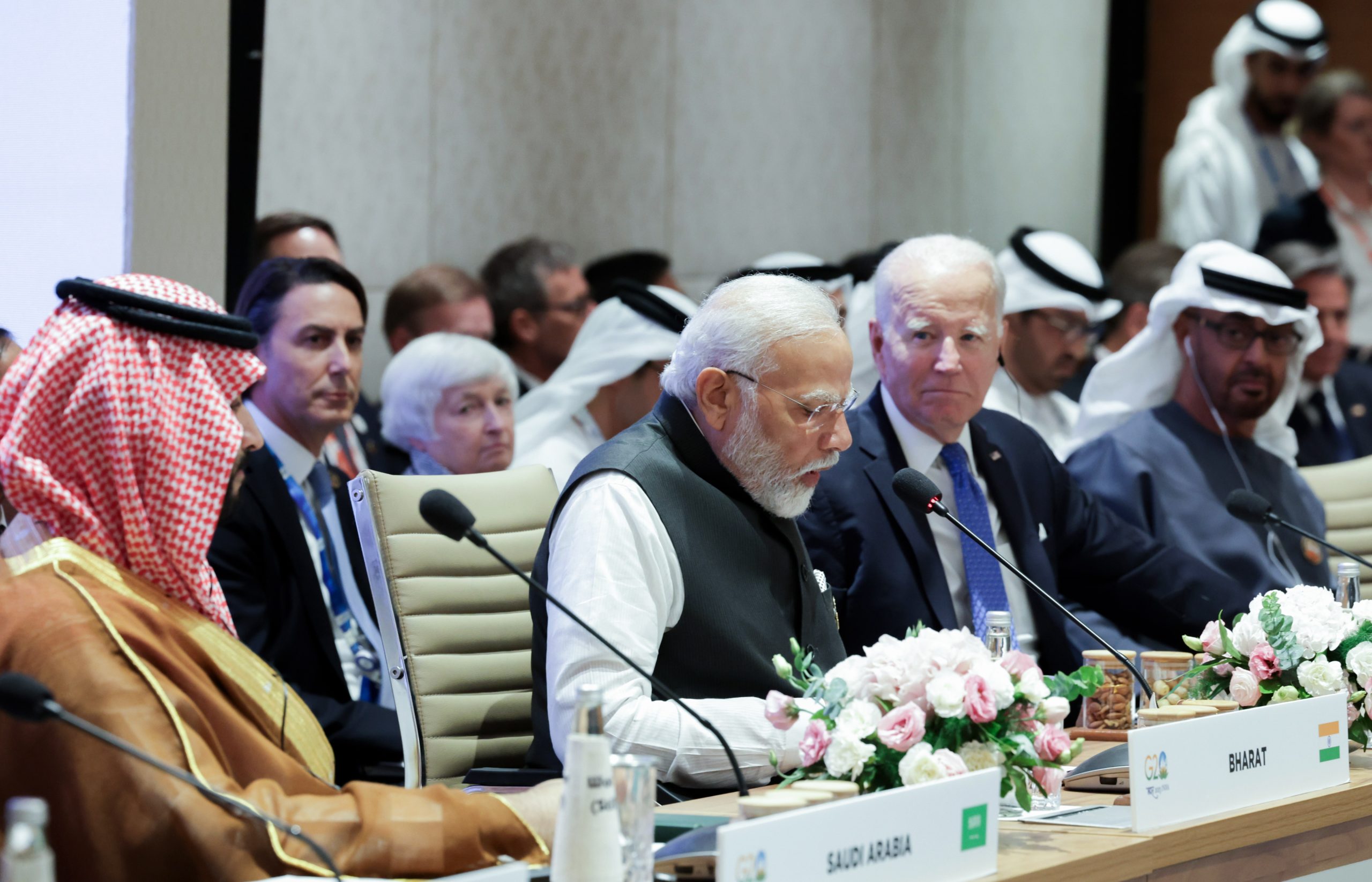
Photo: Atlantic Council
India’s long-term strategy to build faster and cheaper trade routes to Europe is now being shaped by the escalating conflict in the Middle East. New Delhi has spent years quietly developing two ambitious connectivity corridors designed to reduce shipping costs and transit times to one of its most important trading partners. However, the ongoing geopolitical crisis is forcing policymakers to reconsider which of these routes is realistically viable.
Europe remains a crucial market for Indian exports ranging from pharmaceuticals and textiles to machinery and refined petroleum products. Bilateral trade between India and the European Union alone exceeds $130 billion annually, and negotiations toward deeper economic partnerships have intensified in recent years. Ensuring efficient transport links to the region is therefore a key priority for India’s trade and industrial strategy.
With the conflict involving the United States, Israel, and Iran reshaping regional stability, analysts increasingly believe that only one of India’s two proposed corridors may ultimately survive.
Two Competing Routes for India’s Trade Ambitions
India has been developing two separate trade corridors aimed at improving connectivity with Europe and Central Asia.
The first route runs north through Iran as part of the International North–South Transport Corridor, commonly known as INSTC. This multimodal network combines maritime shipping, railways, and road transport to connect Indian ports with Iran’s Chabahar Port before moving cargo through Iran, the Caucasus, and into Russia, Central Asia, and Europe.
The second route runs west and forms part of the India–Middle East–Europe Economic Corridor, often referred to as IMEC. This project would transport goods from India to ports in the United Arab Emirates and Saudi Arabia before moving them by rail through the Middle East to Israel’s Haifa Port and onward to Europe by sea.
Both routes aim to reduce the heavy reliance on traditional shipping through the Suez Canal, which has long served as the main maritime gateway connecting Asia with Europe.
IMEC Gains Momentum as Iran’s Position Weakens
The war involving Iran is significantly undermining the feasibility of the northern corridor that relies on Iranian infrastructure. Economic sanctions, geopolitical instability, and potential damage to transport infrastructure are all creating uncertainty around the future of the INSTC project.
If the current conflict results in prolonged sanctions or political instability in Iran, India’s investments in the corridor could face major obstacles. Some analysts argue that even if the war ends and sanctions are lifted, geopolitical influence in the region could shift toward other powers, limiting India’s strategic leverage over the route.
In contrast, the IMEC corridor is gaining renewed attention as a more stable alternative. The project has received strong backing from the United States, Israel, and several Gulf nations, all of which view the corridor as a transformative infrastructure project linking Asia, the Middle East, and Europe.
Political leaders have repeatedly described IMEC as one of the most ambitious global connectivity initiatives currently under development.
The Economic Advantage of the IMEC Corridor
Beyond geopolitical considerations, IMEC offers significant logistical advantages for India’s exporters.
According to government estimates, the corridor could reduce transportation time between India and Europe by approximately 40 percent compared with traditional routes. Shipping costs could also decline by as much as 30 percent due to shorter transit distances and more efficient rail connections across the Middle East.
Currently, many shipments between India and Europe rely on maritime routes passing through the Suez Canal. While this corridor has historically served as a key trade artery, disruptions in the Red Sea and surrounding regions have recently exposed its vulnerability.
Security risks in the region have already forced several major shipping companies to avoid the Red Sea and reroute vessels around the Cape of Good Hope at the southern tip of Africa. This alternative route can add between 10 and 20 days to shipping times and increase freight costs by as much as 40 to 50 percent on some routes.
These disruptions have reinforced the economic case for building alternative trade corridors that are less dependent on a single maritime chokepoint.
Challenges Facing the Iran-Based Corridor
The INSTC route, despite years of planning, continues to face structural challenges. A key component of the corridor is the railway connecting Iran’s Chabahar Port to the city of Zahedan, which would link the port to Iran’s national rail network and onward to Central Asia.
This project has experienced repeated delays and remains unfinished. Analysts now warn that the railway’s completion timeline, previously targeted for 2026, could be pushed back indefinitely due to economic and political instability.
India has already invested more than $120 million in the Shahid Beheshti terminal at Chabahar Port to strengthen its presence in the region. However, the long-term viability of that investment is uncertain as the U.S. sanctions waiver that allowed India to operate the port approaches expiration.
Without continued exemptions or improvements in diplomatic relations, the Chabahar project could face operational challenges that further weaken the INSTC corridor.
Trade Strategy and Geopolitical Alignment
India traditionally pursues a balanced foreign policy that avoids aligning too closely with any single geopolitical bloc. However, major conflicts often force difficult strategic decisions, particularly when infrastructure and trade investments are involved.
The outcome of the Middle East conflict could therefore influence which trade corridor India ultimately prioritizes.
If regional stability favors U.S. and Israeli influence in the Middle East, IMEC may receive greater political and financial support. Conversely, continued instability or sanctions affecting Iran could effectively sideline the northern route.
At the same time, experts caution that IMEC’s success is not guaranteed. The project relies heavily on political cooperation among multiple countries across the Middle East, a region where geopolitical tensions remain common.
Regional Stability Will Determine the Future
Despite growing enthusiasm around IMEC, its long-term success will depend on sustained regional stability and continued cooperation among participating countries.
Major infrastructure projects of this scale require billions of dollars in investment and years of construction to complete ports, railways, logistics hubs, and customs frameworks. Political instability or shifting alliances could slow progress or reshape the corridor’s design.
Nevertheless, the current geopolitical environment has strengthened the strategic logic behind the project. By creating a direct land-sea trade corridor linking India with Europe through the Middle East, IMEC could dramatically transform regional logistics and global trade patterns.
Broader Developments in India’s Economic Landscape
The evolving trade corridor strategy comes amid several other significant developments in India’s economy.
India’s government has recently prioritized domestic energy supplies, directing oil refineries to focus on providing cooking gas to roughly 330 million households. This policy could affect millions of commercial users, including restaurants and small businesses that rely on the same fuel source.
At the same time, India is exploring a potential reset in economic relations with China by easing investment restrictions that were imposed during earlier geopolitical tensions. The shift signals a possible effort to strengthen cross-border investment flows and support economic growth.
Meanwhile, Indian conglomerate Reliance Industries has announced plans to invest in a major oil refinery project in the United States, which would become the first new refinery built in the country in roughly five decades.
Together, these developments highlight how India’s economic and trade strategies are increasingly shaped by shifting geopolitical dynamics, infrastructure ambitions, and evolving global supply chains.
.webp)
Popular articles



Subscribe to unlock premium content
How Finland Uses Ice Swimming Festivals to Boost Winter Tourism and Local Economies

The Boom of Luxury Personal Libraries Renting Rare Books to the Ultra-Wealthy

Why Bhutan’s Hand-Woven Textiles Are Gaining Global Collector Value

How Finland Uses Ice Swimming Festivals to Boost Winter Tourism and Local Economies
The Boom of Luxury Personal Libraries Renting Rare Books to the Ultra-Wealthy
How Finland Uses Ice Swimming Festivals to Boost Winter Tourism and Local Economies


