
Middle East Conflict Forces Bank of England to Delay Expected Interest Rate Cut

Middle East Conflict Forces Bank of England to Delay Expected Interest Rate Cut
By
Leah Rosenfeld
Last updated:
March 10, 2026
First Published:
April 25, 2026

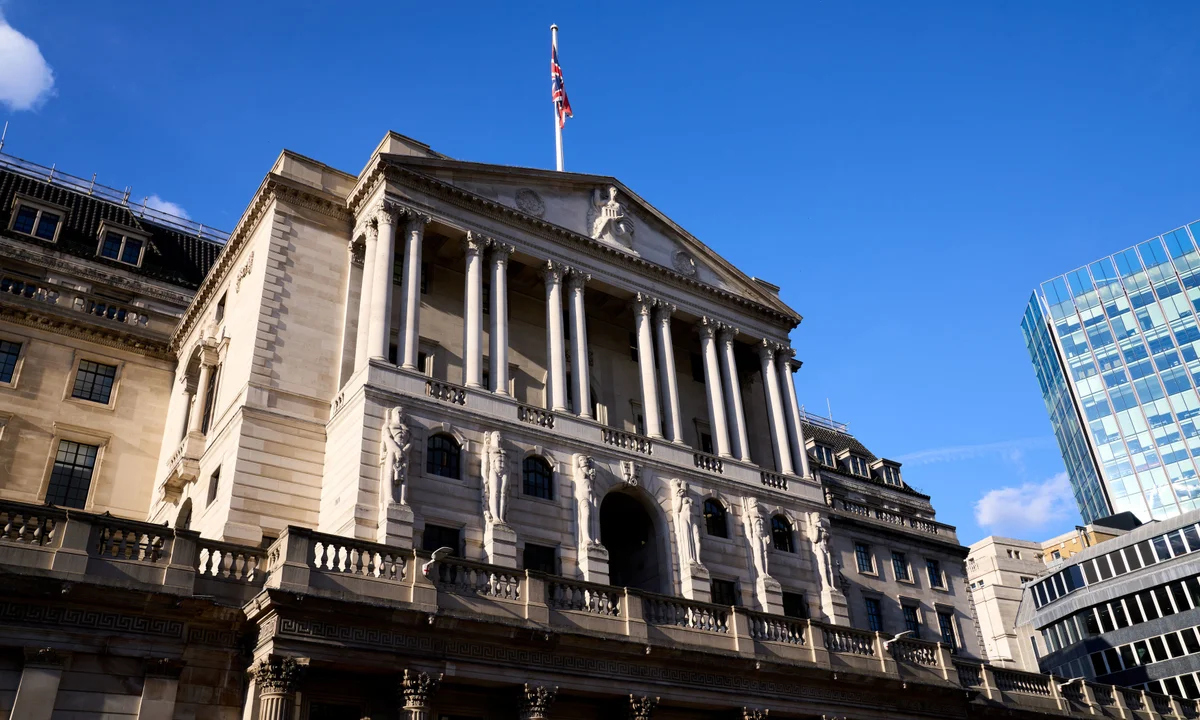
Geopolitical Shock Disrupts Rate Cut Expectations
Expectations that the Bank of England (BoE) would soon begin lowering interest rates have been abruptly disrupted by escalating geopolitical tensions in the Middle East.
Before the outbreak of war involving Iran, financial markets and economists widely believed the BoE could begin cutting interest rates as early as March 2026, or possibly at its following meeting in April. Slowing inflation, weakening economic growth, and signs of a cooling labor market had created strong momentum for monetary easing.
However, the conflict involving Iran, Israel, and the United States has rapidly changed the economic outlook. Damage to regional energy infrastructure and severe disruptions to shipping routes have driven a sharp rise in global oil and gas prices, raising fresh inflation concerns.
As a result, many economists now believe the Bank of England is unlikely to cut rates at its March 19 policy meeting, and may delay any action until later in the spring or even further into the year.
Energy Markets Trigger Fresh Inflation Risks
The immediate impact of the conflict has been felt in global energy markets.
Oil prices surged following attacks on key Iranian infrastructure and growing instability across the Middle East. Markets also reacted to the disruption of the Strait of Hormuz, one of the most important energy shipping routes in the world. Roughly 20 percent of global oil supply and a large portion of liquefied natural gas shipments normally pass through the narrow waterway.
Any threat to that corridor quickly sends energy markets into turmoil.
Analysts estimate that even temporary disruptions could push Brent crude prices significantly higher, potentially adding 10 to 20 percent to energy costs depending on the duration of the crisis. Natural gas markets have also reacted strongly, particularly in Europe, where energy security remains a major economic concern.
For the United Kingdom, these price movements carry immediate consequences.
Why the U.K. Economy Is Especially Vulnerable
The U.K. economy is particularly sensitive to global energy shocks because of its heavy reliance on imports.
Despite domestic production in the North Sea, the country still imports roughly 40 percent of its oil and as much as 60 percent of its natural gas, according to recent energy data. This dependency means international price spikes quickly translate into higher costs for households and businesses.
Rising wholesale gas prices often feed directly into electricity bills and heating costs. Because energy is a key input across the entire economy, higher prices also increase costs for manufacturing, transportation, and food production.
For policymakers at the Bank of England, this creates a complicated situation.
Higher energy prices can quickly push inflation upward again just as policymakers believed price pressures were finally easing.
Inflation Had Been Moving in the Right Direction
Before the geopolitical shock, inflation data in the U.K. had begun to show encouraging signs.
The country’s Consumer Price Index (CPI) slowed to 3 percent in January, down from 3.4 percent in December, continuing a gradual cooling trend from the double-digit inflation seen in 2022 and early 2023.
Economists expected inflation to continue drifting downward toward the Bank of England’s 2 percent target, particularly as energy costs were projected to fall during the spring months.
This decline in price pressures had fueled expectations that the BoE could begin lowering its policy interest rate from the current 3.75 percent, which has been held at restrictive levels to control inflation.
Lower interest rates would help reduce borrowing costs for businesses and households, potentially stimulating economic growth after several quarters of sluggish performance.
But the surge in energy prices has now complicated that outlook.
Policymakers Face a Difficult Monetary Policy Dilemma
Central banks must balance two competing priorities: controlling inflation and supporting economic growth.
The Bank of England now finds itself caught between those two objectives.
On one hand, the U.K. economy has shown signs of weakness. Growth has remained modest, business investment has slowed, and labor market indicators suggest hiring activity is cooling.
On the other hand, a renewed surge in energy prices could cause inflation to rise again, undermining progress made over the past year.
Economists say this creates a difficult decision for the BoE’s Monetary Policy Committee (MPC), which meets regularly to determine interest rate policy.
While temporary price spikes can sometimes be ignored, sustained increases in energy costs can feed into broader inflation through wages and consumer prices.
If policymakers believe the energy shock will persist, they may be forced to keep interest rates higher for longer.
Rate Cut Timeline Now Pushed Back
Several economic forecasts have already been revised following the outbreak of the conflict.
Many analysts now expect the first interest rate cut to occur in April or later, rather than in March. Some forecasts suggest the central bank may only implement two rate cuts in 2026, potentially in April and July, assuming energy markets stabilize.
However, the outlook remains highly uncertain.
If tensions in the Middle East escalate further or disrupt energy supplies for an extended period, the Bank of England could delay easing policy even longer.
Financial markets are closely monitoring oil prices, shipping disruptions, and diplomatic developments, all of which will influence the central bank’s decisions in the coming months.
Government Monitoring Energy Prices Closely
The British government has acknowledged the risks posed by rising global energy prices and says it is closely monitoring developments.
Officials have emphasized that the U.K. does not control global energy prices and must accept prices set by international markets.
As policymakers often note, the country is largely a “price taker” rather than a price maker when it comes to oil and natural gas.
To shield consumers from sudden price swings, the U.K. uses an energy price cap, which limits how much suppliers can charge households for electricity and gas. The cap is reviewed periodically, with the next adjustment scheduled for July.
Until then, the cap is expected to provide some protection for consumers.
However, if global gas prices remain elevated when the cap is updated, household energy bills could rise again later in the year.
The Path Ahead Depends on the Conflict
Ultimately, the Bank of England’s next move will depend largely on how the geopolitical situation evolves.
If the conflict in the Middle East de-escalates quickly and energy markets stabilize, policymakers may still proceed with rate cuts later in the spring.
But if oil and gas prices remain elevated or continue climbing, the central bank may choose to delay easing monetary policy until inflation risks become clearer.
For now, the war in Iran has introduced a new layer of uncertainty into the global economic outlook and temporarily halted what had appeared to be the beginning of a long-awaited interest rate cutting cycle in the United Kingdom.
.webp)
Popular articles



Subscribe to unlock premium content
How Finland Uses Ice Swimming Festivals to Boost Winter Tourism and Local Economies

The Boom of Luxury Personal Libraries Renting Rare Books to the Ultra-Wealthy

Why Bhutan’s Hand-Woven Textiles Are Gaining Global Collector Value

How Finland Uses Ice Swimming Festivals to Boost Winter Tourism and Local Economies
The Boom of Luxury Personal Libraries Renting Rare Books to the Ultra-Wealthy
How Finland Uses Ice Swimming Festivals to Boost Winter Tourism and Local Economies


