Microsoft Shares Tumble 23% in Worst Quarter Since Financial Crisis as AI Strategy Faces Scrutiny

Microsoft Shares Tumble 23% in Worst Quarter Since Financial Crisis as AI Strategy Faces Scrutiny
By
Rachel Steinberg
Last updated:
April 1, 2026
First Published:
April 25, 2026

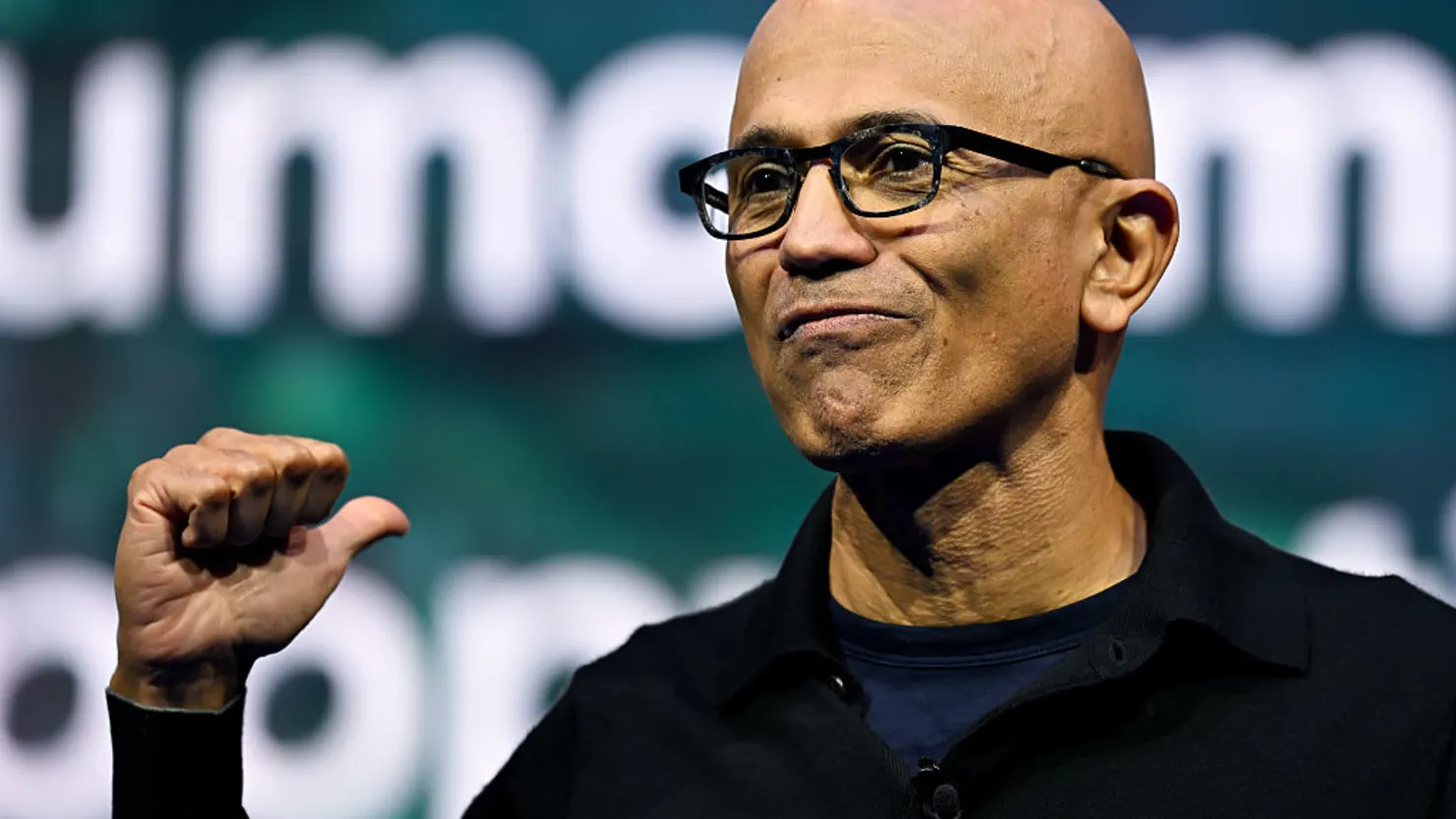
Microsoft CEO Satya Nadella speaks at the Microsoft AI Tour event in Munich, Germany, on Feb. 25, 2026.
Sven Hoppe | Picture Alliance | Getty Images
Microsoft has closed out its most challenging quarter on Wall Street in over a decade, with its stock plunging 23% in the first three months of the year. The sharp decline marks its worst quarterly performance since the 2008 financial crisis and significantly underperforms both its Big Tech peers and the broader Nasdaq Composite, which fell around 7% during the same period.
The sell-off reflects growing investor skepticism around Microsoft’s aggressive push into artificial intelligence, particularly concerns about the return on billions of dollars being invested into AI infrastructure and whether its flagship AI products can deliver meaningful revenue growth in the near term.
At the center of this चिंता is Microsoft’s AI assistant, Copilot, which was expected to become a major monetization engine across its productivity ecosystem. However, adoption has been slower than anticipated, with estimates suggesting that only about 3% of commercial users of Microsoft 365 have subscribed to the Copilot add-on. Meanwhile, competition is intensifying from rivals such as Google, OpenAI, and Anthropic, all of which are rapidly advancing their own AI offerings.
Despite maintaining dominance in enterprise software through Windows and Office, Microsoft is facing a strategic balancing act. It must continue scaling its AI capabilities while managing the massive capital expenditures required to build and operate data centers. Rising energy costs—exacerbated by geopolitical tensions impacting global oil markets—are further increasing the cost of running AI infrastructure at scale.
Analysts have flagged a growing disconnect between Microsoft’s strong operational performance and its declining market valuation. The company recently reported revenue growth of nearly 17% year-over-year, with its cloud division continuing to deliver robust expansion. However, its valuation multiple has dropped to levels not seen since late 2022, around the time OpenAI launched ChatGPT and triggered the current AI arms race.
The broader software sector is also under pressure, with many high-growth SaaS companies experiencing steep declines. Stocks like Adobe, Atlassian, and ServiceNow have each fallen more than 30% this year, as investors reassess long-term growth assumptions in an AI-driven landscape. Industry insiders have even begun referring to the trend as a “SaaSpocalypse,” highlighting the structural shift underway.
Within Microsoft, internal adjustments signal a recalibration of its AI strategy. Mustafa Suleyman, who previously led consumer-facing AI efforts, has been reassigned to focus on foundational AI models. Leadership of the Copilot product experience has been handed to Jacob Andreou, indicating a renewed push to improve product-market fit and user engagement.
Still, Microsoft’s cloud platform Azure remains a bright spot. The division posted 39% revenue growth in the latest quarter, driven by surging demand for AI computing resources. The company’s backlog of contracted future revenue—known as remaining performance obligations—has exceeded $625 billion, more than doubling year-over-year, signaling strong long-term demand.
Microsoft’s early investment in OpenAI once positioned it as a clear leader in generative AI, but the competitive landscape is evolving. OpenAI is increasingly diversifying its cloud partnerships, while also launching enterprise-focused tools that directly compete with Microsoft’s offerings.
CEO Satya Nadella has maintained a confident tone, emphasizing that AI competition is not a zero-sum game and that demand for intelligent software will continue to expand across industries. Long-term investors appear to share some of that optimism, pointing to Microsoft’s unmatched ecosystem, pricing power in enterprise software, and deeply embedded customer base.
However, in the short term, markets remain cautious. With high capital spending, uncertain AI monetization timelines, and intensifying competition, Microsoft is navigating one of the most complex strategic transitions in its history.
.webp)
Popular articles



Subscribe to unlock premium content
The Hidden World of Ultra-Rare Seaweed Farming

Riding Waves and Wealth in Bali

The Market for Renting Private Libraries Where Only Rare, Unpublished Manuscripts Exist

The Hidden World of Ultra-Rare Seaweed Farming
Riding Waves and Wealth in Bali
The Hidden World of Ultra-Rare Seaweed Farming