Microsoft Elevates Top Sales Executives as It Doubles Down on AI-Led Growth

Microsoft Elevates Top Sales Executives as It Doubles Down on AI-Led Growth
By
Calder Monroe
Last updated:
February 4, 2026
First Published:
February 4, 2026

Getty Images
Microsoft is reshaping its commercial leadership bench as it pushes deeper into artificial intelligence and cloud computing, announcing the promotion of four senior sales executives to the rank of executive vice president. The move comes just months after Judson Althoff was named CEO of Microsoft’s commercial business, signaling a broader organizational reset aimed at speeding up product delivery and tightening the connection between customers and innovation.
The newly promoted executives are Deb Cupp, Nick Parker, Ralph Haupter, and Mala Anand. All four will continue reporting directly to Althoff, who now oversees Microsoft’s global commercial strategy across enterprise, small and medium-sized businesses, and partner channels.
The appointments arrive at a critical moment for Microsoft. Shares of the company are down roughly 15% so far in 2026, making it the weakest performer among the so-called Magnificent Seven technology stocks. Investor sentiment has been pressured by softer-than-expected Azure cloud growth disclosed last week, raising fresh questions about how quickly legacy software giants can translate the explosion of generative AI into sustained revenue acceleration.
Strengthening the Commercial Engine
Microsoft said the leadership changes are designed to free up Althoff’s time so he can focus more directly on commercial product strategy while keeping customer feedback tightly integrated with engineering and product decisions.
According to the company, this faster feedback loop is especially important as businesses race to deploy AI tools across workflows, software development, and operations. Enterprise customers are increasingly demanding rapid integration of AI features into everyday products like Microsoft 365 Copilot and GitHub Copilot, alongside continued reliability and scale from Azure.
Deb Cupp, who now becomes executive vice president after serving as chief revenue officer for Microsoft’s global enterprise sales organization, has steadily risen through the ranks. Over the past several years, she moved from leading Microsoft’s U.S. business to overseeing North America and later the entire Americas region, managing relationships with some of the company’s largest corporate customers.
Nick Parker, who joined Microsoft in 2000, steps into the executive vice president role from his position as chief business officer of worldwide sales and solutions. He has played a central role in coordinating global go-to-market strategies and aligning sales teams with Microsoft’s evolving product portfolio.
Ralph Haupter takes on the title of executive vice president and chief revenue officer for small and medium enterprises and channel partners. Haupter joined Microsoft from IBM in 2005 and previously spent four years as CEO and chairman of Microsoft’s Greater China business, giving him deep experience across international markets and partner ecosystems.
Mala Anand, formerly of SAP and a Microsoft executive since 2019, becomes executive vice president and chief customer experience officer. Her remit focuses on improving how customers adopt Microsoft technologies, from onboarding through long-term usage, at a time when AI deployments often require significant change management inside organizations.
AI Investment Meets Market Reality
The promotions come as Microsoft recalibrates how it allocates computing capacity across its business. Executives recently said the company plans to direct more resources toward research and development and AI-powered products such as Microsoft 365 Copilot and GitHub Copilot, while still supporting growing demand from Azure cloud customers.
This balancing act has drawn close scrutiny from Wall Street. While Microsoft remains one of the world’s most valuable companies, analysts have flagged rising infrastructure costs tied to AI workloads and the need for massive capital spending on data centers and specialized chips. At the same time, enterprises are experimenting with building their own applications using large language models, creating uncertainty about how much incremental revenue will flow directly to platform providers.
Microsoft leadership has emphasized that AI adoption is accelerating across industries, from financial services and healthcare to manufacturing and retail. The company continues to sign multiyear cloud and AI agreements with large enterprises, and Copilot features are being embedded across Word, Excel, Teams, and other core products in an effort to drive recurring subscription upgrades.
Nadella’s Long-Term Vision
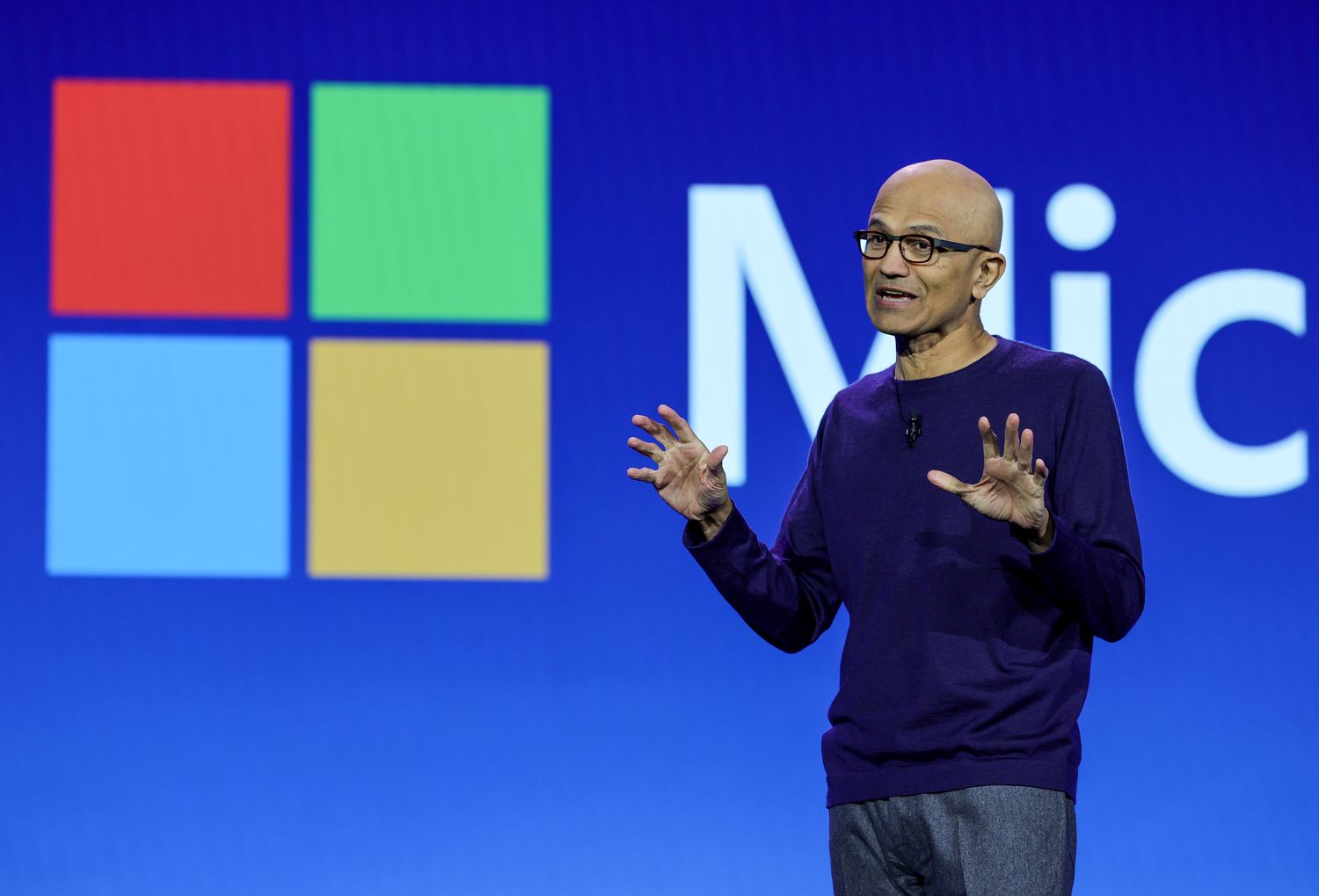
Microsoft CEO Satya Nadella, who himself held the executive vice president title before taking over the top job in 2014, has increasingly concentrated on innovation and platform strategy while empowering Althoff to run the commercial side of the business.
Nadella remains closely involved in the company’s AI direction. At a developer event in India late last year, he demonstrated an application he built using multiple generative AI models to research topics, underscoring his hands-on approach to the technology. More recently, he reflected on his engineering roots, noting that he began his career working in command-line environments and still enjoys building tools firsthand.
With these latest promotions, Microsoft is signaling that execution in sales, customer experience, and partner channels will be just as critical as breakthroughs in AI models themselves. As competition intensifies across cloud platforms and enterprise AI, the company is betting that a strengthened commercial leadership team can help convert rapid technological change into durable business growth.

Popular articles


Subscribe to unlock premium content
Immersive Art Beneath the Waves

The $30 Million Market for Ultra-Rare Glow-in-the-Dark Paintings

Arctic Elegance on Ice

Immersive Art Beneath the Waves
The $30 Million Market for Ultra-Rare Glow-in-the-Dark Paintings
Immersive Art Beneath the Waves