Meta Expands Beyond Advertising With New AI Business Agents for Customer Service and Sales

Meta Expands Beyond Advertising With New AI Business Agents for Customer Service and Sales
By
David Goldfarb
Last updated:
June 4, 2026
First Published:
June 4, 2026


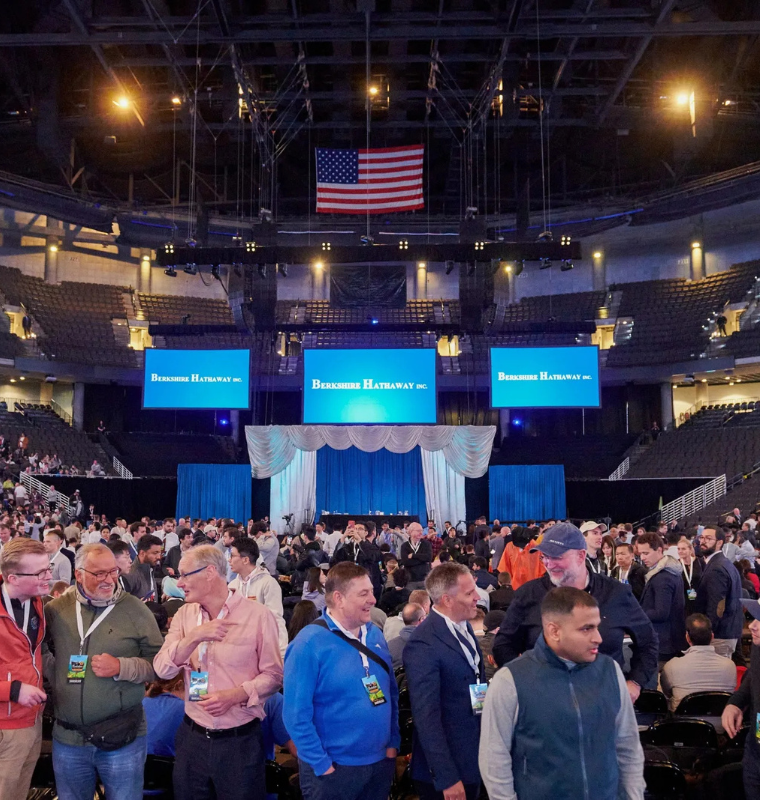
Photo: Entrepreneur UK
Meta is making one of its boldest moves yet to diversify revenue beyond digital advertising, unveiling a new AI-powered business agent designed to help companies automate customer interactions, boost sales, and streamline daily operations across its family of apps.
The launch marks a significant step in Meta's broader artificial intelligence strategy as CEO Mark Zuckerberg seeks to transform the company from an advertising giant into a leading provider of AI-powered business services.
The new offering, known as Meta Business Agent, will allow businesses to engage customers through WhatsApp, Instagram, and Messenger while automating tasks that traditionally required human staff. The service will be packaged within Meta's recently introduced Meta One subscription ecosystem, creating a new recurring revenue stream beyond advertising.
Meta Pushes Deeper Into the AI Economy
For nearly two decades, Meta's financial success has been driven primarily by advertising.
Today, roughly 98% of the company's revenue still comes from ads displayed across Facebook, Instagram, Messenger, and other platforms. While that business continues to generate tens of billions of dollars annually, executives have increasingly emphasized the need to develop additional revenue sources.
Artificial intelligence has emerged as the company's most promising opportunity.
Rather than limiting AI to consumer chatbots, Meta is now targeting businesses that want to automate customer support, lead generation, appointment scheduling, and product recommendations.
The strategy places Meta directly in one of the fastest-growing areas of enterprise technology: AI agents.
Industry analysts estimate that the global AI agent market could grow into a multi-hundred-billion-dollar industry over the next decade as businesses increasingly adopt automated digital assistants capable of handling complex customer interactions.
What Meta Business Agent Can Do
The new AI-powered service is designed to function as a virtual employee operating around the clock.
Businesses using the platform will be able to deploy AI agents that can:
- Answer customer questions instantly
- Recommend products based on customer preferences
- Schedule appointments automatically
- Handle common support requests
- Generate sales leads
- Guide customers through purchasing decisions
- Provide personalized shopping experiences
- Assist with operational tasks
Because the system is integrated directly into Meta's messaging ecosystem, businesses can interact with customers through platforms they already use daily.
With billions of active users across WhatsApp, Instagram, and Messenger, Meta believes it has a major advantage over competitors that require customers to adopt separate applications.
Bringing Enterprise-Level Tools to Small Businesses
During the company's product presentation, Zuckerberg emphasized that the goal is to make sophisticated AI capabilities available to businesses of every size.
Traditionally, advanced customer service automation required large budgets, dedicated software teams, and expensive enterprise platforms.
Meta's vision is different.
A local clothing retailer, restaurant, beauty salon, or online store could potentially access AI-powered customer engagement tools that were previously available only to major corporations.
The company believes this democratization of AI could significantly improve customer experiences while helping small businesses compete more effectively in increasingly digital markets.
Building a New Subscription Business
The launch also reflects Meta's growing interest in subscription-based revenue models.
Last week, the company introduced Meta One, a new premium subscription framework that bundles advanced services for creators, professionals, and businesses.
The Meta Business Agent will become part of that ecosystem, allowing Meta to generate recurring subscription revenue alongside its advertising business.
This represents an important strategic shift.
Historically, Meta has struggled to establish major subscription products despite multiple attempts involving hardware, virtual reality, creator tools, and premium digital services.
If successful, AI subscriptions could become one of the company's most significant new revenue streams.
Meta Envisions AI Agents Running Entire Businesses
The current version of Meta Business Agent focuses primarily on customer communication and operational support.
However, Zuckerberg outlined a much more ambitious long-term vision.
As Meta's AI models become increasingly capable, future versions of the platform may help businesses analyze performance, identify growth opportunities, monitor competitors, and generate strategic recommendations.
Executives envision AI agents eventually functioning as digital business assistants capable of supporting marketing, sales, operations, and customer engagement simultaneously.
In theory, these systems could provide real-time business intelligence and decision support while continuously learning from customer interactions.
This would move AI agents beyond simple chatbots and into the realm of operational management tools.
Competition in the AI Agent Market Intensifies
Meta is entering an increasingly crowded and highly competitive market.
Major technology companies are racing to establish leadership positions in AI-powered business automation.
Among the most prominent competitors are:
- Microsoft
- Amazon
- OpenAI
- Anthropic
These companies are investing billions of dollars in AI infrastructure, foundation models, enterprise software, and automation platforms.
The competition reflects growing belief that AI agents could become one of the most transformative software categories since cloud computing.
Existing WhatsApp Business Customers Become Key Target
Meta already possesses a significant advantage through its established business messaging ecosystem.
Millions of businesses currently use WhatsApp Business to communicate with customers, process inquiries, and support sales activities.
Under the new model, larger businesses utilizing WhatsApp Business Platform will pay based on usage, similar to existing messaging-based pricing structures.
This approach allows Meta to monetize AI interactions without forcing businesses into expensive enterprise contracts.
As usage grows, AI-powered conversations could become a substantial source of revenue.
Integration With Shopify and Zendesk Expands Capabilities
A major feature of the new platform is its ability to connect with external business systems.
Meta announced that companies will be able to integrate data from platforms including:
- Shopify
- Zendesk
These integrations allow AI agents to access customer information, product catalogs, support histories, inventory data, and other business records.
The result is a more personalized customer experience.
Rather than offering generic responses, the AI can tailor recommendations and support interactions based on real business data.
This functionality is increasingly becoming a critical requirement in enterprise AI deployments.
Why This Move Matters for Meta's Future
Meta's AI ambitions extend far beyond improving its existing advertising products.
While AI has already helped enhance ad targeting, recommendation algorithms, and content discovery across Facebook and Instagram, the company is now pursuing direct monetization opportunities.
The AI business agent initiative signals a broader transformation in how Meta views its future.
Instead of relying almost entirely on advertising revenue, the company is building a portfolio of AI-driven products capable of generating subscription fees, usage-based payments, and enterprise software revenue.
If successful, this strategy could reduce Meta's dependence on advertising cycles while positioning the company as a major player in the rapidly expanding AI economy.
The Road Ahead
The launch of Meta Business Agent represents another milestone in the industry's shift toward AI-powered automation.
Businesses increasingly want technology that can engage customers, automate repetitive tasks, and improve operational efficiency without requiring large technical teams.
Meta believes its combination of massive messaging platforms, advanced AI models, and global business relationships gives it a unique opportunity to capture a meaningful share of that market.
As competition intensifies among the world's largest technology companies, AI agents are emerging as the next major battleground—and Meta is making it clear that it intends to be one of the leading players shaping that future.
.webp)
Popular articles



Subscribe to unlock premium content
The Rise of Indoor Vertical Gardening

Esports Tournaments Are Becoming the New Spectator Sport

Minimalism in Motion

The Rise of Indoor Vertical Gardening
Esports Tournaments Are Becoming the New Spectator Sport
The Rise of Indoor Vertical Gardening