Alphabet’s $80 Billion Equity Wave Pushes Markets Into Uncharted Territory, Says Goldman Sachs Executive

Alphabet’s $80 Billion Equity Wave Pushes Markets Into Uncharted Territory, Says Goldman Sachs Executive
By
Alina Sinclair
Last updated:
June 3, 2026
First Published:
June 3, 2026

.webp)
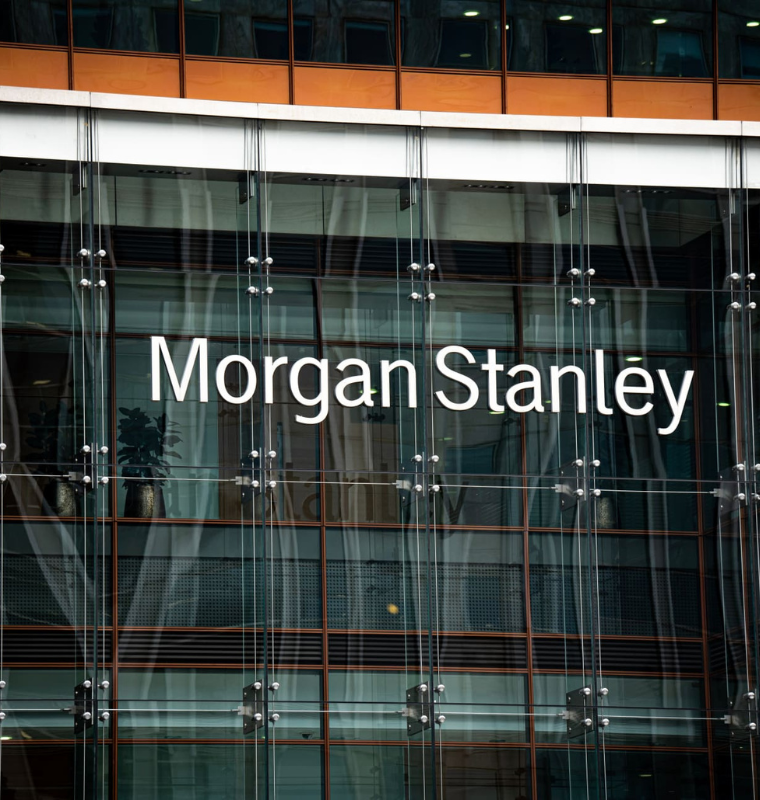
Photo: Bloomberg.com
The global capital markets are entering what bankers are describing as a structurally new phase after Alphabet announced an $80 billion equity-related financing program aimed at strengthening its artificial intelligence and infrastructure expansion plans.
According to senior investment banking executives, the scale and timing of the issuance has pushed equity markets into what they describe as “uncharted” or “unprecedented” territory, reflecting both the size of Big Tech capital needs and the accelerating race for AI dominance.
The discussion comes as investment banks position themselves for one of the busiest capital markets environments in years, driven by mega equity deals, IPO pipelines, and large-scale corporate financing.
Goldman Sachs Warns of Historic Scale in Equity Markets
Speaking in an exclusive interview, Anthony Gutman, co-chief executive of Goldman Sachs International, said the sheer size of Alphabet’s fundraising marks a turning point for global equity issuance.
He described the current environment as one requiring caution and precision, noting that the scale of capital deployment is unlike anything seen in prior market cycles.
The Alphabet transaction alone, structured across multiple equity-linked components, includes a reported $10 billion allocation tied to strategic investors, highlighting how large corporations are increasingly blending public and private capital channels.
Investment banks including JPMorgan Chase and Morgan Stanley are acting alongside Goldman Sachs as key advisers and bookrunners on the broader capital raising structure.
AI Infrastructure Spending Drives Record Capital Demand
The financing move reflects a broader shift in how technology companies are allocating capital, particularly as artificial intelligence workloads require massive investments in compute infrastructure, data centers, and advanced semiconductor systems.
Alphabet’s strategy is part of a wider trend among hyperscalers, who are collectively expected to spend hundreds of billions of dollars over the coming years on AI-related infrastructure expansion.
Industry analysts estimate that global AI infrastructure spending could exceed $1 trillion cumulatively over the next decade, driven by demand for training large-scale models, cloud computing expansion, and enterprise AI adoption.
This level of capital intensity is reshaping equity markets, as companies increasingly rely on large-scale issuance rather than internal cash flow alone to fund growth.
Capital Markets Enter a Record Issuance Cycle
Bankers say the Alphabet deal is not an isolated event but part of a broader acceleration in equity capital markets activity.
Several factors are contributing to the surge:
- A growing pipeline of mega initial public offerings
- Rising capital requirements for AI infrastructure
- Increased private-to-public market transitions
- Strong institutional investor demand for large, high-quality issuers
- Expansion of dual-track financing strategies
Market participants are already anticipating one of the strongest issuance cycles in years, with multiple large-scale listings expected across technology, energy, and industrial sectors.
Mega IPO Pipeline Builds Momentum
The equity markets are also preparing for a wave of high-profile public listings.
Among the most closely watched potential IPOs are:
- SpaceX, which is reportedly targeting a valuation of around $1.75 trillion
- OpenAI, which has indicated long-term plans for a public listing
- Anthropic, which is also exploring market entry options
Together, these potential listings could represent one of the largest IPO waves in modern financial history, significantly reshaping capital market depth and liquidity.
Analysts note that if even a portion of these offerings materialize, annual IPO proceeds could surpass previous cycle peaks by a substantial margin.
Strong Investor Demand Supports Large Issuance
Despite concerns about market absorption capacity, investment bankers report strong institutional demand for high-quality equity offerings.
Gutman noted that relative to total global market capitalization, even large transactions appear manageable when spread across global institutional investor bases.
Large pension funds, sovereign wealth funds, and long-term asset managers continue to show appetite for exposure to dominant technology platforms, particularly those positioned at the center of AI infrastructure development.
This demand has helped stabilize pricing expectations even as issuance volumes rise.
The Role of Investment Banks in Mega Deals
Large-scale offerings such as Alphabet’s require coordinated execution across multiple top-tier investment banks.
In addition to advisory roles, firms like Goldman Sachs, JPMorgan Chase, and Morgan Stanley are responsible for:
- Structuring complex equity offerings
- Managing investor allocations
- Pricing large-scale transactions
- Ensuring regulatory compliance
- Coordinating cross-border investor demand
As deal sizes increase, the complexity of execution has also grown significantly, requiring deeper coordination between equity capital markets, private placement teams, and institutional sales desks.
A Structural Shift in Equity Market Dynamics
Market observers say the current environment represents more than just a temporary issuance spike.
Instead, it reflects a structural shift driven by three key forces:
First, the capital intensity of AI development is fundamentally higher than previous technology cycles.
Second, the concentration of market leadership among a small number of mega-cap companies is increasing the scale of individual financing events.
Third, institutional investors are consolidating capital flows into fewer, larger transactions rather than fragmented smaller deals.
Together, these forces are redefining how global equity markets function.
Outlook: More Mega Deals Ahead
With AI investment accelerating and IPO pipelines expanding, bankers expect continued momentum in equity issuance through the next several quarters.
While concerns remain about valuation pressures and market absorption capacity, the current demand environment suggests that large-scale offerings are likely to remain well-supported.
For now, Alphabet’s $80 billion move is being viewed not as an outlier, but as a signal of what may become the new normal in global capital markets.
.webp)
Popular articles



Subscribe to unlock premium content
The Rise of Indoor Vertical Gardening

Esports Tournaments Are Becoming the New Spectator Sport

Minimalism in Motion

The Rise of Indoor Vertical Gardening
Esports Tournaments Are Becoming the New Spectator Sport
The Rise of Indoor Vertical Gardening