
Macron Condemns Trade Intimidation and Calls on U.S. to Roll Back Tariffs

Macron Condemns Trade Intimidation and Calls on U.S. to Roll Back Tariffs
By
Rachel Steinberg
Last updated:
January 21, 2026
First Published:
April 25, 2026

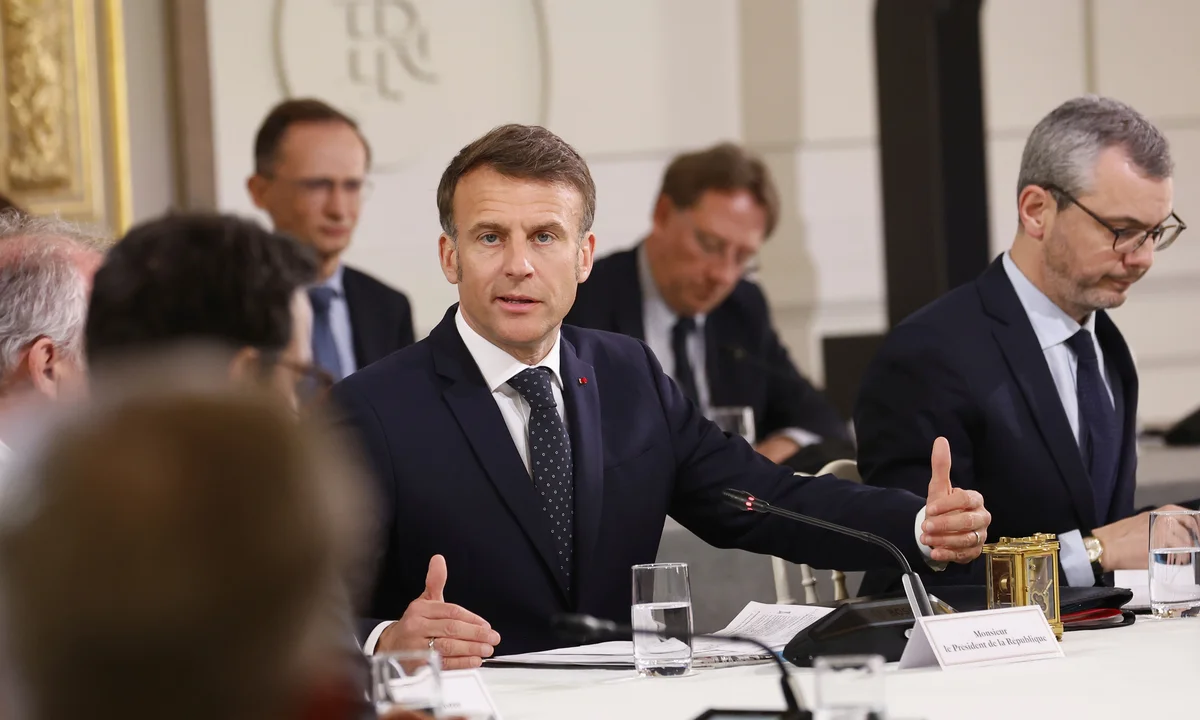
Photo: The Guardian
French President Emmanuel Macron delivered a sharp rebuke of U.S. trade policy at the World Economic Forum in Davos, calling for the suspension of American tariffs on European goods and warning against what he described as economic bullying. His remarks come after U.S. President Donald Trump threatened to impose tariffs of up to 200 percent on French wine and other European exports, intensifying an already fragile transatlantic relationship.
Macron’s comments were widely seen as a direct response to Washington’s increasingly aggressive use of trade measures, even though he stopped short of naming Trump explicitly.
A forceful message from Davos
Speaking before an audience of global political and business leaders in Switzerland, Macron framed the dispute as a broader struggle between cooperation and coercion. He argued that global growth and stability cannot be achieved through threats or unilateral pressure.
Macron emphasized that Europe favors predictability, mutual respect, and adherence to international rules, rather than confrontation driven by tariffs. He warned that repeated tariff threats only deepen divisions at a time when the global economy is already facing slowing growth, geopolitical conflict, and fragile supply chains.
Trump is scheduled to address the Davos forum a day later, adding to the charged atmosphere surrounding the event.
Tariff threats target French wine and Europe more broadly
The latest escalation follows Trump’s warning that French wine exports could face tariffs as high as 200 percent. France is one of the world’s largest wine exporters, shipping billions of euros worth of wine annually, with the United States representing one of its most important overseas markets.
In addition to France, Trump has threatened to expand tariffs on at least eight European countries if they resist U.S. demands related to Greenland, a self-governing territory within the Kingdom of Denmark. These measures would add to existing trade frictions and could significantly disrupt transatlantic commerce.
European officials fear that such tariffs would not only hurt exporters but also raise consumer prices and undermine investment confidence on both sides of the Atlantic.
Europe weighs its strongest trade defense tool
Macron confirmed that the European Union is actively considering the use of its Anti-Coercion Instrument, a powerful but rarely discussed mechanism designed to respond to economic pressure from third countries.
The Anti-Coercion Instrument would allow the EU to restrict access for U.S. companies to European public procurement contracts, impose import and export controls on goods and services, and potentially limit foreign direct investment. The tool was created to deter trade coercion but has never been deployed.
Macron described the prospect of using it against the United States as deeply troubling, calling it “crazy” that relations between long-standing allies could deteriorate to that point. He stressed that Europe does not want escalation but must be prepared to defend its economic sovereignty.
Call for dismantling tariffs and restoring cooperation
The French president urged a reversal of existing and proposed tariffs, arguing that trade barriers fragment markets and weaken collective growth. He criticized what he described as an endless buildup of tariffs used as leverage not only in trade disputes but also in matters of territorial sovereignty.
Macron warned that such practices risk normalizing economic pressure as a political weapon, setting a dangerous precedent in global trade. He called on European nations to act in unity, noting that without coordinated governance, cooperation gives way to destructive competition.
He also cautioned that U.S. trade agreements and policies increasingly demand maximum concessions from partners while undermining European export interests.
Security tensions spill into the Arctic
Trade disputes are unfolding alongside growing security tensions. Macron confirmed that France has deployed troops to Greenland in support of Denmark, emphasizing that the move was defensive and intended to support a European ally rather than provoke confrontation.
France recently joined Operation Arctic Endurance, sending 15 soldiers to Greenland alongside forces from Germany and Norway. The deployment reflects heightened European concern over Arctic security and sovereignty amid increased global interest in the region’s strategic and economic value.
High stakes for transatlantic relations
The clash over tariffs and Greenland has raised concerns that economic disputes could spiral into broader diplomatic and security rifts. Markets and businesses are watching closely, as further escalation could affect industries ranging from agriculture and luxury goods to defense and infrastructure.
As Trump prepares to address Davos and U.S. officials signal a more assertive global posture, Macron’s message was clear: Europe is open to cooperation, but not at the cost of intimidation or unilateral pressure.
With billions of euros in trade at stake and the credibility of global trade rules under strain, the coming weeks may prove decisive for the future of U.S.-EU economic relations.
.webp)
Popular articles



Subscribe to unlock premium content
Crypto in the Arctic
Iceland’s Seaweed Revolution
Private Island Rentals for Corporate Retreats Hit $1 Billion

Crypto in the Arctic
Iceland’s Seaweed Revolution
Crypto in the Arctic


