Kim Jong Un Showcases Naval Expansion and Missile Power in Rare Dual Military Display

Kim Jong Un Showcases Naval Expansion and Missile Power in Rare Dual Military Display
By
Rachel Steinberg
Last updated:
December 25, 2025
First Published:
December 25, 2025

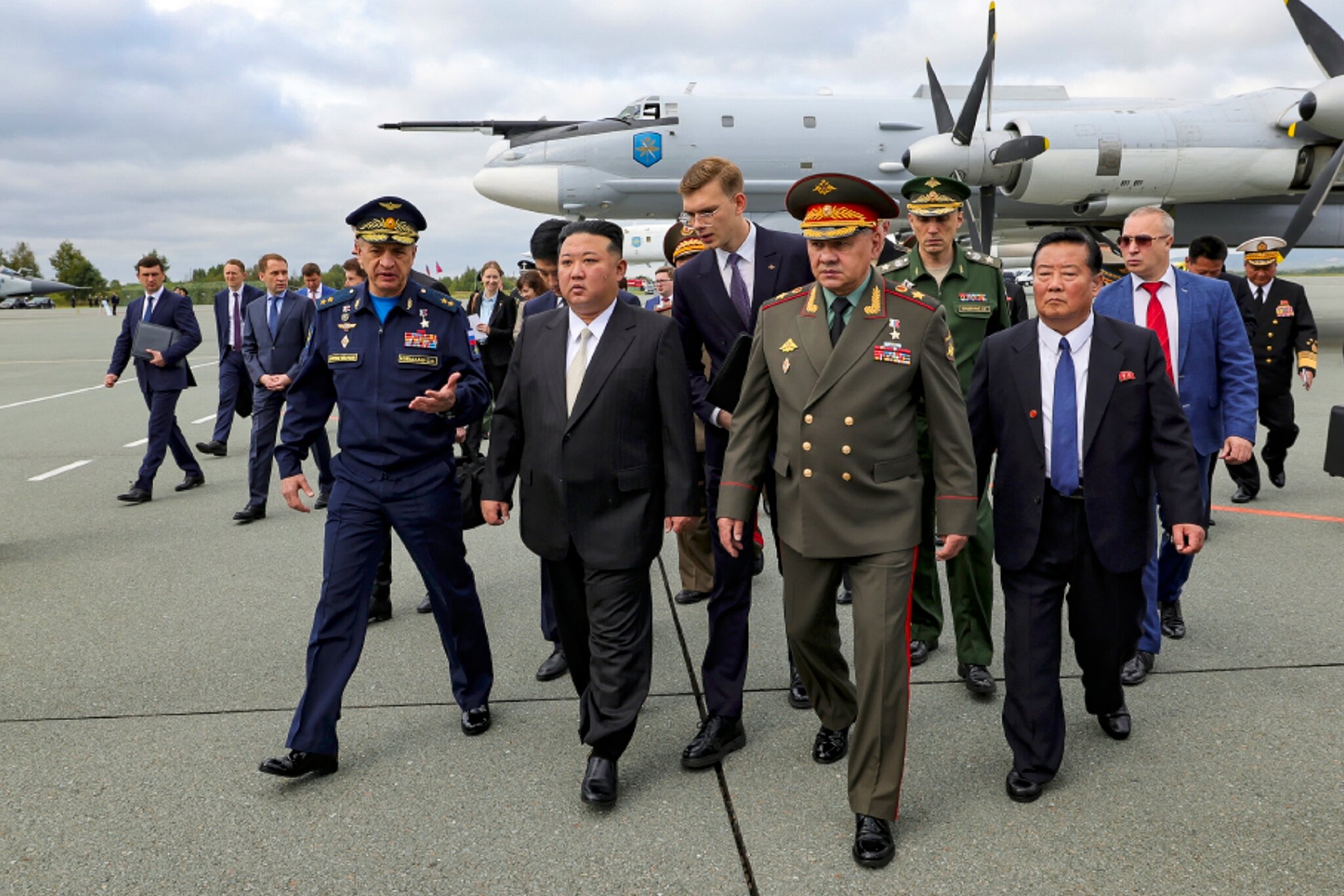
Photo: The New York Times
A Coordinated Show of Military Progress
North Korean leader Kim Jong Un has conducted a high profile inspection of strategic military programs, observing submarine construction alongside his daughter while also overseeing the test launch of long range surface to air missiles. State media framed the events as evidence of rapid progress in Pyongyang’s efforts to modernize its armed forces amid what it describes as a deteriorating global security environment.
The appearances underscore North Korea’s focus on strengthening both its naval and air defense capabilities, areas that analysts say are increasingly central to its long term deterrence strategy.
Missile Test Signals Growing Air Defense Reach
According to state media, North Korea test fired a new type of long range surface to air missile near its east coast on Wednesday. The test was designed to evaluate high altitude interception technology, with missiles reportedly striking airborne targets at distances of up to 200 kilometers.
South Korea’s Joint Chiefs of Staff confirmed the launch, noting that the military had detected preparations in advance and was monitoring the situation closely. The test took place in the early evening local time, reinforcing assessments that Pyongyang is continuing to normalize weapons testing as part of its development cycle.
Military observers view the test as part of a broader push to improve North Korea’s layered air defense systems, particularly against reconnaissance aircraft and potential aerial threats.
Nuclear Submarine Project Takes Shape
Kim also inspected construction at a separate site involving an 8,700 ton nuclear powered submarine, a vessel believed to be capable of launching surface to air missiles. While state media did not disclose the location or timing of the visit, images showed Kim touring an indoor facility housing a large red submarine hull.
Experts analyzing the images say the vessel’s design strongly suggests the presence of a nuclear reactor, indicating that North Korea may be nearing a major milestone in naval propulsion. A senior researcher at the Korea Institute for National Unification noted that the submarine appears close to operational readiness, although sea trials have not yet been confirmed.
The project is part of the ruling party’s broader plan to modernize the navy, one of five priority areas identified for advancing the country’s military capabilities.
A Carefully Staged Appearance With Kim’s Daughter
Photos released by state media showed Kim accompanied by his daughter, Ju Ae, who has appeared with him at several high profile military events over the past year. Standing beside her father among senior officials, she was shown observing the submarine construction process, a detail that has drawn attention from analysts who see her growing presence as symbolically significant.
While North Korea has made no official statements about succession, some observers believe these appearances are intended to signal continuity and reinforce the leadership’s long term vision.
Regional Tensions Frame the Messaging
During the inspections, Kim reiterated that the expansion of nuclear capabilities and naval modernization are, in his words, essential and unavoidable given what he described as an increasingly unstable world. He warned that South Korea’s plans to develop a nuclear powered submarine in cooperation with the United States would further inflame tensions and pose direct security risks.
North Korean media also criticized the recent arrival of a U.S. nuclear powered submarine at the South Korean port of Busan, calling it an escalation that threatens stability on the Korean Peninsula. The U.S. submarine Greeneville docked earlier this week for crew rest and resupply, according to South Korean naval officials.
Broader Implications for Northeast Asia
Pyongyang has also accused Japan of moving closer to nuclear armament, claiming that regional developments, including South Korea’s naval ambitions, are encouraging a dangerous arms buildup. Together, the submarine inspection and missile test form part of a consistent narrative aimed at justifying continued weapons development.
For regional economies and security planners, the events highlight persistent geopolitical risks in Northeast Asia. While largely symbolic, such displays often precede further testing or deployments, keeping markets, governments, and defense analysts on alert as North Korea presses ahead with its military modernization agenda.

Popular articles


Subscribe to unlock premium content
The New Wave of Superyacht Ownership

Micro-Experience Convenience Stores Are Reinventing Quick Stops

Custom Vans for Digital Nomads Redefine Mobility

The New Wave of Superyacht Ownership
Micro-Experience Convenience Stores Are Reinventing Quick Stops
The New Wave of Superyacht Ownership