

Kharg Island Emerges as Flashpoint in U.S.–Iran Tensions
By
David Goldfarb
Last updated:
March 16, 2026
First Published:
April 25, 2026

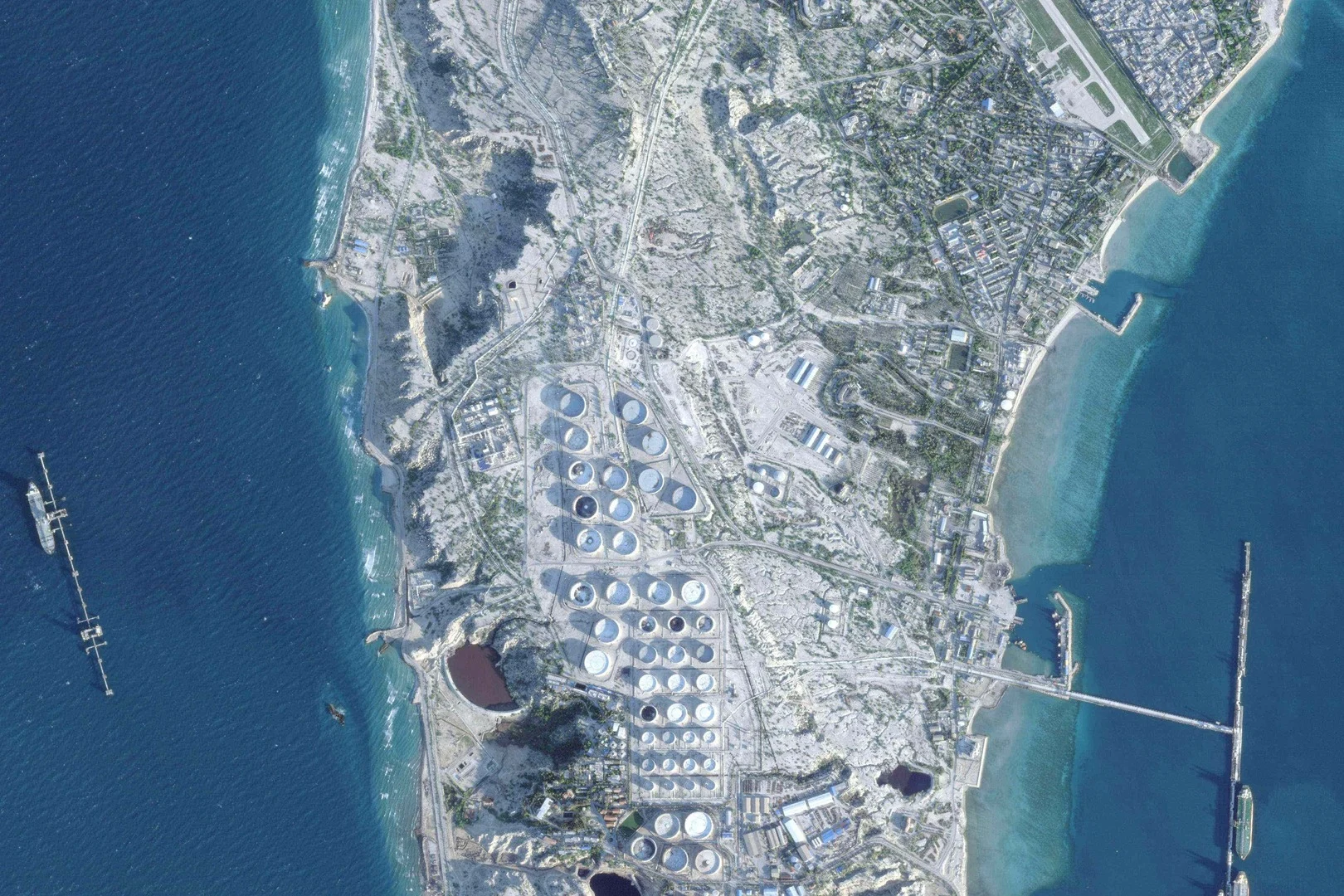
Photo: Belfast Telegraph
A recent U.S. military strike ordered by President Donald Trump on Iranian military facilities on Kharg Island has placed one of the Middle East’s most critical oil export hubs at the center of escalating tensions between Washington and Tehran. The move signals a sharp escalation in geopolitical pressure on Iran and has heightened concerns across global energy markets.
While the strikes specifically targeted military infrastructure rather than oil facilities, the symbolic significance of Kharg Island cannot be overstated. The small island serves as the primary gateway for Iran’s crude exports, and any disruption there could have far reaching consequences for global oil supply, regional stability, and energy prices.
Energy analysts say the decision to strike near such a strategically vital energy hub sends a clear signal to Iran that further escalation could threaten the backbone of its oil economy.
A Strategic Island at the Heart of Iran’s Oil Industry
Kharg Island is widely considered the most important node in Iran’s oil export network. Located roughly 15 miles off the Iranian mainland in the northern Persian Gulf, the island has served for decades as the central hub for the country’s crude shipments to international markets.
Despite its relatively small size — measuring only about five miles in length — the island hosts massive storage terminals, offshore loading facilities, and pipeline infrastructure capable of handling enormous volumes of oil exports.
Industry estimates suggest that around 90 percent of Iran’s crude exports pass through Kharg Island, making it the single most important oil export point in the country. The island’s export terminals have a combined loading capacity of roughly 7 million barrels per day, allowing large supertankers to transport crude to major buyers across Asia and beyond.
Iran currently exports approximately 1.5 million barrels of crude oil per day, and the majority of those shipments originate from Kharg. These exports provide a critical source of foreign currency revenue for Tehran and help finance government spending, public services, and strategic programs.
Because of its central role in Iran’s energy economy, Kharg Island has long been considered one of the country’s most sensitive and strategically important targets in any military conflict.
U.S. Strike Sends Warning Without Targeting Oil Infrastructure
According to U.S. officials, the recent military strike focused specifically on Iranian military installations located on the island. The operation was designed as a warning rather than an attempt to directly disrupt oil exports.
However, President Trump indicated that the United States could expand its targets if Iran continues aggressive actions in the Strait of Hormuz, a critical maritime chokepoint through which nearly one fifth of the world’s oil supply passes each day.
The warning underscores how energy infrastructure is becoming increasingly intertwined with geopolitical strategy in the region. While the oil terminals themselves were not targeted, the proximity of the strike highlights how quickly the situation could escalate.
Analysts say the message from Washington is clear: continued threats to international shipping could trigger direct attacks on the economic lifelines supporting Iran’s oil industry.
Potential Impact on Iran’s Oil Exports
If Kharg Island’s oil infrastructure were to suffer major damage, the consequences for Iran’s economy could be immediate and severe.
Energy market estimates suggest that a direct strike on the export terminals could effectively halt most of Iran’s 1.5 million barrels per day in crude shipments, cutting off one of the government’s largest sources of revenue.
Rebuilding damaged oil facilities on the island would not be a quick process. Large scale energy infrastructure such as storage tanks, loading terminals, and pipeline systems can take years to fully repair or reconstruct, particularly in a conflict environment where continued attacks remain possible.
For Iran, the stakes are enormous. Oil exports account for a significant portion of government revenue and remain one of the country’s most important economic pillars.
Limited Alternatives for Export Routes
Although Kharg Island dominates Iran’s export capacity, the country does have some limited alternative infrastructure that could partially offset disruptions.
One example is the Goreh to Jask pipeline, a strategic project designed specifically to reduce reliance on the Strait of Hormuz and Kharg Island. The pipeline transports crude oil from southwestern production fields to the port of Jask on the Gulf of Oman.
The system has the capacity to move roughly 1.5 million barrels of oil per day, theoretically allowing Iran to export crude without routing shipments through the heavily monitored Persian Gulf shipping lanes.
However, analysts caution that shifting large volumes of oil exports away from Kharg would be operationally complex and unlikely to fully replace the island’s massive infrastructure. Storage facilities, tanker loading capabilities, and logistical networks at Kharg remain far more developed than those at alternative ports.
As a result, even with backup routes available, any serious disruption to Kharg Island would still represent a major shock to Iran’s export capacity.
Risk of Broader Attacks on Regional Energy Infrastructure
Energy experts warn that an attack on Kharg Island could trigger retaliation from Iran against other energy facilities across the Middle East.
One possible target frequently cited by analysts is Saudi Arabia’s Abqaiq processing facility, the largest oil stabilization plant in the world. Abqaiq processes millions of barrels of crude daily and is considered one of the most strategically important energy installations globally.
A coordinated attack on major regional energy facilities could send shockwaves through global oil markets, dramatically tightening supply and pushing prices sharply higher.
Such a scenario would not only affect Middle Eastern oil producers but could also disrupt global supply chains, shipping insurance markets, and long term energy investment decisions.
Oil Markets Already Pricing in Geopolitical Risk
The escalating tensions have already begun influencing global oil prices. Crude markets reacted quickly to the growing conflict risk, with Brent crude climbing above $100 per barrel as traders factored in potential supply disruptions.
The rise in prices reflects not only fears of physical supply losses but also the broader uncertainty surrounding shipping routes and energy security.
Energy strategists increasingly believe that geopolitical tensions are becoming a permanent feature of commodity pricing. As conflicts threaten major energy chokepoints, traders are building additional risk premiums into oil contracts.
Insurance costs for shipping through volatile regions are also expected to remain elevated, even if active hostilities eventually subside.
A New Era of Energy Market Risk
The threat to Kharg Island illustrates how modern energy markets are increasingly shaped by geopolitical security concerns rather than purely economic supply and demand fundamentals.
Infrastructure located near key maritime chokepoints — whether in the Persian Gulf, the Red Sea, or other strategic routes — is becoming a focal point for military strategy and global economic risk.
If tensions continue to rise, traders and governments alike may be forced to rethink supply chain strategies, diversify energy sources, and increase stockpiles to hedge against future disruptions.
For the oil market, even the possibility of attacks on critical facilities like Kharg Island can have major consequences. The mere threat of supply interruptions is often enough to push prices higher, alter trading patterns, and inject long lasting volatility into global energy markets.
.webp)
Popular articles



Subscribe to unlock premium content
How Finland Uses Ice Swimming Festivals to Boost Winter Tourism and Local Economies

The Boom of Luxury Personal Libraries Renting Rare Books to the Ultra-Wealthy

Why Bhutan’s Hand-Woven Textiles Are Gaining Global Collector Value

How Finland Uses Ice Swimming Festivals to Boost Winter Tourism and Local Economies
The Boom of Luxury Personal Libraries Renting Rare Books to the Ultra-Wealthy
How Finland Uses Ice Swimming Festivals to Boost Winter Tourism and Local Economies


