Japan’s Stock Market Breaks New Ground as Nikkei Surges Past 65,000 on Easing Oil Concerns

Japan’s Stock Market Breaks New Ground as Nikkei Surges Past 65,000 on Easing Oil Concerns
By
Leah Rosenfeld
Last updated:
May 25, 2026
First Published:
May 25, 2026

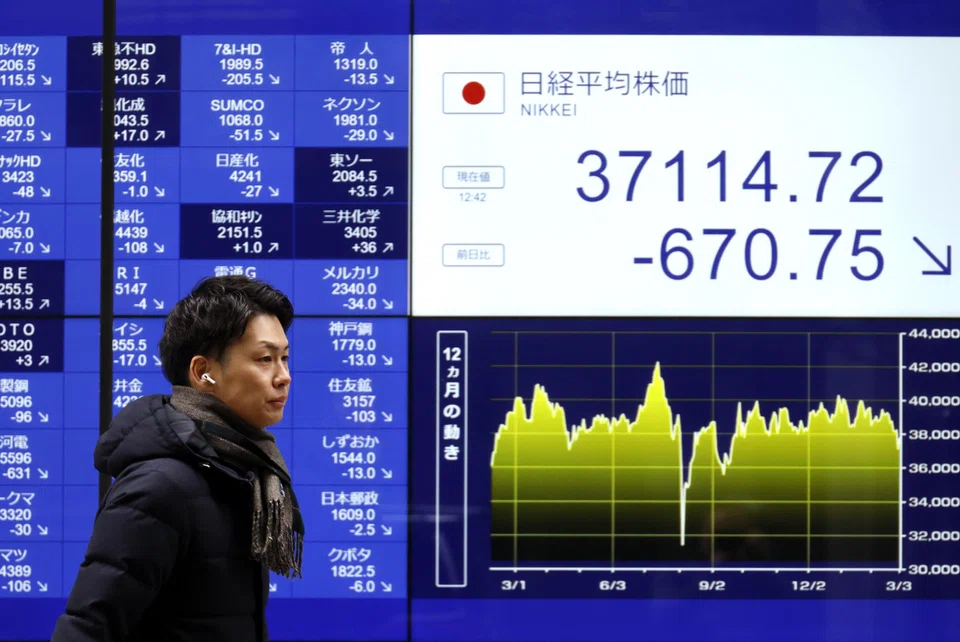
Photo: The Business Times
Japan’s stock market entered historic territory on Monday after the benchmark Nikkei 225 index climbed above the 65,000 mark for the first time ever, setting a new all-time record. The rally was fueled by a sharp decline in global oil prices after fresh signs emerged that tensions surrounding the critical Strait of Hormuz could ease.
The breakthrough represents another milestone for Japanese equities, extending a powerful upward trend driven by improving corporate earnings, strong investor confidence, foreign capital inflows, and growing optimism surrounding global economic conditions.
Lower energy prices also boosted sentiment across broader Asian markets, helping push several major indexes higher despite reduced trading volumes caused by public holidays across key regions.
Nikkei Reaches Historic High as Investors Embrace Risk
Japan's Nikkei 225 jumped more than 3% during trading and touched a record high of 65,408.87, crossing the psychological 65,000 threshold for the first time in history.
The broader Topix index also moved higher, adding approximately 1.19%.
The gains reflected a broad market rally rather than isolated strength in a few sectors, with investors returning aggressively to equities following a shift in sentiment surrounding energy markets and geopolitical developments.
The move also reinforced Japan's position as one of the strongest-performing major equity markets in recent years.
Analysts have pointed to several supporting factors behind the market's rise, including:
• Strong corporate earnings growth
• Increased foreign investor participation
• Continued technology sector strength
• Improving shareholder return initiatives
• Lower pressure from global energy costs
The latest surge adds another chapter to Japan’s equity recovery story after years of economic stagnation and slower market performance.
Oil Prices Drop Sharply Following Iran Negotiation Signals
A major driver behind the stock market rally came from the energy market.
Oil prices moved sharply lower after comments from President Donald Trump suggested progress in discussions involving Iran.
According to Trump's statement, negotiations were moving in a constructive direction, helping reduce concerns about prolonged disruptions in one of the world's most strategically important shipping routes.
The Strait of Hormuz remains a critical artery for global energy transportation.
Roughly one-fifth of global oil supplies move through the waterway, making any disruption capable of creating immediate ripple effects throughout world markets.
Recent tensions had pushed oil prices sharply higher after the Trump administration imposed measures against Iranian ports and concerns increased over access through the Strait.
However, renewed hopes surrounding diplomacy quickly changed market sentiment.
During early Asian trading:
• West Texas Intermediate crude futures dropped approximately 5.87% to $90.93 per barrel
• Brent crude futures fell around 5.58% to $97.76 per barrel
The decline in energy prices provided relief to investors who had been concerned that rising oil costs could worsen inflation and pressure economic growth.
Lower Energy Costs Boost Global Market Confidence
Energy prices play a major role in shaping investor behavior because higher oil costs often affect transportation, manufacturing, consumer spending, and inflation expectations.
When crude prices rise sharply, investors typically become cautious because higher business expenses can reduce profits and slow economic activity.
Conversely, falling oil prices often improve sentiment across financial markets.
The latest decline reduced immediate concerns surrounding:
• Inflation pressure
• Corporate operating costs
• Supply chain disruptions
• Consumer spending challenges
• Global economic slowdown risks
As a result, investors shifted back toward riskier assets including equities and technology-related sectors.
Taiwan and Other Asian Markets Join the Rally
Japan was not the only market benefiting from the improved sentiment.
Taiwan's stock market also reached a historic milestone.
The Taiex index surged more than 2.9%, crossing the 43,000 level for the first time and reaching approximately 43,495.
Other regional markets also recorded gains:
• Australia’s S&P/ASX 200 rose approximately 0.45%
• China's CSI 300 gained around 0.91%
• India's Nifty 50 advanced roughly 1.09%
The broad-based gains highlighted stronger confidence throughout the region as investors reacted positively to lower energy costs.
However, trading activity remained lighter than usual because several markets were closed for public holidays.
Hong Kong and South Korea did not open for trading, while U.S. markets also remained closed due to the Memorial Day holiday.
Wall Street Momentum Continues Supporting Global Markets
Even before Monday’s Asian rally, U.S. markets had already delivered strong performances during their previous trading session.
The Dow Jones Industrial Average climbed approximately 294 points to close at 50,579.70, setting another record finish after also touching an intraday high.
Meanwhile:
• The S&P 500 rose 0.37% to 7,473.47
• The Nasdaq Composite gained 0.19% to 26,343.97
Strong U.S. market momentum has continued supporting global investor confidence, particularly in technology and growth-oriented sectors.
Investors Shift Focus Toward What Comes Next
While the latest rally reflects strong optimism, investors will continue monitoring several developments in the coming weeks.
Markets remain sensitive to:
• Progress in Iran-related negotiations
• Oil price volatility
• Inflation trends
• Central bank policy decisions
• Global economic growth indicators
For now, however, lower crude prices and easing geopolitical concerns have given investors a reason to increase exposure to equities.
Japan’s record-breaking move above 65,000 demonstrates how quickly market sentiment can change when geopolitical risks begin to ease and investors regain confidence in the broader economic outlook.
.webp)
Popular articles



Subscribe to unlock premium content
The Hidden World of Ultra-Rare Seaweed Farming

Riding Waves and Wealth in Bali

The Market for Renting Private Libraries Where Only Rare, Unpublished Manuscripts Exist

The Hidden World of Ultra-Rare Seaweed Farming
Riding Waves and Wealth in Bali
The Hidden World of Ultra-Rare Seaweed Farming