Japan’s Stock Market Breaks New Ground as Nikkei Surges Past 57,000 on Takaichi Landslide

Japan’s Stock Market Breaks New Ground as Nikkei Surges Past 57,000 on Takaichi Landslide
By
Rachel Steinberg
Last updated:
February 9, 2026
First Published:
February 9, 2026

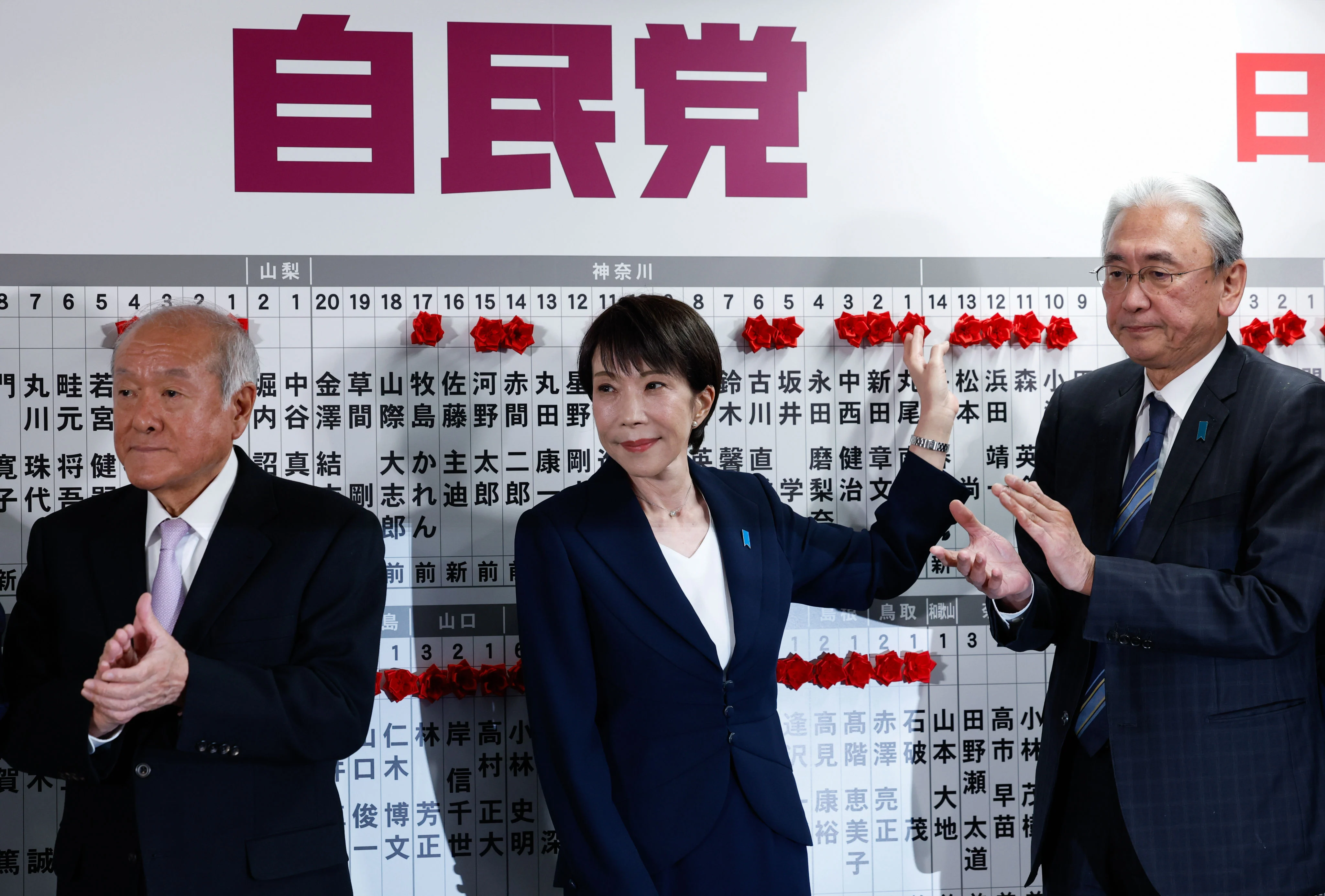
Photo: South China Morning Post
Markets Rally After Decisive Political Victory
Japanese equities soared to fresh record levels after Prime Minister Sanae Takaichi secured a landmark election victory, delivering markets the political clarity they had been pricing in for months. Investors responded swiftly, driving benchmark indices sharply higher as confidence grew around policy continuity, fiscal expansion, and structural reforms.
Japan’s Nikkei 225 surged 5.6% to close at 57,337, marking the first time the index has crossed the 57,000 threshold. The broader Topix index climbed more than 3%, also reaching an all-time high, underscoring the breadth of the rally across sectors.
Supermajority Strengthens Policy Momentum
According to public broadcaster NHK, Takaichi’s ruling Liberal Democratic Party captured a two-thirds supermajority in the 465-seat lower house. The result gives her administration a strong mandate to advance legislation with minimal political resistance, a development investors view as highly supportive for markets.
Analysts say the scale of the victory removes uncertainty around fiscal decision-making and strengthens expectations for increased public investment, tax incentives, and industrial policy aimed at revitalizing growth.
The “Takaichi Trade” Gains Traction
Japanese stocks have repeatedly set new highs in recent months, fueled by what traders have dubbed the “Takaichi trade.” Markets expect her economic agenda to mirror and expand upon Abenomics-style policies, with a focus on growth, accommodative monetary conditions, and higher government spending.
“This outcome is likely the most market-friendly scenario over the medium term,” said Sree Kochugovindan, senior research economist at Aberdeen Investments, noting that strategic investments and tax reforms could continue to lift corporate earnings and equity valuations.
Sector Leaders Drive the Rally
Gains were led by cyclical and growth-sensitive sectors. Real estate stocks jumped more than 7%, benefiting from expectations of continued low financing costs and infrastructure spending. Healthcare and industrials followed closely behind.
Among individual names, CyberAgent Inc emerged as the top Nikkei performer, surging over 16%. Semiconductor equipment maker Advantest rallied more than 12%, while Sumitomo Electric Industries climbed over 11%, reflecting strong demand for technology and manufacturing-linked stocks.
Currency and Bond Markets React
The Japanese yen strengthened modestly to 156.88 against the U.S. dollar, as investors recalibrated expectations around capital flows and economic growth. Meanwhile, government bond yields moved higher, signaling a shift toward reflationary expectations.
The yield on the 10-year Japanese government bond rose nearly 4 basis points to 2.274%, while the 20-year yield increased about 3 basis points to 3.158%. Analysts say the moves reflect anticipation of larger fiscal outlays rather than concerns about financial stability.
Crédit Agricole CIB noted that the election result gives Takaichi greater latitude to pursue a more proactive fiscal stance, backed by a clear public mandate.
Global Leaders and Markets Take Note
U.S. President Donald Trump congratulated Takaichi on her victory in a public message, praising her decision to call an election and highlighting strong voter support. The endorsement added to the sense of international recognition surrounding the outcome.
The rally in Japan also lifted sentiment across Asia. South Korea’s Kospi jumped 4.15%, while the Kosdaq rose nearly 3%. Australia’s S&P/ASX 200 gained 1.65% in early trading. Hong Kong’s Hang Seng Index advanced 1.5%, and China’s CSI 300 added 0.9%.
U.S. equity futures edged higher during Asian trading hours, building on strong gains from the previous session.
Global Context Supports Risk Appetite
The upbeat mood followed a strong finish on Wall Street last Friday, when U.S. stocks rebounded sharply as technology shares recovered and bitcoin stabilized after a prolonged sell-off.
The Dow Jones Industrial Average surged 1,206 points, or 2.47%, closing above 50,000 for the first time. The S&P 500 gained nearly 2%, while the Nasdaq Composite rose more than 2%. Despite the rally, weekly performance remained mixed, reflecting ongoing rotation within global equity markets.
A New Chapter for Japanese Equities
Takaichi’s decisive victory comes after a turbulent political period marked by leadership changes and electoral setbacks for the ruling party. With a strong mandate now in place, investors are increasingly betting that Japan’s equity market can sustain its momentum.
As fiscal policy takes center stage and reform expectations rise, Japan’s breakout above 57,000 may mark not just a milestone, but the beginning of a new phase for one of the world’s most closely watched stock markets.
.webp)
Popular articles



Subscribe to unlock premium content
Zara’s Hyper-Fast Fashion Supply Chain Is Changing Global Retail

The Rise of Apple Stores as Experiential Brand Centers Worldwide

Boutique Eco-Lodges in Costa Rica Redefining Ultra-Luxury Travel

Zara’s Hyper-Fast Fashion Supply Chain Is Changing Global Retail
The Rise of Apple Stores as Experiential Brand Centers Worldwide
Zara’s Hyper-Fast Fashion Supply Chain Is Changing Global Retail