Japan’s Prime Minister Signals Market Action After Yen Whiplash Sparks Intervention Fears

Japan’s Prime Minister Signals Market Action After Yen Whiplash Sparks Intervention Fears
By
Rachel Steinberg
Last updated:
January 26, 2026
First Published:
January 26, 2026

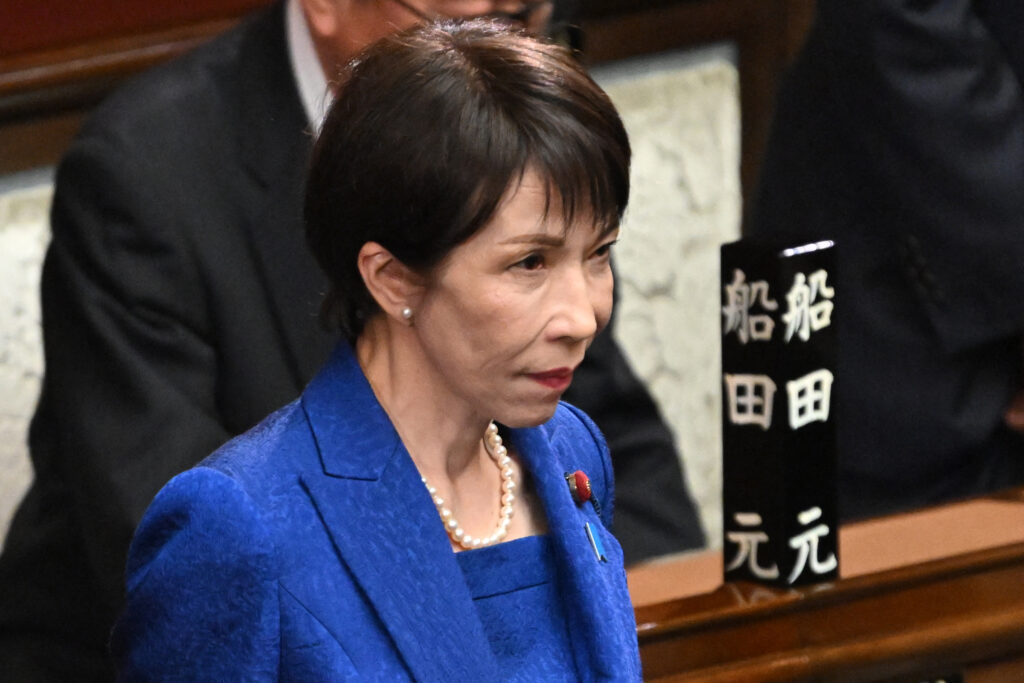
Photo: ARAB News
Yen Volatility Puts Tokyo on Alert
Japan’s financial markets were jolted this week after the yen staged an abrupt rebound following weeks of steady declines, prompting Prime Minister Sanae Takaichi to warn that her government stands ready to act against what she described as speculative or abnormal market behavior.
The currency had been hovering near the psychologically critical 160-per-dollar level, a threshold closely watched by traders and policymakers alike. After sliding toward that mark, the yen suddenly strengthened on Friday following rate checks by the New York Federal Reserve, a move that reignited talk of possible coordinated intervention between Japan and the United States.
The sharp swing caught investors off guard and underscored how fragile sentiment has become around Japan’s currency and bond markets.
While Takaichi declined to comment on specific price moves, she said in a televised interview that authorities would take “necessary steps” if speculative activity threatens stability. Her remarks come as Japan grapples with a weakening currency, rising yields, and growing concerns about inflation and public debt.
Bonds and Currency React to Expansionary Signals
The yen’s turbulence has unfolded alongside a selloff in Japanese government bonds, driven largely by fears that Takaichi’s expansionary fiscal agenda, combined with the Bank of Japan’s gradual pace of interest rate normalization, could lead to heavier debt issuance and sustained price pressures.
Bond yields have climbed sharply in recent weeks, increasing the cost of servicing Japan’s already massive public debt, which exceeds 250 percent of GDP. Markets have been especially sensitive to signals that the government may loosen fiscal policy just as global interest rates remain elevated.
A weaker yen has also become a political issue at home. While exporters benefit from a softer currency, households feel the strain through higher import costs for food, energy, and everyday goods. That dynamic has intensified pressure on Takaichi to act decisively as living expenses continue to rise.
Tax Relief at the Center of the Election Campaign
Adding to market unease is Takaichi’s campaign pledge to suspend the 8 percent sales tax on food for two years, a move designed to ease the burden on families facing higher grocery bills.
The prime minister said her administration aims to begin the tax suspension during the fiscal year starting in April. The proposal is part of a broader spending package intended to offset rising living costs, but it has also sparked concern among investors about how the government will finance the measure without worsening Japan’s fiscal position.
Bond markets reacted swiftly to the announcement, with yields jumping as traders priced in the risk of larger budget deficits.
Takaichi called a snap election for February 8 to seek a public mandate for her economic agenda, further raising the stakes. Since then, she has emphasized that Japan can fund the tax cut without issuing new debt, attempting to calm markets rattled by the prospect of expanded borrowing.
International Attention on Rising Japanese Yields
Developments in Japan have not gone unnoticed abroad. U.S. Treasury Secretary Scott Bessent recently signaled Washington’s concern about spillovers from higher Japanese yields, noting that it has become difficult to separate global market reactions from domestic dynamics in Japan.
Speaking at the World Economic Forum in Davos, Bessent said he had been in contact with Japanese counterparts and expressed confidence that Tokyo would communicate in ways that help restore calm.
These comments highlight how closely global investors are watching Japan, given its outsized role in international bond markets and its status as one of the world’s largest holders of U.S. Treasuries.
Bank of Japan Signals Readiness to Step In
The Bank of Japan has also moved to reassure markets. Governor Kazuo Ueda indicated that the central bank is prepared to work closely with the government to prevent disorderly moves in bond yields, including through emergency bond-buying operations if necessary.
Such measures would echo past interventions aimed at stabilizing markets during periods of stress. The BOJ is already navigating a delicate transition after years of ultra-loose monetary policy, and officials are keen to avoid sharp spikes in long-term rates that could undermine the economic recovery.
In September, the BOJ outlined plans to gradually unwind its massive exchange-traded fund holdings, accumulated during its decade-long stimulus campaign, at a pace of roughly 330 billion yen per year. That process adds another layer of complexity as policymakers balance market stability with efforts to normalize policy.
Debate Grows Over How to Pay for Tax Cuts
The election has intensified debate over how to finance proposed tax relief.
Several opposition parties have floated the idea of tapping foreign exchange reserves or selling portions of the BOJ’s ETF portfolio, using the proceeds to fund consumption tax cuts. Some lawmakers argue that accelerating ETF sales could quickly generate cash for government spending.
Senior officials from Takaichi’s ruling coalition have pushed back, warning that such steps could carry serious consequences. Using FX reserves would likely require selling U.S. Treasuries, potentially unsettling global markets. Drawing on BOJ assets, they argue, risks undermining the central bank’s independence and could further weaken the yen while pushing long-term interest rates higher.
These concerns have exposed deep divisions over fiscal strategy, even as most parties agree on the need to provide relief to households.
Markets, Policy, and Politics Collide
Japan now finds itself at a crossroads where currency volatility, bond market pressure, and election politics are converging.
For policymakers, the challenge is to support consumers without triggering a loss of confidence among investors. For markets, the focus remains on whether Tokyo can deliver tax relief while maintaining fiscal discipline and coordinating effectively with the Bank of Japan.
With the yen still vulnerable, yields elevated, and campaigning underway, traders are bracing for continued volatility. Takaichi’s warning to speculators signals that authorities are on high alert, but the coming weeks will test whether words alone are enough to stabilize markets or whether more concrete action lies ahead.
.webp)
Popular articles



Subscribe to unlock premium content
Colombia’s Coffee Regions Are Becoming Luxury Travel Destinations Hidden in the Highlands

Chile’s Desert Skies Are Becoming the World’s Most Exclusive Destination

The Rise of Heritage Manor Stays in the United Kingdom Countryside

Colombia’s Coffee Regions Are Becoming Luxury Travel Destinations Hidden in the Highlands
Chile’s Desert Skies Are Becoming the World’s Most Exclusive Destination
Colombia’s Coffee Regions Are Becoming Luxury Travel Destinations Hidden in the Highlands