
Inside the Strait of Hormuz Flashpoint: Why Global Shipping Is on Edge

Inside the Strait of Hormuz Flashpoint: Why Global Shipping Is on Edge
By
Alina Sinclair
Last updated:
March 3, 2026
First Published:
April 25, 2026

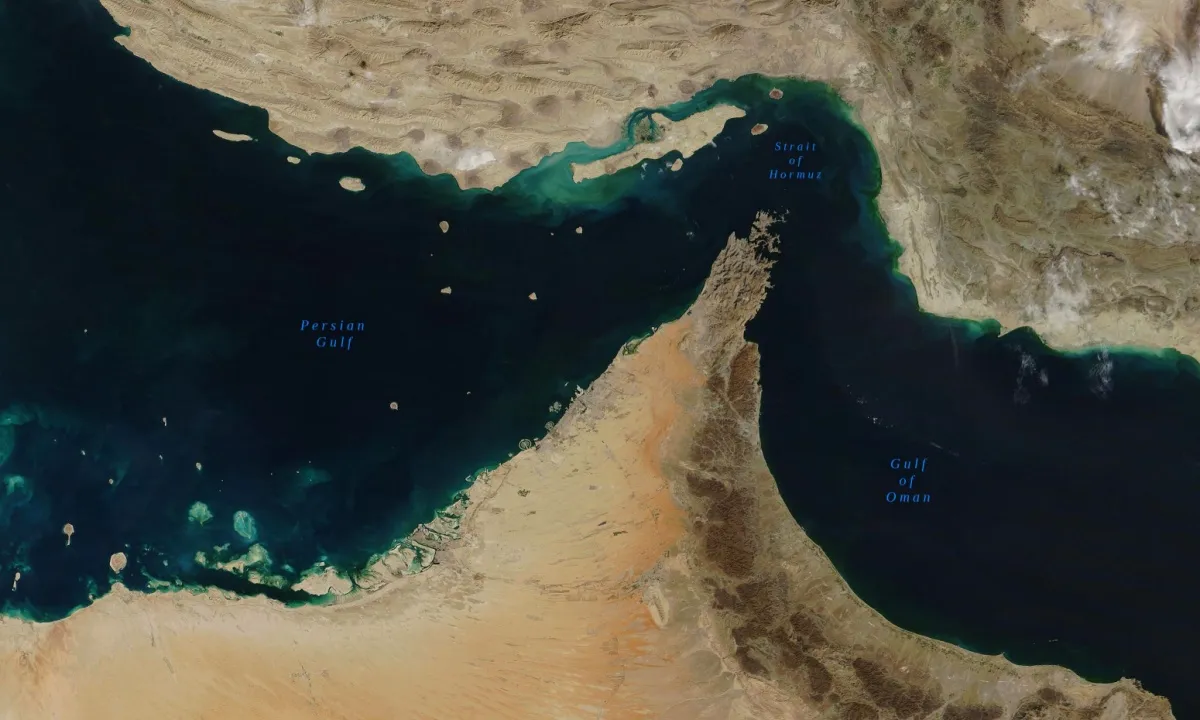
The escalating conflict in the Middle East has jolted one of the world’s most important maritime corridors, forcing major shipping companies to suspend sailings and redraw global trade routes almost overnight.
Following U.S. and Israeli strikes on Iran, several of the world’s largest container carriers have paused operations through the Strait of Hormuz — a narrow waterway that handles roughly one-fifth of global oil consumption. The disruption is raising alarm bells across energy markets, logistics networks and corporate supply chains worldwide.
What happens next in this corridor could shape fuel prices, shipping costs and inflation in the months ahead.
The Strait of Hormuz is not just another shipping lane. It is arguably the most strategically vital maritime choke point on the planet.
Positioned between Iran and Oman, the strait connects the Persian Gulf with the Arabian Sea and the wider Indian Ocean. At its narrowest point, it spans just 21 miles, with designated shipping lanes only about two miles wide in each direction.
In 2023, an estimated 20.9 million barrels of oil per day passed through the strait, according to U.S. government data. That volume represents roughly 20% of global petroleum liquids consumption. In addition, vast quantities of liquefied natural gas from Qatar — one of the world’s largest LNG exporters — transit the same route.
Even minor disruptions here can ripple through global energy markets within hours.
Shipping companies move to protect crews and cargo
Within days of the latest escalation, industry heavyweights including Maersk, MSC, Hapag-Lloyd and CMA CGM issued updated guidance to customers.
Maersk announced it would suspend vessel crossings through the Strait of Hormuz until further notice, warning of delays for ships calling at Persian Gulf ports. The company also paused future transits via the Bab el-Mandeb Strait and the Suez Canal, redirecting vessels around the Cape of Good Hope at Africa’s southern tip — a route that adds thousands of nautical miles and up to 10 to 14 days of sailing time.
Hapag-Lloyd similarly halted transits through Hormuz, citing crew safety. CMA CGM instructed ships already in the Gulf to proceed to designated shelter zones, while MSC ordered vessels operating in the region to move to secure areas and await further developments.
These decisions reflect mounting security concerns, not just for cargo but for seafarers navigating increasingly volatile waters.
Why rerouting matters for global trade
Diverting ships around Africa is not a minor logistical tweak. The Cape of Good Hope route can extend Asia-Europe voyages by roughly 3,500 to 4,000 nautical miles. That translates into higher fuel consumption, increased charter costs and tighter vessel capacity.
For container shipping, capacity constraints often lead to rate spikes. During past Red Sea disruptions, spot freight rates between Asia and Europe doubled within weeks. If Hormuz and Bab el-Mandeb remain unstable simultaneously, the strain on global container supply could intensify sharply.
The Bab el-Mandeb Strait — linking the Red Sea to the Gulf of Aden — is another critical artery. In the first half of 2023, it accounted for approximately 12% of global seaborne oil trade and about 8% of LNG shipments. When both chokepoints face elevated risk, the global shipping system has few alternatives.
Ports such as Jebel Ali in Dubai and Khor Fakkan in the United Arab Emirates serve as major transshipment hubs, redistributing cargo between Asia, Europe and Africa. Disruptions there can delay everything from electronics to automotive parts and consumer goods.
Energy markets brace for volatility
Energy analysts are closely monitoring whether Iran attempts to restrict traffic through the Strait of Hormuz. While a full closure is considered unlikely — given the overwhelming naval presence of Western powers in the region — even isolated attacks or heightened insurance risks can deter commercial vessels.
Last year alone, an estimated 15 million barrels of oil per day and roughly 80 million tons of LNG moved through the strait, according to market intelligence estimates. Any sustained interruption could quickly tighten global supply.
Insurance premiums for tankers transiting high-risk zones can surge by multiples during conflict periods. Higher war-risk premiums add direct costs to cargo transport, which often get passed on to refiners and ultimately consumers.
Oil prices have already reacted to the latest escalation, climbing sharply as traders factor in the risk of supply disruption. Even if physical flows remain largely intact, the perception of risk can keep prices elevated.
A fragile system under pressure
The global shipping industry has spent the past several years navigating repeated shocks: pandemic port closures, the Suez Canal blockage in 2021, Red Sea attacks and ongoing geopolitical tensions.
Each new crisis forces carriers to activate contingency plans — and then revise them as conditions evolve. Industry executives acknowledge a growing sense of operational fatigue, as rerouting decisions are made and remade in rapid succession.
There is also “no real alternative” to ocean freight for most global trade. More than 80% of world merchandise trade by volume moves by sea. Air freight is too expensive for bulk commodities, and land routes cannot replace Gulf energy exports at scale.
What happens next
A complete shutdown of the Strait of Hormuz remains a low-probability but high-impact scenario. Military analysts argue that any attempt to block the waterway would likely be countered quickly. However, sporadic incidents — such as drone attacks or vessel seizures — may be harder to prevent.
Even limited disruptions can trigger market caution. Tanker operators may hesitate to enter the Gulf. Container lines may extend rerouting measures. Insurance costs may stay elevated.
The result would not necessarily be an immediate halt in trade, but rather a steady buildup of higher costs, longer transit times and tighter supply — conditions that can feed into global inflation and corporate margins.
For now, shipping companies are operating in defensive mode, prioritizing crew safety and asset protection. The longer instability persists, the greater the impact on trade flows, freight pricing and energy markets.
In a global economy still recalibrating from recent supply chain shocks, the Strait of Hormuz has once again become a focal point for risk.
.webp)
Popular articles



Subscribe to unlock premium content
How Finland Uses Ice Swimming Festivals to Boost Winter Tourism and Local Economies

The Boom of Luxury Personal Libraries Renting Rare Books to the Ultra-Wealthy

Why Bhutan’s Hand-Woven Textiles Are Gaining Global Collector Value

How Finland Uses Ice Swimming Festivals to Boost Winter Tourism and Local Economies
The Boom of Luxury Personal Libraries Renting Rare Books to the Ultra-Wealthy
How Finland Uses Ice Swimming Festivals to Boost Winter Tourism and Local Economies


