
India Markets Surge After Landmark U.S.–India Trade Deal Slashes Tariffs

India Markets Surge After Landmark U.S.–India Trade Deal Slashes Tariffs
By
Alina Sinclair
Last updated:
February 3, 2026
First Published:
April 25, 2026

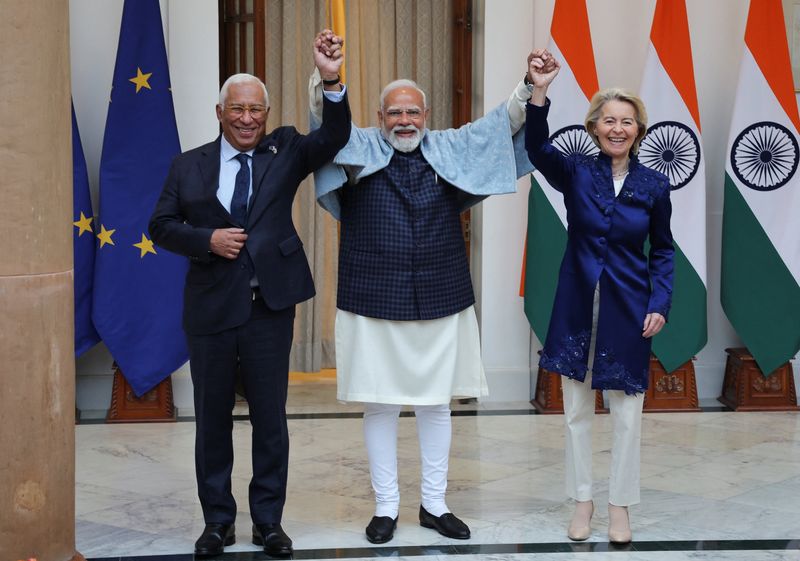
Photo: Investing.com
A Breakthrough Trade Agreement Reignites Investor Confidence
Indian financial markets opened sharply higher after New Delhi and Washington announced a long awaited bilateral trade agreement that significantly reduces U.S. tariffs on Indian exports. The deal marks a turning point in economic relations between the two countries and immediately lifted investor sentiment across equities, currencies, and export focused sectors.
At the center of the agreement is a reduction in U.S. reciprocal tariffs on Indian goods to 18%, down from 25%, with sources indicating that the effective overall tariff rate has fallen dramatically from levels that had approached 50% earlier. Those higher duties had included an additional 25% levy linked to India’s purchase of Russian oil, a key pressure point in recent negotiations.
U.S. President Donald Trump confirmed that the United States would cut tariffs to 18%, while India agreed to remove both tariff and non tariff barriers on American products, effectively opening its market to U.S. exports at zero duty. The agreement follows direct talks between Trump and Indian Prime Minister Narendra Modi, during which India also committed to scaling back Russian oil imports and increasing energy purchases from the United States.
Prime Minister Modi later stated that “Made in India” products will now enjoy substantially lower tariffs in the U.S., calling the deal a step toward stronger global cooperation, stability, and economic prosperity.
Nifty 50 and Sensex Post Powerful Gains
The market reaction was immediate and decisive.
India’s benchmark Nifty 50 surged nearly 5% at the open, while the BSE Sensex jumped over 4,000 points in early trading, putting both indices on track for their strongest single day performance in almost six years. As profit taking set in, the Nifty trimmed some gains but still traded around 4% higher, underscoring the strength of the rally.
Export driven sectors led the advance, with sharp buying seen in:
- Textiles and apparel
- Auto components and engineering goods
- Chemicals and specialty manufacturing
- Select IT and industrial names
Several mid cap and small cap export oriented stocks touched upper circuit limits as investors rushed to price in improved access to the U.S. market.
Indian companies listed overseas also benefited, with American Depositary Receipts posting gains of up to 6–7%, reflecting renewed confidence from global investors.
Rupee Strengthens as Capital Inflow Expectations Rise
The currency market echoed the optimism. The Indian rupee strengthened by about 1%, rising to around 90.29 per U.S. dollar, marking one of its strongest daily moves in years.
The rupee had been Asia’s worst performing major currency in 2025, pressured by persistent foreign fund outflows and the absence of a U.S. trade deal. With tariffs now sharply reduced, traders are anticipating stronger export receipts and renewed portfolio inflows, both of which support the currency.
Bond markets also reacted positively, with long term government yields easing as risk premiums fell and demand for Indian assets improved.
From Underperformer to Potential Comeback Story
Prior to this breakthrough, Indian equities had lagged peers across emerging markets. While the Nifty gained just over 10% last year, foreign investors exited in record volumes. In dollar terms, performance looked even weaker due to currency depreciation, with the MSCI India Index rising only 4.29% in 2025, compared to a 33.57% surge in the broader MSCI Emerging Markets Index.
Analysts say the lack of an explicit U.S. trade agreement had created a disconnect between India’s strong macroeconomic fundamentals and the weak performance of its financial assets.
That gap may now begin to close.
Market strategists described the tariff reduction as materially better than consensus expectations, noting that it removes one of the biggest overhangs on sentiment. When combined with India’s recently concluded trade agreement with the European Union, the U.S. deal is being viewed as one of the strongest external growth catalysts heading into 2026.
Together, these agreements significantly expand India’s access to two of the world’s largest consumer markets.
Why the Deal Matters for India’s Economy
Beyond the immediate market rally, economists believe the agreement could have lasting effects on India’s growth trajectory.
Lower U.S. tariffs improve price competitiveness for Indian exports, which could drive higher volumes across manufacturing, chemicals, pharmaceuticals, and engineering goods. This supports:
- Stronger export earnings
- Improved current account dynamics
- Higher industrial utilization
- Increased foreign direct and portfolio investment
With India also eliminating tariffs and non tariff barriers on U.S. imports, bilateral trade flows are expected to accelerate, encouraging deeper supply chain integration between the two economies.
Financial institutions say the deal provides a clear framework for businesses to plan long term investments, reducing uncertainty that had held back capital spending over the past year.
“This breakthrough is unequivocally positive” for exports, market sentiment, and financial conditions, according to senior economists, who expect domestic equities to experience a relief rally after tariffs weighed heavily on confidence in recent quarters.
Outlook: Relief Rally Today, Structural Gains Tomorrow
While markets will closely watch implementation timelines and sector specific details, investors broadly see this agreement as a structural positive rather than a short lived catalyst.
After a year marked by currency weakness, foreign outflows, and relative underperformance, India now enters 2026 with renewed momentum. Reduced U.S. tariffs, expanding trade partnerships, and improving capital flows could help reposition Indian markets as one of the more attractive growth stories among major emerging economies.
If execution stays on track, the U.S.–India trade deal may prove to be not just a spark for today’s rally, but a foundation for sustained economic and market recovery in the months ahead.
.webp)
Popular articles



Subscribe to unlock premium content
Crypto in the Arctic

Iceland’s Seaweed Revolution

Private Island Rentals for Corporate Retreats Hit $1 Billion

Crypto in the Arctic
Iceland’s Seaweed Revolution
Crypto in the Arctic


