India Holds Interest Rates Steady as Inflation Risks Rise and Growth Outlook Weakens

India Holds Interest Rates Steady as Inflation Risks Rise and Growth Outlook Weakens
By
Augusta Parker
Last updated:
June 5, 2026
First Published:
June 5, 2026

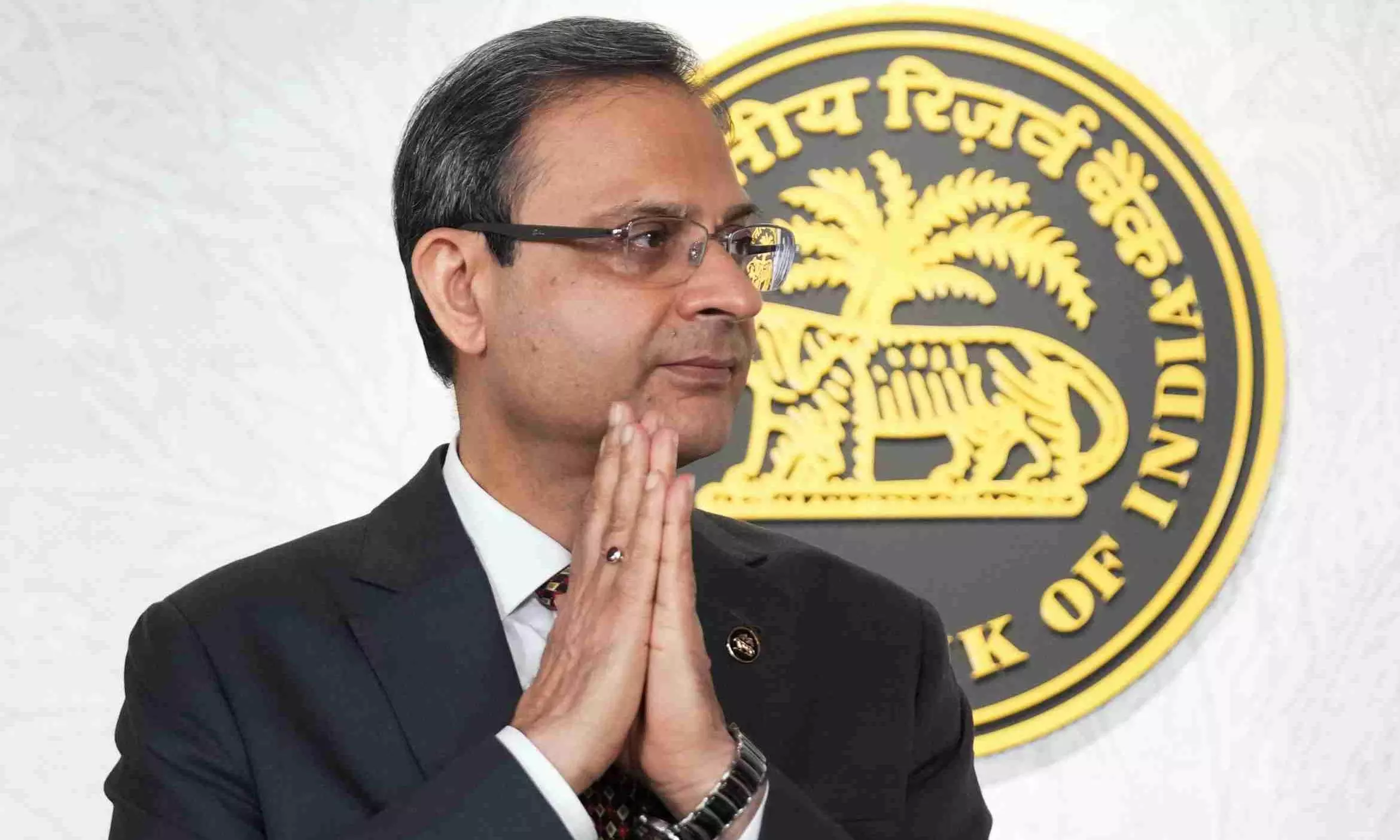
Photo: The Federal
India’s central bank has chosen to keep borrowing costs unchanged, signaling a more cautious approach as the country faces mounting economic challenges from rising global oil prices, currency weakness, and persistent inflation concerns.
The Reserve Bank of India (RBI) left its benchmark policy rate unchanged at 5.25% during its latest monetary policy meeting, a move that was widely anticipated by economists and financial markets. However, alongside the rate decision, the central bank delivered a more guarded assessment of the economy, raising its inflation forecast while lowering its growth expectations for the coming financial year.
The decision comes at a time when geopolitical tensions in the Middle East, particularly the ongoing conflict involving Iran, continue to disrupt energy markets and threaten global economic stability. For India, one of the world's largest energy importers, higher crude oil prices pose significant risks to both inflation and economic growth.
RBI Signals More Caution Amid Growing Uncertainty
While maintaining interest rates, the RBI adjusted its economic projections to reflect a more challenging environment.
The central bank increased its inflation forecast for the financial year ending March 2027 to 5.1%, up from its previous estimate of 4.6%. At the same time, it lowered its GDP growth outlook to 6.6%, compared with its earlier forecast of 6.9%.
The revised projections highlight the balancing act facing policymakers. Higher inflation typically calls for tighter monetary policy, while slowing economic growth often requires supportive measures.
RBI Governor Sanjay Malhotra emphasized that global uncertainties have increased considerably in recent months. According to the central bank, rising energy costs, supply chain disruptions, and geopolitical instability are creating significant headwinds for economic activity.
The governor noted that monetary policy has become increasingly cautious as policymakers monitor developments in international markets and assess their impact on domestic inflation.
Oil Prices and the Iran Conflict Add New Economic Pressures
One of the biggest challenges confronting India is the sharp rise in global energy prices.
As a nation that imports nearly 85% of its crude oil requirements, India remains highly vulnerable to fluctuations in international energy markets. Any prolonged disruption to oil supplies can significantly increase the country's import bill, widen its trade deficit, and put pressure on government finances.
The ongoing conflict in the Middle East has already contributed to elevated crude prices, increasing concerns that transportation costs, manufacturing expenses, and consumer prices could continue rising in the months ahead.
Higher fuel costs tend to spread throughout the economy, affecting everything from food transportation to industrial production. This creates what economists call "cost-push inflation," where rising input costs eventually lead to higher prices for consumers.
Rupee Under Pressure Despite Government Intervention
The surge in energy prices has also weighed heavily on India's currency.
The Indian rupee has fallen more than 6% against the U.S. dollar this year, making it one of the weaker-performing major Asian currencies during the period. A weaker currency increases the cost of imports, particularly oil, further fueling inflationary pressures.
To stabilize the currency, Indian authorities have taken multiple measures.
Government officials have encouraged citizens to reduce non-essential foreign spending, conserve fuel, and limit demand for imported goods. Authorities have also increased duties on gold imports, aiming to reduce foreign exchange outflows and protect currency reserves.
Meanwhile, policymakers have reportedly intervened in foreign exchange markets through state-run banks, selling U.S. dollars to slow the rupee's decline.
Despite these efforts, analysts believe the currency remains vulnerable if oil prices stay elevated or if global investors continue moving capital toward safer assets.
Inflation Remains Below Target but Risks Are Building
Although inflation remains relatively contained compared with many other economies, warning signs are emerging.
India's consumer inflation rate climbed to 3.48% in April, marking the sixth consecutive monthly increase. While still below the RBI's medium-term target of 4%, the upward trend has attracted the attention of policymakers.
Food prices continue to be a major concern.
Food inflation accelerated to 4.2% in April from 3.87% the previous month, reflecting growing pressures across agricultural markets. Since food represents a substantial portion of household spending in India, sustained increases can have a significant impact on consumers.
The situation could become even more challenging due to weather-related risks.
Meteorologists have warned that El Niño conditions may disrupt India's southwest monsoon season, which is crucial for agricultural production. Below-average rainfall could reduce crop yields, tighten food supplies, and trigger further increases in food prices across the country.
Economists view the delayed monsoon as one of the most significant inflation threats facing India over the next year.
Growth Momentum Begins to Slow
Alongside inflation concerns, signs of moderating economic growth are becoming increasingly visible.
India remains one of the world's fastest-growing major economies, supported by strong domestic consumption, infrastructure spending, and government investment programs. However, growth is beginning to lose some momentum as global demand softens and financial conditions become more restrictive.
Economists surveyed by Reuters expect India's economy to have expanded by approximately 7.2% during the January-March quarter, compared with 7.8% growth in the previous quarter.
While these figures remain strong by international standards, they suggest that economic activity is gradually cooling.
Slower global trade, elevated borrowing costs, geopolitical uncertainty, and weaker external demand are all contributing to the moderation.
Markets React to the RBI Decision
Financial markets responded calmly to the central bank's announcement.
India's benchmark 10-year government bond yield fell approximately four basis points to around 6.96%, indicating that investors viewed the policy decision as supportive for fixed-income markets.
Meanwhile, the Nifty 50 equity index edged higher, reflecting optimism that the RBI is maintaining stability while avoiding additional pressure on economic growth.
Investors are now closely watching upcoming inflation data, monsoon developments, and global oil prices for clues about the central bank's next move.
Could Interest Rate Hikes Return?
Although rates remained unchanged, several economists believe the RBI's updated guidance signals a more hawkish stance than previous meetings.
The combination of rising inflation forecasts, elevated oil prices, currency weakness, and weather-related risks has increased speculation that policymakers may consider tightening monetary policy if inflation accelerates further.
Some analysts believe a rate hike could become a possibility later this year if energy prices remain high and inflation moves decisively above the RBI's comfort zone.
For now, however, the central bank appears focused on maintaining stability while monitoring a rapidly changing global environment.
Outlook: A Delicate Balancing Act Ahead
India enters the second half of the year facing a complex economic landscape.
The country continues to benefit from strong domestic demand, expanding infrastructure investment, and long-term growth potential. However, rising geopolitical tensions, volatile energy markets, weather-related risks, and currency pressures are creating new obstacles for policymakers.
The RBI's latest decision underscores the challenge of balancing inflation control with economic growth. With oil prices elevated, the rupee under pressure, and monsoon uncertainty looming, the coming months are likely to play a critical role in shaping India's economic trajectory.
How effectively policymakers manage these competing forces could determine whether India maintains its position as one of the world's fastest-growing major economies while keeping inflation under control.
.webp)
Popular articles



Subscribe to unlock premium content
Bali’s Digital Detox Revolution

Elevating Perspectives with Drone Photography

Dinner Reinvented in Los Angeles

Bali’s Digital Detox Revolution
Elevating Perspectives with Drone Photography
Bali’s Digital Detox Revolution