
India Deepens Energy and Trade Ties With UAE Through $3 Billion LNG Pact

India Deepens Energy and Trade Ties With UAE Through $3 Billion LNG Pact
By
Leah Rosenfeld
Last updated:
January 21, 2026
First Published:
April 25, 2026

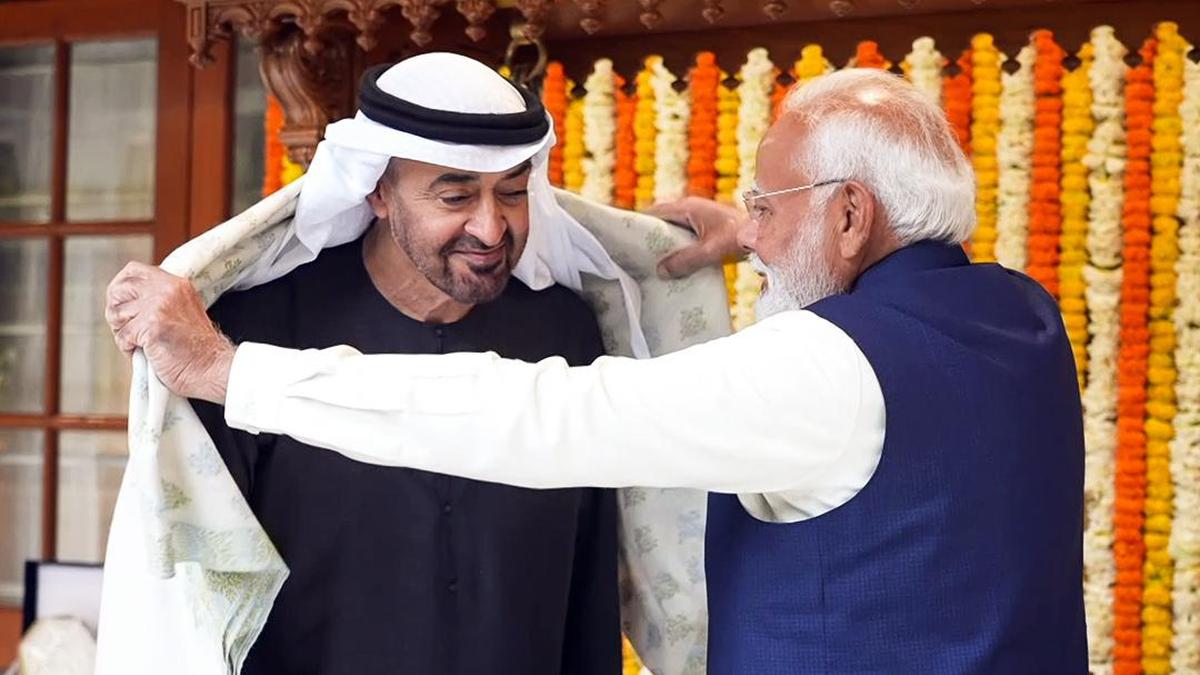
Photo: India Podcast
India has taken a decisive step to strengthen its economic and energy partnership with the United Arab Emirates, signing a long-term liquefied natural gas agreement while committing to double bilateral trade to $200 billion by 2032. The move underscores New Delhi’s broader strategy to diversify trade relationships at a time when negotiations with the United States remain uncertain and export pressures persist.
The agreements were finalized during a fast-paced, high-level meeting in New Delhi between Indian Prime Minister Narendra Modi and UAE President Sheikh Mohamed bin Zayed Al Nahyan, reflecting the growing strategic closeness between the two countries.
A decade-long LNG supply agreement
At the center of the announcements is a 10-year LNG supply contract between Abu Dhabi National Oil Company and India’s state-owned Hindustan Petroleum Corporation. Under the deal, ADNOC will supply LNG worth up to $3 billion beginning in 2028, providing India with a stable, long-term source of cleaner-burning fuel as it expands its energy mix.
ADNOC said the agreement will make India its largest LNG customer, accounting for roughly 20 percent of its LNG sales by 2029. The deal strengthens India’s energy security while giving the UAE a dependable anchor market in South Asia, one of the world’s fastest-growing energy-consuming regions.
For India, LNG plays a critical role in reducing reliance on coal and meeting rising demand from industry, power generation, and urban households.
Trade target set at $200 billion by 2032
Beyond energy, both governments announced plans to double bilateral trade to $200 billion by 2032, up from approximately $100 billion recorded in India’s fiscal year 2025. Trade growth has accelerated since the two countries signed a Comprehensive Economic Partnership Agreement in 2022, which lowered tariffs, streamlined customs procedures, and expanded market access across multiple sectors.
India is currently the UAE’s second-largest trading partner, contributing nearly 9 percent of the country’s total trade and about 14 percent of its non-oil exports. For India, the UAE ranks as its third-largest trading partner after the United States and China.
The relationship is also underpinned by strong people-to-people ties. Around 3.5 million Indians live and work in the UAE, forming one of the largest expatriate communities in the Gulf and playing a key role in trade, investment, and remittance flows.
Strategic alignment beyond economics
Prime Minister Modi described the discussions as wide-ranging, covering economic cooperation, energy security, and broader strategic coordination. Analysts say the speed and depth of engagement reflect a mature partnership that has moved beyond transactional trade into long-term alignment.
According to foreign policy experts, India-UAE relations have evolved to the point where senior leaders can meet at short notice to finalize substantive agreements. This reflects growing trust and shared interests in regional stability, infrastructure investment, and supply chain resilience.
Reducing dependence on the U.S. market
India’s push to expand trade with the UAE comes against the backdrop of strained trade relations with the United States. Since August last year, Washington has imposed tariffs of up to 50 percent on certain Indian exports, putting pressure on manufacturers and exporters.
While New Delhi continues to engage with Washington, officials and analysts have acknowledged that even a potential deal with the U.S. would not fully insulate India from policy unpredictability. This has accelerated efforts to deepen ties with alternative partners across Europe, the Middle East, and the Asia-Pacific.
Over the past year, India has signed trade agreements with the United Kingdom and Oman and has indicated that a pact with New Zealand is expected in the first half of 2026.
A broader diversification strategy
The LNG agreement with the UAE fits into India’s wider strategy of balancing trade, energy security, and geopolitics. By locking in long-term energy supplies and expanding trade with a trusted partner, India aims to reduce exposure to single-market risks and strengthen its negotiating position globally.
For the UAE, closer ties with India reinforce its role as a key energy supplier and economic hub connecting Asia, the Middle East, and Africa. Together, the two countries are signaling that their partnership is set to become one of the most influential economic corridors in the region over the next decade.
.webp)
Popular articles



Subscribe to unlock premium content
Crypto in the Arctic

Iceland’s Seaweed Revolution

Private Island Rentals for Corporate Retreats Hit $1 Billion

Crypto in the Arctic
Iceland’s Seaweed Revolution
Crypto in the Arctic


