Humanoid Robots Poised to Become the Next Industrial Revolution, Investors Say

Humanoid Robots Poised to Become the Next Industrial Revolution, Investors Say
By
Rachel Steinberg
Last updated:
June 3, 2026
First Published:
June 3, 2026

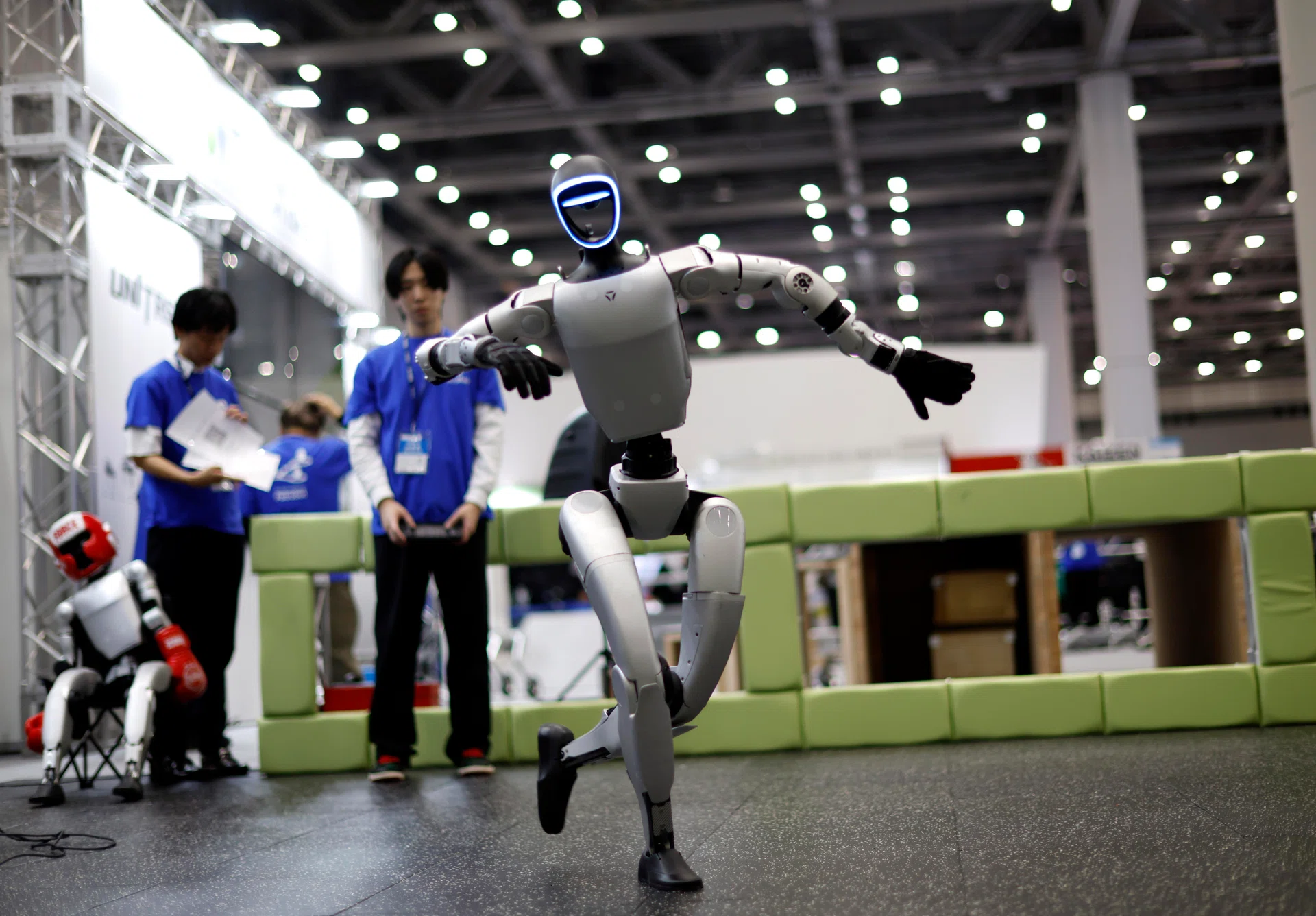
Photo: The Business Times
The race to build intelligent humanoid robots is accelerating, and investors increasingly believe the technology could become one of the most transformative economic forces of the coming decade.
What was once considered science fiction is rapidly becoming reality as advances in artificial intelligence, machine learning, sensors, and robotics push humanoid machines into real-world environments. From manufacturing plants and logistics centers to hospitals and private homes, these AI-powered systems are expected to play a growing role across nearly every sector of the economy.
Industry analysts forecast explosive growth for the market, with some predicting that humanoid robots could evolve from a niche industry worth just a few billion dollars today into a sector generating hundreds of billions—or even trillions—of dollars annually within the next ten years.
The Rise of Physical AI
The artificial intelligence boom has largely focused on software over the past few years. Chatbots, generative AI platforms, and large language models have dominated headlines and attracted hundreds of billions of dollars in investment.
The next phase of the AI revolution, however, may involve bringing intelligence into the physical world.
This concept, often referred to as "physical AI," combines advanced software with robotics, allowing machines not only to think and reason but also to move, manipulate objects, and perform tasks in real-world environments.
SoftBank founder and CEO Masayoshi Son recently described robotics and physical AI as one of the most promising opportunities in technology, suggesting the next trillion-dollar company could emerge from this rapidly developing sector.
As computing power becomes cheaper and AI models become increasingly capable of understanding and interacting with their surroundings, humanoid robots are moving from experimental prototypes toward commercial deployment.
A Market Expected to Expand 100-Fold
According to industry forecasts, the humanoid robotics market is still in its infancy.
Current estimates place the industry's value at roughly $2 billion to $3 billion globally. However, analysts expect that figure to rise dramatically over the next decade.
Research from Barclays projects the market could reach approximately $200 billion by 2035, representing growth of nearly 100 times from current levels.
Some investors believe even those forecasts may prove conservative.
Technology analyst Dan Ives of Wedbush believes humanoid robotics could eventually become a multi-trillion-dollar opportunity as adoption expands across both commercial and consumer markets.
Such projections are based on the expectation that robots will gradually move beyond repetitive industrial tasks and become integrated into everyday life.
Solving a Growing Labor Challenge
One of the primary drivers behind the rise of humanoid robots is the global labor shortage facing many economies.
Aging populations, declining birth rates, urbanization, and changing workforce preferences have made it increasingly difficult for employers to fill certain roles.
Many industries continue to struggle with jobs often described as dirty, dull, dangerous, or physically demanding.
Humanoid robots are being developed specifically to address these challenges.
Today, many machines are already capable of performing relatively simple tasks such as lifting packages, moving inventory, transporting materials, sorting products, and assisting on assembly lines.
As AI systems improve, robots are expected to take on more complex responsibilities requiring greater adaptability, awareness, and decision-making capabilities.
Experts believe this progression could significantly improve productivity while helping businesses address labor shortages that may otherwise constrain economic growth.
The First Wave Is Already Underway
The deployment of humanoid robots has already begun in several industries.
Manufacturing facilities are using robotic systems to automate repetitive processes and increase efficiency. Logistics companies are deploying machines in warehouses to assist with packaging, sorting, and transportation tasks.
Construction firms, agricultural businesses, and industrial operators are also testing robotic workers capable of functioning in environments that are challenging or hazardous for humans.
Major companies around the world are investing heavily in these technologies.
Tesla's Optimus project has become one of the most closely watched humanoid robot initiatives, while technology startups across Asia, Europe, and North America continue to attract significant investor funding.
Japanese airports have already begun experimenting with robotic baggage handlers, demonstrating how the technology is gradually moving beyond factory floors.
Industry observers expect this first phase of adoption to continue throughout the remainder of the decade.
The Next Frontier: Healthcare, Education, and Home Assistance
While industrial applications represent the initial growth opportunity, many analysts believe the largest economic impact will come from service-oriented industries.
After 2030, experts anticipate broader deployment in healthcare, elderly care, education, hospitality, retail, and personal assistance.
These sectors represent a significant portion of economic activity in developed economies and face increasing staffing challenges due to demographic shifts.
Future robots could assist elderly individuals with daily activities, support healthcare professionals, help students learn, manage household tasks, and provide customer service in hotels and retail environments.
As AI models become more capable of understanding human behavior and responding in real time, the range of possible applications is expected to expand significantly.
Many industry experts believe this second phase of adoption will unlock the largest commercial opportunities.
China Emerges as the Global Robotics Leader
One of the most significant developments in the robotics industry is China's growing dominance.
Industry data shows that China has become the world's largest robotics market and one of the leading centers for innovation and manufacturing.
The country installs approximately half of all industrial robots deployed globally each year, far exceeding installation rates in the United States and many other developed economies.
China has also dramatically increased robot density across its workforce, reaching nearly 500 robots per 10,000 workers after years of rapid investment in automation.
In the humanoid robotics sector specifically, China has established a commanding lead in both production and deployment.
The country accounted for the overwhelming majority of new humanoid robot installations last year and has benefited from lower manufacturing costs, extensive supply chains, and strong government support for advanced technologies.
Many Chinese manufacturers can reportedly produce humanoid robots at roughly half the cost of comparable Western alternatives, creating a significant competitive advantage.
Investors Position for the Robotics Boom
The growing excitement surrounding robotics is increasingly influencing investment strategies.
Fund managers seeking exposure to the trend are investing across the technology ecosystem rather than focusing solely on robot manufacturers.
Key beneficiaries include semiconductor companies, AI software developers, sensor manufacturers, communications providers, battery producers, and advanced electronics suppliers.
Many investors believe Asia will play a central role in the industry's growth due to its leadership in chip manufacturing, electronics production, and robotics development.
Companies involved in artificial intelligence infrastructure, advanced processors, memory chips, and industrial automation are widely viewed as important building blocks for the future robotics economy.
As a result, investment portfolios are increasingly emphasizing technology exposure over traditional consumer sectors.
Humanoid Robots Could Redefine Daily Life
Some investors believe society will look dramatically different within a decade.
Factories may operate with large numbers of robotic workers. Warehouses could function with minimal human intervention. Government agencies, military organizations, hospitals, and businesses may rely heavily on intelligent machines to improve efficiency and reduce costs.
At the consumer level, humanoid robots could eventually become household products, assisting families with chores, caregiving, security, and everyday tasks.
Just as smartphones transformed communication and the internet reshaped commerce, proponents argue that humanoid robots could fundamentally alter how people interact with technology.
Massive Opportunity Comes With Significant Challenges
Despite the enthusiasm, experts acknowledge that substantial hurdles remain.
Robots must become more reliable, safer, more affordable, and better equipped to navigate complex environments before large-scale adoption becomes possible.
Questions surrounding regulation, privacy, cybersecurity, workplace displacement, and ethical AI development will also need to be addressed.
Governments, technology companies, and industry leaders are expected to play critical roles in creating frameworks that balance innovation with public safety.
Nevertheless, many investors remain convinced that the long-term trajectory is clear.
As artificial intelligence gains physical capabilities and robotics technology continues to advance, humanoid machines are increasingly being viewed as the next major technological platform—one that could generate trillions of dollars in economic value and transform industries around the world over the coming decade.
.webp)
Popular articles



Subscribe to unlock premium content
The Rise of Indoor Vertical Gardening

Esports Tournaments Are Becoming the New Spectator Sport

Minimalism in Motion

The Rise of Indoor Vertical Gardening
Esports Tournaments Are Becoming the New Spectator Sport
The Rise of Indoor Vertical Gardening