Home Depot Beats Expectations Despite Cooling Renovation Demand

Home Depot Beats Expectations Despite Cooling Renovation Demand
By
Leah Rosenfeld
Last updated:
February 27, 2026
First Published:
February 27, 2026

Getty Images
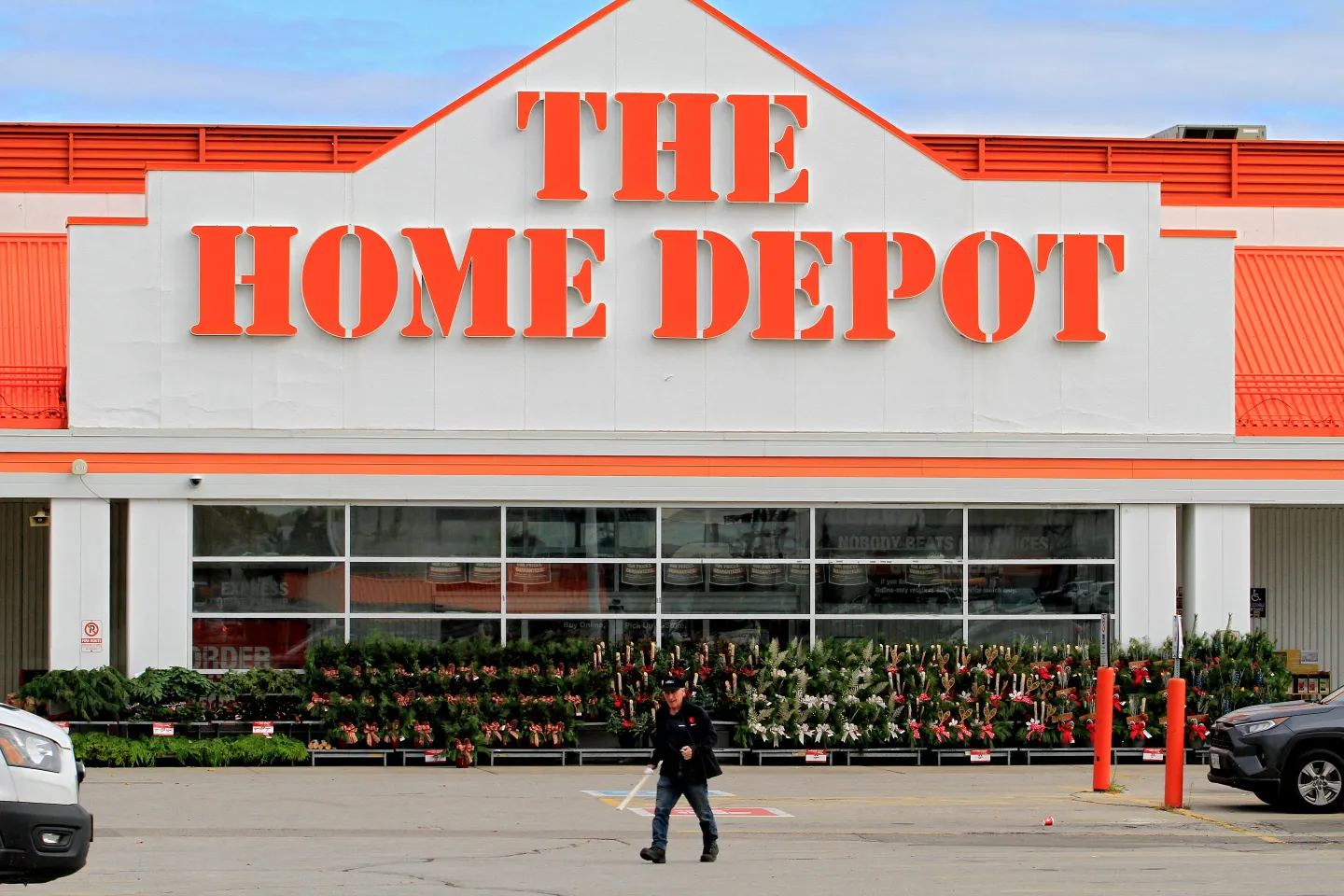
Home Depot delivered a better-than-expected fiscal fourth quarter even as the broader home improvement market remained sluggish. The retailer reported declining sales year over year, reflecting a prolonged slowdown in housing turnover and a more cautious consumer, yet stronger execution and stable professional-contractor demand enabled the company to surpass Wall Street forecasts on both revenue and profit.
The results highlight a business navigating a cyclical downturn rather than a structural one, with management signaling that demand remains stable but muted as homeowners delay large renovation projects.
Key Financial Performance
For the quarter ended February 1, the company posted:
- Adjusted earnings per share of $2.72, comfortably ahead of the $2.54 consensus estimate
- Revenue of $38.2 billion, slightly above expectations of $38.12 billion
Net income totaled $2.57 billion, down from $3.0 billion a year earlier, while reported revenue declined roughly 4% from $39.7 billion. Part of the drop was calendar-related, as the prior fiscal year included an extra week that contributed about $2.5 billion in sales.
Shares rose modestly following the release, pushing the company’s market capitalization to roughly $380+ billion, reflecting investor confidence that earnings may be nearing a cyclical bottom.
Housing Market Drag Continues
Executives pointed to the same macro headwinds that have pressured the sector for several years: elevated borrowing costs, limited housing supply, and affordability concerns.
Chief Financial Officer Richard McPhail described the environment as a prolonged “frozen” housing cycle, noting that weak mobility has reduced the number of renovation projects typically tied to home purchases and sales.
Consumer sentiment has also softened, with shoppers increasingly focused on essential repairs rather than discretionary upgrades. This shift has kept demand steady but capped growth, particularly in big-ticket categories.
Sales Trends and Customer Behavior
Comparable sales edged higher by 0.4% globally and 0.3% in the U.S., indicating modest underlying stability despite the headline decline.
Transaction volumes slipped 1.6%, but the average ticket increased 2.4%, driven by selective price increases and customers opting for higher-quality products in certain categories.
Spending patterns showed a clear divide:
- Repair and maintenance projects remained resilient
- Large discretionary remodels stayed subdued
- Some shoppers traded down to more affordable options, particularly in appliances and countertops
Big-ticket purchases above $1,000 rose 1.3%, suggesting pockets of demand among higher-income homeowners.
Tariffs and Pricing Outlook
Management is also evaluating potential cost impacts from evolving trade policy. The company is reviewing a proposed 15% global tariff announced by Donald Trump after a ruling by the Supreme Court of the United States affected earlier import duties.
Executives emphasized that more than half of merchandise is sourced domestically and that the company has diversified its supply chain so no single foreign country represents more than 10% of purchases. This positioning should help cushion potential margin pressure, though some modest price increases have already been implemented.
Professional Segment Provides Stability
Demand from contractors and trade professionals continues to outperform do-it-yourself activity, reinforcing the company’s strategic shift toward the pro customer.
Recent acquisitions — including roofing and building-supply distributor SRS Distribution and specialty products firm GMS — are expanding this segment’s reach.
While SRS sales dipped slightly year over year in the quarter, management said performance still exceeded broader industry trends, where shipments of certain materials such as shingles fell sharply. Over the full year, the unit delivered low single-digit organic growth, with expectations for mid-single-digit gains ahead.
Operational Moves and Capital Allocation
As the company prepares for an eventual housing rebound, it is continuing to invest in its footprint and operations:
- 12 new stores opened last fiscal year
- 15 additional locations planned for the current year
- Workforce restructuring included about 800 layoffs and a return-to-office mandate
The board also approved a 1.3% dividend increase to $2.33 per share, underscoring confidence in cash-flow generation despite the softer demand environment.
Outlook
Management reaffirmed its full-year guidance, projecting:
- Total sales growth of roughly 2.5% to 4.5%
- Comparable sales between flat and up 2%
- Earnings per share ranging from flat to up about 4% from last year’s $14.69
Leadership, including CEO Ted Decker, believes the company is operating near the trough of the cycle, with improving mortgage trends and the upcoming spring selling season serving as potential catalysts for demand.
Bottom Line
Home Depot’s latest results reinforce a narrative of resilience in a difficult macro environment. While the housing slowdown continues to suppress large renovation projects, steady professional demand, disciplined pricing, and supply-chain diversification are helping the retailer protect profitability and maintain market share.
If interest rates ease and housing activity gradually rebounds, the company appears positioned to convert its stable operating base into renewed growth.
.webp)
Popular articles



Subscribe to unlock premium content
Namibia Is Quietly Building the Future of Ultra Remote Eco Luxury
.png)
Colombia’s Coffee Regions Are Becoming Luxury Travel Destinations Hidden in the Highlands

Chile’s Desert Skies Are Becoming the World’s Most Exclusive Destination

Namibia Is Quietly Building the Future of Ultra Remote Eco Luxury
Colombia’s Coffee Regions Are Becoming Luxury Travel Destinations Hidden in the Highlands
Namibia Is Quietly Building the Future of Ultra Remote Eco Luxury