
Global Markets Brace for High-Stakes Trump-Xi Summit as Trade, Taiwan, and Energy Crisis Dominate Agenda

Global Markets Brace for High-Stakes Trump-Xi Summit as Trade, Taiwan, and Energy Crisis Dominate Agenda
By
Augusta Parker
Last updated:
May 11, 2026
First Published:
May 11, 2026

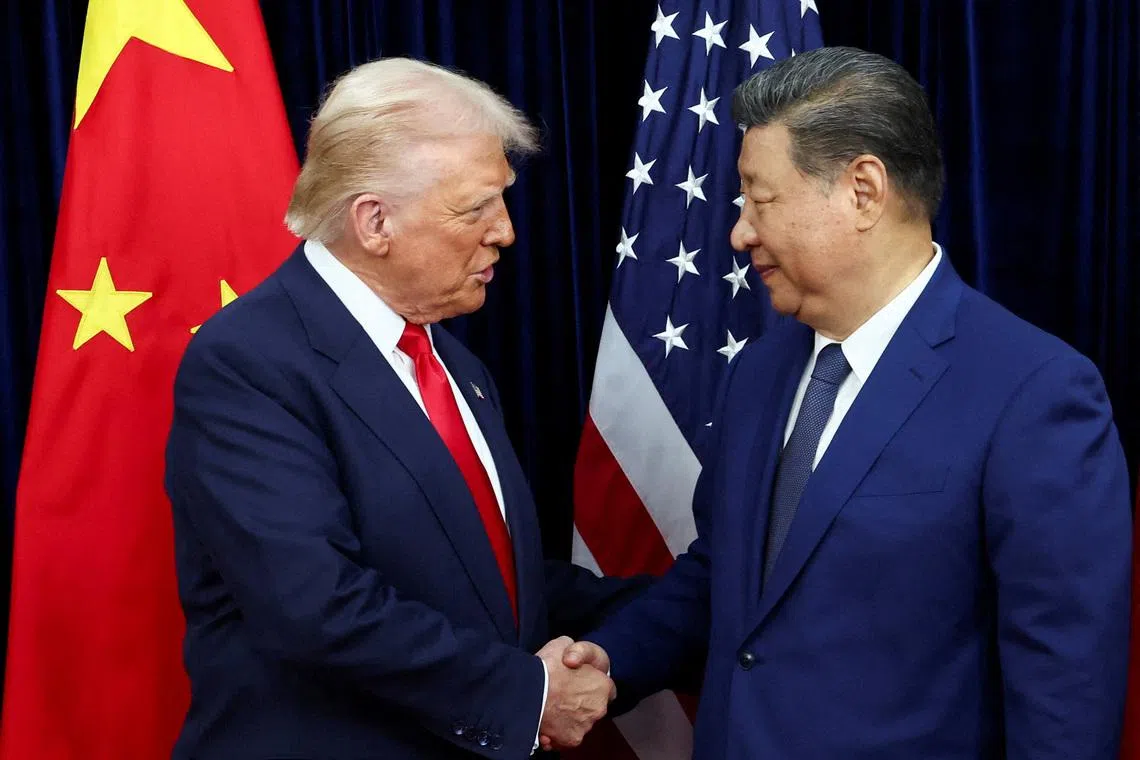
Photo: South China Morning Post
As U.S. President Donald Trump and Chinese President Xi Jinping prepare to meet in Beijing this Thursday, governments and financial markets around the world are closely monitoring what could become one of the most consequential diplomatic summits in years.
The meeting comes at a critical moment for the global economy, with tensions escalating over trade restrictions, Taiwan, artificial intelligence, semiconductor access, and the ongoing Iran conflict that has disrupted global energy supplies. Analysts say decisions made during the summit could reshape international trade relationships, alter supply chains, and determine whether the world’s two largest economies move toward cooperation or deeper confrontation.
While the discussions will take place behind closed doors in Beijing, the ripple effects are expected to be felt everywhere from Singapore and Tokyo to Brussels and Moscow.
A Summit With Global Economic Consequences
The Trump-Xi meeting carries one of the broadest agendas seen in recent years between Washington and Beijing. Officials from both countries are expected to discuss tariffs, technology controls, rare earth exports, artificial intelligence regulation, energy security, and geopolitical flashpoints across Asia and the Middle East.
The summit arrives after months of intensifying pressure between the two powers. Washington has accused Beijing of orchestrating large-scale efforts to obtain sensitive American AI technologies, while China has responded with aggressive economic countermeasures, including restrictions on rare earth exports and tighter controls on semiconductor-related trade.
China’s suspension of exports involving rare earth minerals and industrial magnets has already disrupted supply chains tied to electric vehicles, defense systems, batteries, and electronics manufacturing. Automakers and industrial manufacturers across Europe, Japan, and South Korea have reported mounting concerns over shortages and rising costs.
The restrictions have become especially significant because China controls a dominant share of global rare earth processing capacity, giving Beijing substantial leverage over industries essential to the global technology transition.
Economists say the summit could determine whether supply chain fragmentation accelerates further or stabilizes in the second half of the year.
Trade, Technology, and AI Rivalry at the Center
Technology competition is expected to dominate much of the discussions.
The United States has continued tightening export controls targeting advanced chips, AI hardware, and semiconductor manufacturing equipment, arguing that such technologies could strengthen China’s military and surveillance capabilities.
China, meanwhile, has intensified efforts to reduce dependence on Western technology and expand domestic semiconductor production. Beijing recently introduced new measures discouraging companies from complying with certain U.S. sanctions tied to Iranian oil and technology-related trade restrictions.
The growing dispute has created uncertainty for multinational corporations operating across both markets. Major sectors including automotive manufacturing, cloud computing, consumer electronics, robotics, and AI infrastructure remain heavily exposed to tensions between Washington and Beijing.
Global investors are also watching closely for any signals regarding tariff policy changes. Businesses across Asia had previously shifted manufacturing operations to countries such as Vietnam, Thailand, and Malaysia in response to earlier U.S.-China trade tensions. Analysts say any reduction in tariffs on Chinese goods could reverse some of those supply chain shifts.
Taiwan Emerges as the Most Sensitive Issue
Among the most closely watched topics at the summit will be Taiwan, which both governments have identified as a top priority.
Beijing has reportedly pushed Washington to reconsider aspects of its long-standing security support for Taiwan and soften official rhetoric surrounding the island. China views Taiwan as part of its territory, while Taiwan maintains its own democratic government and rejects Beijing’s sovereignty claims.
Any indication that the United States is adjusting its position could trigger major geopolitical consequences across the Indo-Pacific region.
Security analysts warn that even vague language suggesting reduced U.S. support for Taiwan could encourage Beijing to increase pressure on the island diplomatically, economically, or militarily.
At the same time, officials from both countries have publicly emphasized the importance of avoiding instability in the region. Diplomats involved in recent discussions reportedly described Taiwan as the single biggest source of strategic risk in the U.S.-China relationship.
The issue has become increasingly important for global markets because Taiwan remains central to the global semiconductor industry, producing many of the advanced chips used in smartphones, data centers, military systems, and AI infrastructure worldwide.
Energy Crisis and Strait of Hormuz Tensions
Another major focus of the summit will be the worsening global energy crisis caused by instability near the Strait of Hormuz.
The strategic shipping route handles roughly one-fifth of global oil trade, making any disruption a direct threat to international energy markets. The ongoing Iran conflict has already triggered sharp increases in oil prices, freight costs, and insurance premiums for energy shipments.
Asian economies have been among the hardest hit due to their heavy dependence on imported Gulf oil.
Countries across Southeast Asia, including Singapore, Thailand, Indonesia, and the Philippines, have expressed growing concern over the economic impact of rising fuel prices and supply disruptions. Governments in the region are particularly interested in whether Washington and Beijing can cooperate on efforts to stabilize shipping activity through the strait.
Analysts say even limited coordination between the U.S. and China on energy security could ease pressure on oil markets in the near term, although expectations for a major breakthrough remain cautious.
The energy crisis has also intensified inflation concerns globally, adding pressure on central banks already struggling with slowing economic growth and volatile commodity prices.
Europe and Japan Could Face Unintended Consequences
While many governments hope the summit reduces tensions, some regions may face new competitive challenges if Washington and Beijing reach economic agreements.
European Union members and Japan are reportedly concerned that any deal involving increased Chinese purchases of American energy products could push global commodity prices even higher. A major expansion of Chinese investment into the United States could also redirect trade flows and reduce market opportunities for European and Japanese exporters.
Industries such as automobiles, industrial machinery, chemicals, and advanced manufacturing are particularly sensitive to changes in trade arrangements between the world’s two largest economies.
The summit therefore represents both an opportunity for stability and a potential source of new economic realignments.
Russia Watches Developments Carefully
The talks are also being monitored closely in Moscow, where relations with Beijing have grown increasingly important in recent years.
Russia has relied heavily on China for trade, financial cooperation, and diplomatic support as tensions with Western countries intensified following the war in Ukraine.
Analysts believe the Kremlin could become uneasy if relations between Washington and Beijing begin improving significantly. Some experts suggest one possible outcome of the summit could involve China reducing certain forms of economic or strategic support connected to Russia’s war efforts.
Russian President Vladimir Putin is expected to travel to Beijing shortly after Trump’s visit, highlighting how closely Moscow is tracking developments between the two superpowers.
Global Markets Prepare for Volatility
Investors worldwide are approaching the summit cautiously due to the enormous stakes involved.
Financial markets are expected to react sharply to any developments involving tariffs, semiconductor restrictions, energy cooperation, or Taiwan-related language. Oil prices, shipping rates, currency markets, and technology stocks could all experience increased volatility depending on the tone and outcome of the discussions.
A successful summit that produces limited agreements or reduces tensions could improve market confidence and support global trade recovery. On the other hand, a breakdown in negotiations could deepen geopolitical divisions and intensify pressure on already fragile supply chains.
For businesses and governments alike, the Beijing summit represents far more than a diplomatic meeting. It has become a defining moment that could shape the future direction of global trade, technology competition, energy security, and geopolitical stability for years to come.
.webp)
Popular articles



Subscribe to unlock premium content
Why Estonia’s Old Town Digital Nomad Hubs Are Attracting High-Paying Tech Freelancers

The Tiny Island of Tristan da Cunha and Its Rare Luxury Wildlife Observation Economy

Chocolate Escapes in São Tomé

Why Estonia’s Old Town Digital Nomad Hubs Are Attracting High-Paying Tech Freelancers
The Tiny Island of Tristan da Cunha and Its Rare Luxury Wildlife Observation Economy
Why Estonia’s Old Town Digital Nomad Hubs Are Attracting High-Paying Tech Freelancers


