Global Allies Welcome U.S. Tariff Decision but Trade Outlook Remains Uncertain

Global Allies Welcome U.S. Tariff Decision but Trade Outlook Remains Uncertain
By
Augusta Parker
Last updated:
February 21, 2026
First Published:
February 21, 2026

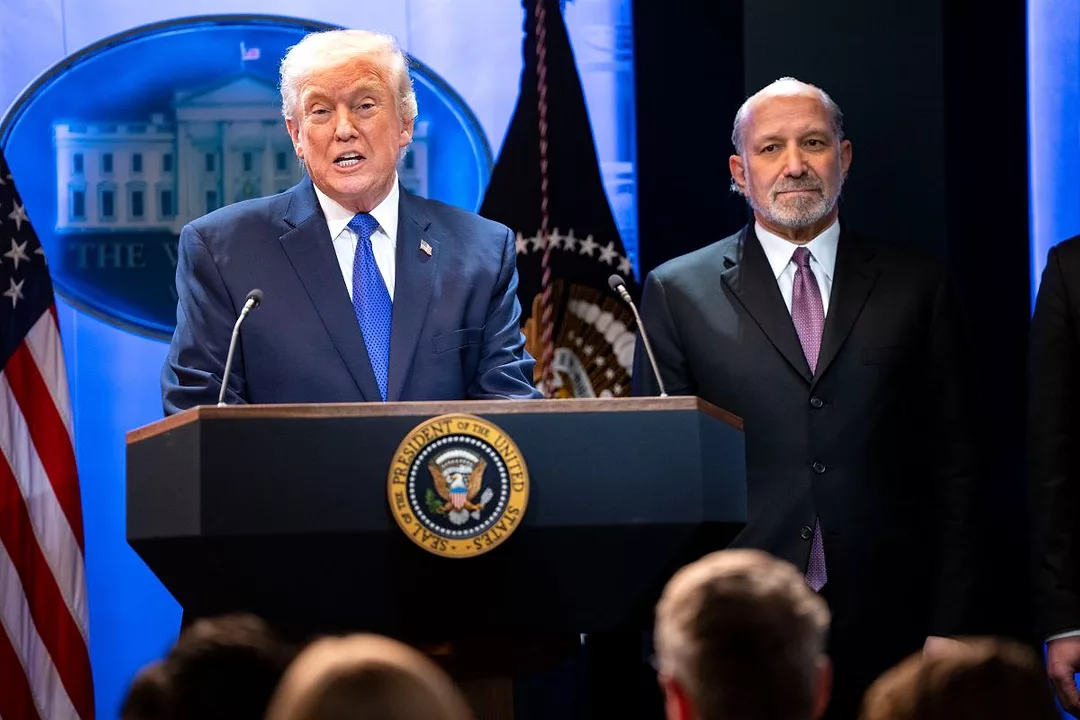
Photo: Supply Chain Brain
A Landmark Ruling With Global Ripples
A major decision by the U.S. Supreme Court has triggered cautious optimism among America’s trading partners, after the court struck down significant portions of former President Donald Trump’s sweeping tariff framework. The ruling, decided by a six to three majority, concluded that the statute underpinning the tariffs did not grant the executive branch authority to impose such broad import duties.
The decision affects a wide network of economies that had been subject to the levies, including the European Union, the United Kingdom, and Canada, as well as emerging manufacturing hubs across Asia and Latin America. While the immediate legal outcome is clear, the practical implications for trade flows, refunds, and future policy remain less certain.
Governments Signal Relief but Seek Clarity
Officials across Europe and North America broadly welcomed the ruling, viewing it as validation of long standing concerns that the tariffs stretched beyond statutory limits. However, governments emphasized that businesses still need guidance on how existing levies will be unwound and whether refunds will be processed.
In the United Kingdom, officials noted that bilateral trade arrangements, including sector specific provisions covering steel, automobiles, and pharmaceuticals, are largely unaffected. The country’s trade framework with Washington already features relatively low reciprocal tariffs, and policymakers expect that preferential access will continue regardless of the legal shift.
Trade groups, including the British Chambers of Commerce, said the ruling does not fully resolve operational uncertainty. Companies still face questions about reclaiming previously paid duties and how supply contracts will account for potential reimbursements. For exporters, tariff reduction remains a priority, but the path forward depends heavily on regulatory implementation.
Europe and Canada Stress Stability
From Brussels, representatives of the European Commission underscored that transatlantic trade relies on predictable policy. Officials said they remain in close contact with U.S. authorities to understand how the administration may respond and to ensure that tariff reductions translate into real commercial certainty for businesses.
Canadian officials echoed similar sentiments. Trade minister Dominic LeBlanc described the decision as reinforcing Canada’s longstanding argument that certain U.S. tariffs lacked justification. Still, Ottawa signaled that the broader trade environment will depend on whether alternative legal pathways are used to maintain duties in sensitive sectors.
Industry Groups Warn the Story Isn’t Over
Outside government circles, industry associations welcomed the decision but cautioned against viewing it as a definitive turning point. Switzerland’s technology manufacturing association, Swissmem, said high tariffs had weighed heavily on exporters and competitiveness, yet warned the administration could still pursue other legal mechanisms to sustain trade barriers.
Similarly, the International Chamber of Commerce highlighted the operational challenges companies now face. The group noted that the U.S. import system is administratively complex, meaning refund claims and compliance adjustments could take months or even years to fully resolve. Without clear procedural guidance, firms risk additional costs and potential disputes.
Why Businesses Still Face “Murky Waters”
Despite the headline victory for trading partners, several factors continue to cloud the outlook. First, the ruling does not automatically eliminate all tariffs, leaving room for policy adjustments under different legal authorities. Second, companies must navigate the logistics of recalculating pricing, renegotiating contracts, and potentially filing for duty reimbursements.
For multinational firms with intricate supply chains, even small tariff changes can alter sourcing strategies and margins. Analysts estimate that during the peak of the tariff regime, affected trade flows reached hundreds of billions of dollars annually, illustrating the scale of potential financial adjustments now underway.
The Road Ahead for Global Trade
In the near term, markets will be watching how quickly U.S. agencies issue implementation guidance and whether new trade negotiations emerge as a result. Many governments see the ruling as an opportunity to push for more durable agreements that lock in lower tariffs and reduce the risk of abrupt policy swings.
While the decision removes a significant legal pillar of the previous tariff framework, it does not immediately restore full predictability to global commerce. For businesses, the next phase will be less about court rulings and more about regulatory details, diplomatic negotiations, and the practical mechanics of unwinding one of the most consequential trade policy experiments of the past decade.
.webp)
Popular articles



Subscribe to unlock premium content
Visa and the Invisible Engine Powering Global Digital Money

Disney’s Streaming Empire Built on Regional Storytelling Power

The Slow Revolution of Steel and Memory Across Eastern Europe

Visa and the Invisible Engine Powering Global Digital Money
Disney’s Streaming Empire Built on Regional Storytelling Power
Visa and the Invisible Engine Powering Global Digital Money