From Rockets to Riches
By
David Goldfarb
Last updated:
February 9, 2026
First Published:
February 9, 2026

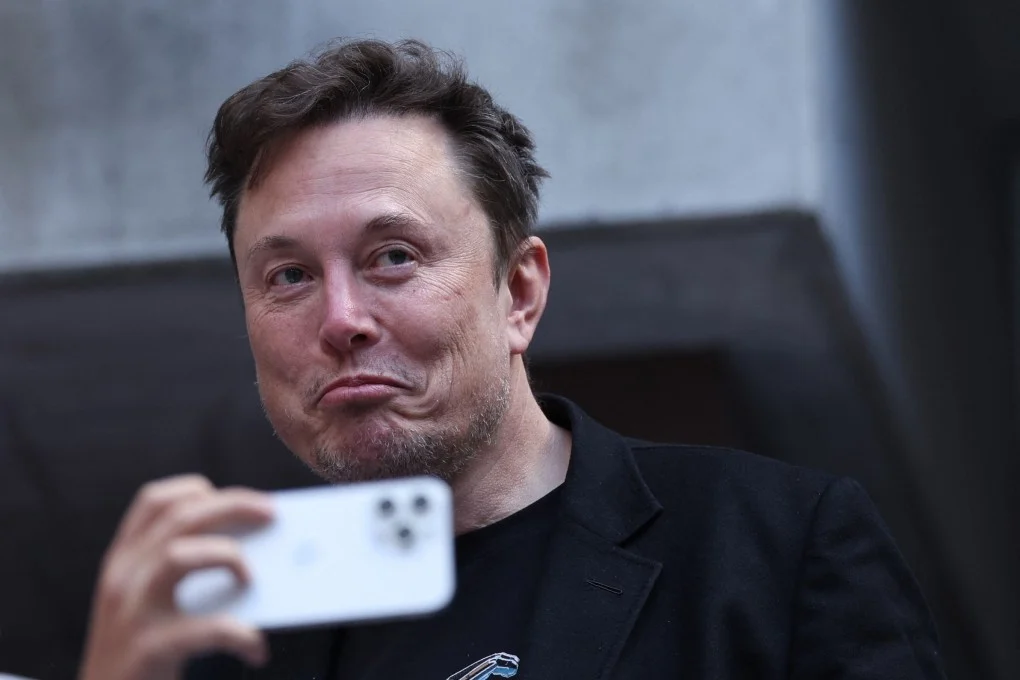
Photo: South China Morning Post
Elon Musk’s Wealth Enters Uncharted Territory
Elon Musk’s fortune has entered a realm never seen before. Following the merger of SpaceX and his artificial intelligence company xAI, Musk’s net worth has surged to roughly $845 billion, making him richer than the next three wealthiest individuals combined. The deal values the newly combined SpaceX–xAI entity at an estimated $1.25 trillion, instantly reshaping the balance of Musk’s business empire and accelerating his path toward a milestone no individual has ever reached: trillionaire status.
While Tesla once defined Musk’s wealth story, rockets, satellites, and artificial intelligence are now doing the heavy lifting.
How SpaceX Became the Center of Musk’s Fortune
SpaceX now represents nearly two-thirds of Musk’s total net worth. With an estimated ownership stake of around 43% in the merged SpaceX–xAI business, his personal share alone is valued at more than $530 billion. That figure eclipses his holdings in Tesla, where his ownership ranges between 11% and 15% depending on stock-based compensation and voting rights.
For Musk to cross the trillionaire threshold, SpaceX would need to reach a valuation of approximately $1.6 trillion, assuming Tesla’s stock price remains flat. Given SpaceX’s rapid growth in government contracts, satellite revenue, and defense-related services, that target no longer seems purely theoretical.
Tesla’s Slowing Momentum Changes the Equation
Tesla remains a massive company, but its growth story has cooled. Shares are down roughly 9% this year as core electric vehicle sales soften and brand perception weakens in key markets. Meanwhile, highly anticipated projects such as robotaxis and humanoid robots remain in development rather than production.
Tesla itself acknowledged the shift in Musk’s wealth profile in a recent proxy filing, noting that the majority of his net worth is now derived from ventures outside the automaker. This marks a significant change for a company that once served as the primary engine of Musk’s personal fortune.
The xAI Merger Raises the Stakes
By folding xAI into SpaceX, Musk has broadened the company’s narrative from aerospace and defense to data, computing, and artificial intelligence. Musk has described the long-term vision as building “orbital data centers,” combining satellite infrastructure with advanced AI models.
This expansion dramatically increases capital needs. AI development is notoriously expensive, with leading firms spending tens of billions annually on computing power, chips, and data centers. The merger positions SpaceX to tap deeper capital markets and justify higher valuations, especially as governments and enterprises race to secure AI and space-based infrastructure.
However, the move also complicates the investment story. The combined entity now blends a profitable launch and satellite business with an AI operation that is still burning cash and facing regulatory scrutiny in multiple regions.
Government Contracts and Political Risk
SpaceX has already secured more than $20 billion in U.S. federal contracts, spanning NASA missions, satellite launches, and national security programs. Additional contracts are expected as governments increase spending on space-based communications and defense systems.
At the same time, political and regulatory pressure is rising. Lawmakers have called for investigations into SpaceX’s investor base, and xAI is under scrutiny abroad following controversies surrounding its Grok image-generation tools. While no formal regulatory block has been announced, these risks could influence how public market investors value a future IPO.
A Possible Public Listing in 2026
Musk has stated that he wants to take SpaceX public as early as 2026. An IPO would dramatically increase the liquidity of his wealth and potentially accelerate his march toward trillionaire status. Yet convincing investors to pay a premium for a company that mixes defense contracting, satellite internet, and AI research will not be simple.
Some investors believe Musk may never list SpaceX on its own. Instead, speculation is growing around a broader consolidation of Musk’s businesses under a single umbrella, potentially reviving his long-held ambition of building one unified company branded simply as X.
Tesla’s Golden Handcuffs May Not Be Enough
Despite SpaceX’s rise, Musk still has powerful incentives to stay engaged at Tesla. Shareholders recently approved a new compensation package that could pay out up to $1 trillion over the next decade if Tesla hits aggressive milestones, including a $2 trillion market capitalization. The first tranche alone requires Tesla to add roughly $460 billion in value from current levels.
Tesla’s board designed the plan to keep Musk focused. But legal experts question whether it will work. As SpaceX and xAI grow larger and more valuable, Tesla’s incentives may begin to look comparatively less compelling.
The Road to a Trillion Dollars
If Tesla stock remains flat, SpaceX and xAI will determine whether Musk becomes the world’s first trillionaire. A valuation jump from $1.25 trillion to $1.6 trillion would be enough to push him over the line, assuming his ownership stake holds.
Whether that happens through an IPO, new government contracts, AI breakthroughs, or a sweeping consolidation of his empire, one thing is clear: Musk’s path to unprecedented wealth no longer runs through electric cars. It runs through orbit, artificial intelligence, and a high-stakes bet that the future of computing belongs in space.
.webp)
Popular articles



Subscribe to unlock premium content
Zara’s Hyper-Fast Fashion Supply Chain Is Changing Global Retail

The Rise of Apple Stores as Experiential Brand Centers Worldwide
Boutique Eco-Lodges in Costa Rica Redefining Ultra-Luxury Travel

Zara’s Hyper-Fast Fashion Supply Chain Is Changing Global Retail
The Rise of Apple Stores as Experiential Brand Centers Worldwide
Zara’s Hyper-Fast Fashion Supply Chain Is Changing Global Retail