Europe’s AI Boom Faces a Critical Energy Challenge as Tech Giants Scale Up

Europe’s AI Boom Faces a Critical Energy Challenge as Tech Giants Scale Up
By
Alina Sinclair
Last updated:
June 3, 2026
First Published:
June 3, 2026

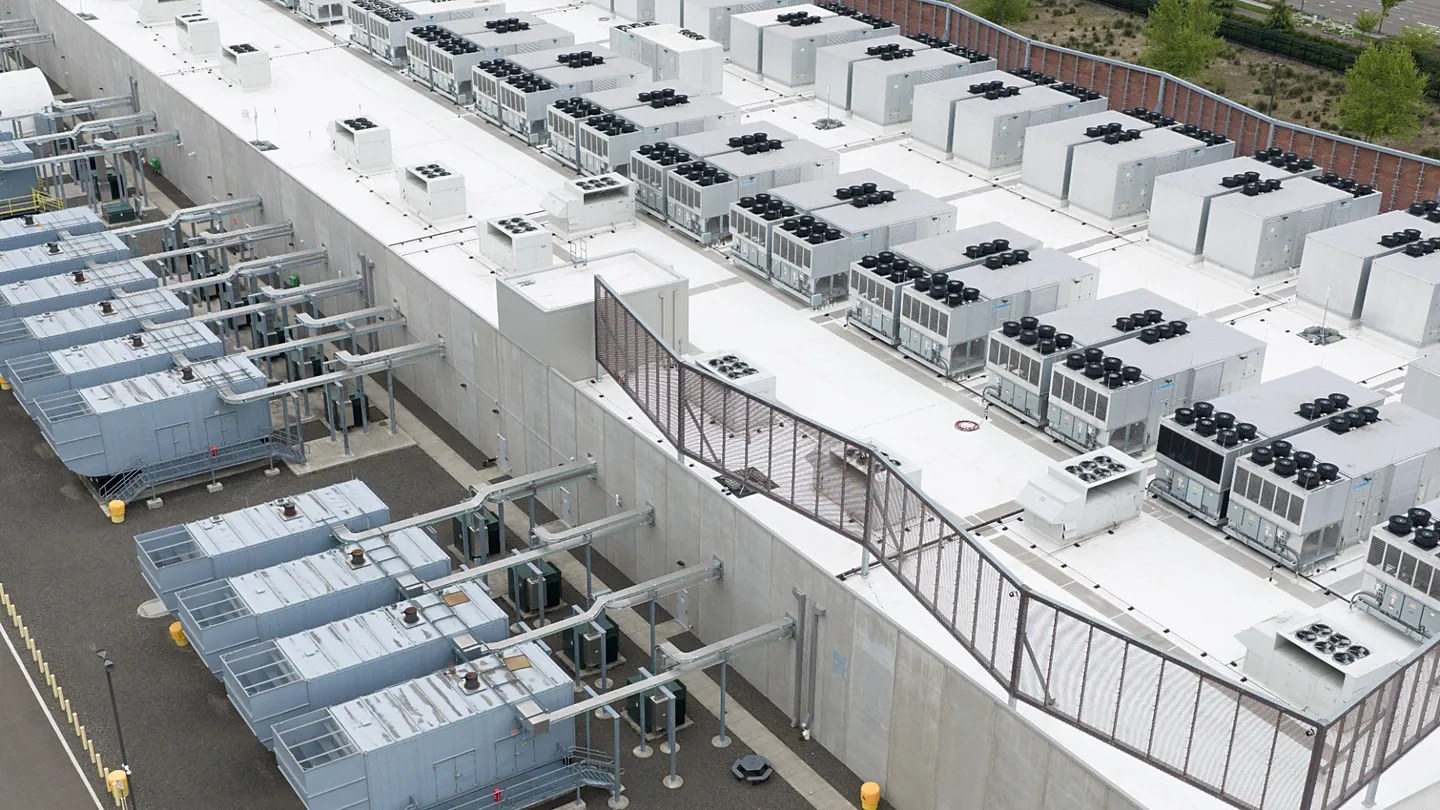
Photo: Euronews
Europe is rapidly emerging as a major battleground in the global artificial intelligence race, attracting billions of euros in investment from some of the world's largest technology and investment firms. However, as AI infrastructure expands at an unprecedented pace, a critical question is coming into focus: can Europe generate enough affordable power to support its ambitions?
The issue has gained renewed attention following SoftBank's announcement that it plans to invest €75 billion in France to build a vast AI infrastructure network. The project highlights both Europe's growing appeal as an AI destination and the enormous energy challenges that come with supporting advanced computing technologies.
As artificial intelligence becomes more powerful, the data centers that train and run these systems are consuming record amounts of electricity, placing increasing pressure on national grids and energy policymakers across the continent.
SoftBank’s Massive France Investment Signals Confidence in Europe
SoftBank's latest commitment represents one of the most significant AI infrastructure investments announced in Europe in recent years.
The Japanese technology investment giant plans to develop approximately 3.1 gigawatts of AI-focused data center capacity across northern France by 2031. The project will include major facilities in Dunkirk, Bosquel, and Bouchain, creating a large-scale computing network designed to support next-generation AI applications.
To put the scale into perspective, 3.1 gigawatts of capacity is enough to power millions of homes and rivals the electricity consumption of some small nations.
The investment reinforces France's growing reputation as one of Europe's most attractive destinations for data center development and advanced technology infrastructure.
Why France Holds a Competitive Advantage
One of the biggest reasons global technology companies are targeting France is its energy mix.
More than 60% of France's electricity generation comes from nuclear power, giving the country access to relatively stable, low-carbon, and reliable electricity supplies compared with many of its European neighbors.
For AI companies, electricity is no longer just an operational expense. It has become a strategic resource.
Training large language models and operating AI-powered services require enormous computing resources. Advanced graphics processors run continuously for weeks or months, consuming substantial amounts of energy. As AI adoption expands, electricity availability increasingly determines where companies choose to build infrastructure.
France's extensive nuclear network provides a level of energy security that many other European countries currently struggle to match.
Data Centers Are Becoming Power-Hungry Economic Engines
The AI revolution is transforming data centers from simple storage facilities into some of the most energy-intensive industrial assets in the world.
A single large AI data center can consume as much electricity as a medium-sized city. As companies race to build more powerful models and support billions of AI interactions daily, energy demand is expected to rise dramatically over the next decade.
Industry estimates suggest global data center electricity consumption could more than double by the early 2030s, driven primarily by artificial intelligence workloads.
This trend is forcing governments and utility providers to rethink energy infrastructure planning, grid expansion, and long-term power generation strategies.
For technology companies, access to reliable electricity is becoming just as important as access to capital or engineering talent.
Europe’s High Energy Costs Remain a Major Obstacle
While Europe offers a highly skilled workforce and strong regulatory frameworks, energy costs remain one of its biggest competitive disadvantages.
Industrial electricity prices across Europe have consistently remained above those seen in several competing economies.
In many cases, energy-intensive industries pay roughly twice as much for electricity as their counterparts in the United States and significantly more than companies operating in major Asian economies such as China and India.
These higher costs directly affect the economics of running large-scale AI infrastructure.
As a result, technology companies are increasingly evaluating not only talent availability and market access but also long-term electricity pricing when selecting locations for future investments.
The challenge is particularly important because AI infrastructure projects typically operate on investment horizons measured in decades rather than years.
Nuclear Energy Is Returning to the Spotlight
The surge in AI-related electricity demand has reignited discussions about the role of nuclear power in Europe's future energy strategy.
Many analysts now argue that nuclear energy could become one of the most effective solutions for supporting large-scale AI infrastructure while maintaining climate goals.
Unlike solar and wind power, nuclear plants provide continuous electricity generation regardless of weather conditions, making them particularly attractive for data centers that require uninterrupted operations.
Despite these advantages, nuclear power currently represents a relatively small share of Europe's overall energy mix compared with fossil fuels.
As AI infrastructure expands, policymakers may face growing pressure to accelerate nuclear investments or extend the lifespan of existing reactors.
Small Modular Reactors Gain Attention from Big Tech
One of the most closely watched developments in the energy sector is the rise of Small Modular Reactors, commonly known as SMRs.
These next-generation nuclear reactors are significantly smaller than traditional nuclear plants and are designed to be manufactured in factories before being transported to deployment sites.
Supporters argue that SMRs could be built faster, cost less, and provide dedicated power sources for large industrial facilities such as AI data centers.
Major technology companies in the United States have already begun exploring the technology.
Amazon has partnered with utility providers to evaluate SMR opportunities, while Google has also announced agreements related to future nuclear power development.
For data center operators, SMRs offer an attractive vision: reliable electricity generation located directly near computing facilities, reducing dependence on strained public grids.
Significant Challenges Remain for SMR Deployment
Despite growing enthusiasm, widespread deployment of SMRs remains years away.
The technology still faces regulatory, financial, engineering, and commercial hurdles before large-scale adoption becomes possible.
One of the biggest concerns is that many operators are hesitant to become early adopters of unproven technologies.
While several SMR projects are under development globally, very few are fully operational, and most remain in demonstration or planning phases.
As a result, many data center developers continue relying on existing power infrastructure while monitoring future advancements in nuclear technology.
For now, the industry's immediate focus remains securing enough electricity over the next decade to support rapidly growing AI demand.
Talent Is Another Key Reason Tech Companies Are Choosing Europe
Energy is not the only factor driving investment decisions.
Europe, and particularly London, continues to attract AI companies due to its deep pool of technical talent, research institutions, and startup ecosystems.
The city has become one of the world's leading centers for artificial intelligence development, drawing engineers, researchers, entrepreneurs, and venture capital from across the globe.
Several major AI companies have recently expanded their presence in London, viewing the city as a strategic hub for European operations.
The combination of world-class universities, strong financial markets, and access to international talent has helped position London as one of the most important AI centers outside the United States.
AI Companies Continue Expanding Their European Footprint
The momentum behind Europe's AI ecosystem continues to build.
A growing number of AI startups and established technology firms are opening new offices, expanding research teams, and investing in local infrastructure across the region.
Companies involved in generative AI, machine learning, cloud computing, semiconductor design, and robotics are increasingly viewing Europe as a critical market for future growth.
This expansion is creating jobs, attracting investment, and strengthening the continent's role in the global technology landscape.
At the same time, it is placing greater pressure on governments to ensure that energy infrastructure keeps pace with technological development.
Europe’s AI Future May Depend on Its Energy Strategy
Europe's ambitions to become a global leader in artificial intelligence are attracting unprecedented levels of investment, but the success of those ambitions may ultimately depend on energy availability.
Projects like SoftBank's €75 billion investment demonstrate that global technology leaders see enormous potential in the region. However, the rapid growth of AI infrastructure is creating power requirements unlike anything Europe has previously experienced.
Over the next decade, the continent's ability to expand electricity generation, modernize its grids, manage energy costs, and support advanced technologies could become one of the defining factors in determining its position within the global AI economy.
As the race for artificial intelligence leadership accelerates, Europe is discovering that the future of technology may be just as dependent on power generation as it is on innovation itself.
.webp)
Popular articles



Subscribe to unlock premium content
The Rise of Indoor Vertical Gardening

Esports Tournaments Are Becoming the New Spectator Sport
Minimalism in Motion

The Rise of Indoor Vertical Gardening
Esports Tournaments Are Becoming the New Spectator Sport
The Rise of Indoor Vertical Gardening